You can't truly understand the battle for Jerusalem by looking at a map. On paper, the city was annexed by Israel decades ago. But on the ground, a street-by-street campaign is radically reshaping the city's demographics. If you walk through neighborhoods like Silwan or Sheikh Jarrah today, you aren't just seeing a regular urban landscape. You're witnessing a deliberate, systematic hardening of control that relies on a complex web of legal mechanisms, bureaucratic zoning laws, and bulldozers.
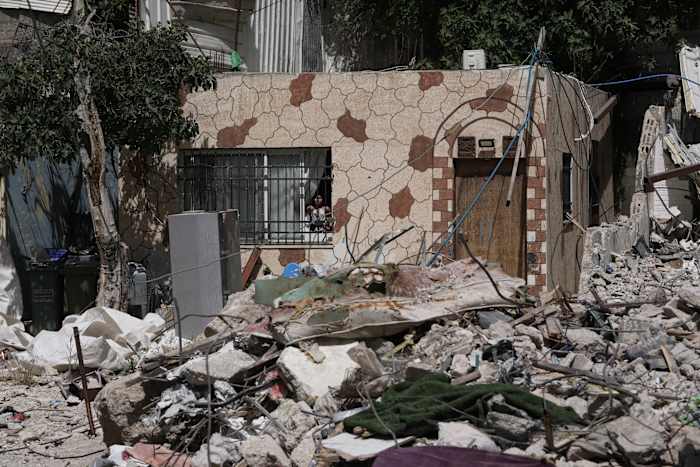
The reality on the ground has shifted gears over the last couple of years. What used to be a slow-moving legal battle is now a rapid, aggressive push. According to data from the Palestinian Authority's Jerusalem Governorate, Israeli authorities demolished 185 structures in East Jerusalem in just the first four months of 2026. This isn't random city planning. It's a highly coordinated effort to cement Israeli sovereignty and break up Palestinian neighborhood continuity around the Old City.
People often ask if these are just standard real estate disputes or municipal enforcement actions. The short answer is no. When you look at the actual laws being applied and the specific organizations taking over these properties, the political objective becomes completely undeniable.
The Asymmetry of Jerusalem Property Law
To understand why Palestinian families keep losing their homes in court, you have to look at how Israeli property laws are structured. It's a system of deep legal asymmetry that leaves Palestinian residents with almost no path to victory.
Take the Legal and Administrative Matters Law of 1970. This specific law allows Israeli citizens or organizations to reclaim property in East Jerusalem that was owned by Jews before the 1948 war. On its surface, it sounds like a standard restitution law. But here is the catch: there is absolutely no parallel law for Palestinians. A Palestinian family living in Silwan cannot go to an Israeli court and claim the home their grandparents owned in West Jerusalem before 1948. Their old properties are locked away under the Absentee Property Law.
Another major tool is the office of the Guardian General, which manages pre-1948 Jewish trusts, known as hekdesh. Settler organizations like Elad and Ateret Cohanim work closely with these trusts. They locate old titles, take over the legal rights, and then launch eviction lawsuits against the Palestinian families currently living there.
- Batn al-Hawa: Right now, in this crowded section of Silwan, around 700 residents across 90 families are facing the imminent threat of eviction because a settler trust claimed ownership of the land from the late 19th century. In March 2026 alone, 15 people from the Rajabi family were evicted.
- Sheikh Jarrah: The long-running battle in the Karm al-Jaouni area follows the exact same script. Families who were settled there by Jordan and the UN in the 1950s are being pushed out by corporate entities utilizing pre-1948 documents.
When these families are evicted, they don't just leave an empty house. Settler groups move in immediately, often under heavy private security and police escort. The physical fabric of the neighborhood changes overnight. Israeli flags go up, security cameras are installed, and a new enclave is established right in the middle of a Palestinian community.
The Permitting Trap and Strategic Demolitions
Evictions are only half the battle. The other half is fought using municipal zoning codes and building permits. Walk into almost any Palestinian neighborhood in East Jerusalem, and you'll notice a lot of construction that looks unfinished or tightly packed. That's because getting a building permit as a Palestinian is nearly impossible.
The Jerusalem Municipality has historically designated massive swathes of Palestinian land as "open public space" or "green areas." Under a detailed zoning plan from 1977, the neighborhood of al-Bustan in Silwan was zoned exactly this way. Because of that designation, the 1,000 Palestinians living there can't legally get a permit to build a new house or even add a room for their growing kids.
When people build anyway out of sheer necessity, the city slaps them with a demolition order. The numbers are staggering. In al-Bustan, authorities demolished 37 homes between 2023 and 2025. The pace hasn't slowed down. In March and April of 2026, another 14 homes were leveled, displacing dozens of residents, including 20 children.
The city often claims it's simply enforcing building regulations. But if you look at the municipal budgets and urban plans, the real intent is tourism and archeology used as geopolitical tools.
The National Park Strategy
The demolitions in al-Bustan aren't happening to clear room for a highway. They're happening to clear room for the "King's Garden," a planned biblical-style tourist park designed to mimic the gardens of King Solomon. This park is part of a larger government initiative to build a continuous chain of tourist sites around the Old City's southern edge.
By turning these areas into national parks and archeological sites—frequently managed by private settler groups like Elad—the state effectively freezes Palestinian growth. You can't build a house inside a national park. This strategy isolates East Jerusalem from the rest of the West Bank and cuts off the historical connection between Palestinian neighborhoods.
The ultimate geopolitical goal was made clear by senior officials. In late 2025, during a framework agreement signing to expand the Ma'ale Adumim settlement into the highly sensitive E1 area, the Israeli Prime Minister stated directly that there would be no Palestinian state. The E1 project, along with new settlements like Givat HaShaked and Kidmat Zion advanced in early 2026, is explicitly designed to block the territorial continuity of any future Palestinian entity.
What Happens Next for Residents
If you're a Palestinian resident in East Jerusalem today, your options are shrinking fast. In the past, community leaders could sometimes tie up eviction orders in the courts for years or get temporary injunctions. Now, that window is closing. The legal avenues have been systematically exhausted.
When a family gets evicted or has their home demolished, they face a brutal choice. They can try to find an apartment in other parts of East Jerusalem, but the housing crisis is severe and rents are astronomical. The other option is to move "behind the Wall" to neighborhoods like Kafr Aqab or Shuafat refugee camp. These areas are technically within the municipal borders but are cut off by the separation barrier. Moving there means losing access to basic city services, reliable water, and infrastructure, while risking the eventual revocation of their Jerusalem residency status entirely.
International bodies, including the European Union and various UN agencies, regularly issue statements condemning these actions as violations of international law and the Fourth Geneva Convention. In May 2026, the EU Representative Office explicitly warned that the dramatic escalation of forced evictions in Silwan is creating immense human suffering. But statements don't stop bulldozers.
The most practical thing to watch right now is the government's push to complete the "settlement of land title" process by 2029. This formal land registration process sounds dry and bureaucratic, but it's the ultimate tool. By forcing a final registration of all land titles in East Jerusalem, the state is effectively smoke-screening undocumented properties and transferring them to state or settler ownership. For the thousands of residents currently living under pending demolition or eviction orders, the next few years aren't about abstract politics—they're a direct fight to keep a roof over their heads.