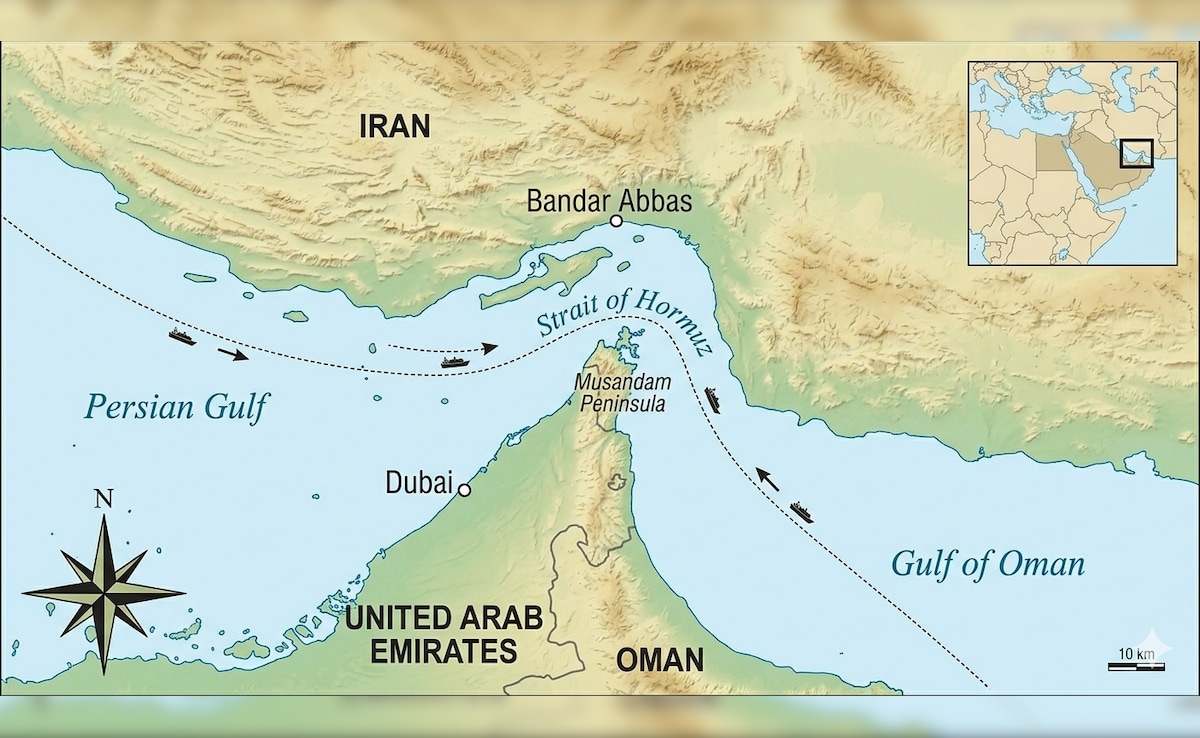
The sea does not care about sovereignty. To a merchant mariner standing on the bridge of a 300-meter VLCC—a Very Large Crude Carrier—the water is simply a medium of resistance and a path to profit. But as the bow cuts through the emerald swells of the Persian Gulf, heading toward the twenty-one-mile-wide needle’s eye known as the Strait of Hormuz, the air changes. It gets heavy. It isn't just the humidity of the Middle East. It is the weight of being watched.
Captain Elias (a composite of the men who navigate these waters) knows the math by heart. One-fifth of the world’s daily oil consumption passes through this single geographic throat. If that throat closes, the world gasps. But lately, the threat isn't just a total blockage or a naval skirmish. It’s something subtler. Something more bureaucratic.
Iran is eyeing a "transit fee." A toll. A pay-to-pass scheme that would transform one of the world’s most vital international waterways into a private driveway.
The Price of a Free Pass
For decades, the legal bedrock of global trade has been the United Nations Convention on the Law of the Sea (UNCLOS). It guarantees "transit passage." This means that as long as a ship is moving continuously and expeditiously, it can pass through international straits even if those straits fall within the territorial waters of a coastal state.
Iran never ratified UNCLOS.
Tehran views the Strait not as a shared global resource, but as a strategic asset they happen to own the keys to. The proposal currently floating through the halls of the Iranian Parliament suggests charging a fee to every vessel passing through. They frame it as a service charge—payment for "security" and "environmental protection."
Consider the irony. The very forces that have, at various times, seized tankers and conducted "drill" maneuvers in the path of commercial shipping now want to be paid for the privilege of their presence.
If you are running a logistics firm in Rotterdam or a refinery in Tokyo, this isn't just a political headline. It’s a line item that threatens to bleed you dry. A "security fee" of just a few thousand dollars per transit sounds small until you multiply it by the 21 million barrels of oil moving through that gap every single day. The cost trickles down. It ends up at the gas pump in Ohio and the heating bill in Berlin.
The Architecture of a Shakedown
The logic of a toll road is simple: you pay for the maintenance of the asphalt so you can get home faster. But the Strait of Hormuz is not a road built by man.
To understand the tension, we have to look at the "traffic separation scheme." Think of it as a two-lane highway in the water. To keep massive ships from colliding, they are funneled into specific inbound and outbound lanes. These lanes happen to sit largely within Omani and Iranian territorial waters.
When a ship like Elias’s enters the outbound lane, it is technically inside Iranian jurisdiction. Usually, this is a formality. You fly your flag, you keep your radio on Channel 16, and you keep moving. But under a tolling regime, that formality becomes a checkpoint.
What happens if a captain refuses to pay?
We’ve already seen the blueprint. The "shadow war" at sea has involved limpet mines, drone strikes, and the boarding of vessels by commandos sliding down ropes from helicopters. If a toll becomes "law" in Tehran, every ship that doesn't pony up becomes a legal target for seizure. Suddenly, an act of piracy is rebranded as a "customs enforcement action."
It is a masterful, if terrifying, bit of geopolitical lawfare.
The Empty Pockets of a Superpower
Why now? Why turn a global chokehold into a toll booth?
The answer is written in the plummeting value of the rial. Decades of "maximum pressure" sanctions have left the Iranian economy looking like a weathered hull—rusted, barnacled, and taking on water. They are desperate for hard currency.
If they can’t sell all the oil they want due to sanctions, they will tax the oil everyone else is selling.
It’s a gamble. They are betting that the world is too tired, too fractured, and too dependent on that oil to mount a unified response. They are betting that a shipping company would rather pay a $50,000 "environmental fee" than risk having a $100 million cargo impounded for six months of "legal review" in a Bandar Abbas courtroom.
It’s a classic protection racket, scaled to a global level.
The Ripple Effect in the Engine Room
In the shipping industry, margins are everything. We often think of "Big Oil" as an infinite pool of money, but the actual transport of goods is a game of pennies.
When insurance premiums spiked after the 2019 tanker attacks, the industry felt it instantly. Now, add a mandatory toll. Then add the cost of the legal teams needed to navigate whether paying that toll violates Western sanctions.
Elias looks at the radar. He sees the blips of the Iranian Revolutionary Guard Corps (IRGC) fast boats. They are small, nimble, and armed. They dance around the lumbering tankers like wolves around a herd of elk.
In a world of "Pay to Pass," these boats become the debt collectors.
The psychological toll on the crews is the hidden cost no one talks about. These sailors aren't combatants. They are Filipinos, Indians, and Eastern Europeans looking to send money home. They didn't sign up to be pawns in a game of maritime "chicken." Every time a new "regulation" is announced in Tehran, the tension on the bridge of every ship in the Gulf ratchets up a notch.
A Precedent Floating in the Water
If Iran succeeds in monetizing the Strait of Hormuz, the map of the world starts to look very different.
What stops Yemen’s Houthis from demanding a "piety tax" in the Bab el-Mandeb? What stops other nations that sit on vital narrows from decided that "freedom of navigation" is a quaint, 20th-century relic that they can no longer afford to provide for free?
The global economy relies on the assumption that the high seas belong to no one and everyone. The moment we accept that a nation can tax the passage of goods through an international strait, we aren't just paying a toll. We are paying for the dismantling of the post-WWII order.
We are moving back to a world of fiefdoms and fortress-seas.
The Strait of Hormuz is more than a waterway. It is a pulse. Every ship that passes through is a heartbeat of global commerce. If you start charging for the blood to flow, eventually, the heart starts to fail.
The sun begins to set over the jagged cliffs of the Musandam Peninsula. On the bridge, Elias watches the silhouettes of the patrol boats. He knows that his cargo—millions of gallons of volatile energy—is the lifeblood of cities thousands of miles away. He also knows that for the men watching him from the shore, that cargo is something else entirely.
It’s leverage.
As the tanker moves into the narrowest part of the channel, the radio crackles. It’s a routine check-in, for now. But the silence that follows is louder than it used to be. The world is waiting to see if the free ocean is about to become an expensive, dangerous, and very private lake.
The toll isn't just about money. It’s about who truly owns the horizon.