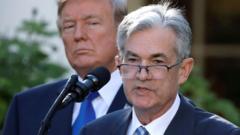
Jerome Powell sits at a desk that essentially dictates the price of a gallon of milk in Ohio and the interest rate on a mortgage in Arizona. He is the mechanic of the global economy, tasked with keeping a massive, overheating engine from seizing up. But recently, a different kind of pressure began to build around the Chairman of the Federal Reserve. It wasn't about inflation or employment statistics. It was about trust.
For months, the U.S. Justice Department held a magnifying glass over Powell. They weren't looking at his policy decisions—those are debated in the bright lights of press conferences. They were looking at his personal finances. Specifically, they were investigating the sale of millions of dollars in municipal bonds from his personal account in late 2020.
The question was simple and devastating: Did the man who moves markets use his private knowledge to protect his own wallet?
The Weight of a Single Signature
Imagine a high-stakes poker game where one player also happens to be the person who printed the cards. That is the inherent tension of the Federal Reserve. When Powell speaks, trillions of dollars shift. If he hints at a rate hike, stocks tumble. If he promises support, they soar. Because of this god-like influence on value, the optics of his personal trades aren't just a matter of paperwork. They are the bedrock of public confidence.
The investigation centered on a moment in October 2020. At the time, the world was still reeling from the pandemic. The Fed was pumping unprecedented amounts of liquidity into the system to keep the floor from falling out. In the midst of this, Powell sold between $1 million and $5 million worth of shares in a Vanguard stock fund.
To the average person struggling to pay rent, that sum is astronomical. To a federal investigator, it was a red flag. They had to determine if that sale was triggered by "non-public information"—the kind of secrets whispered in the mahogany-row hallways of the Eccles Building before they ever hit a New York Times headline.
A System Under the Microscope
The Justice Department’s probe wasn't an isolated event. It was the climax of a season of scandal for the Fed. Two regional presidents, Eric Rosengren of Boston and Robert Kaplan of Dallas, had already resigned following revelations about their own trading activities during the 2020 market turmoil. The air was thick with suspicion. The narrative was forming: while the world burned, the firefighters were busy saving their own furniture.
When the DOJ finally closed the book on Powell this week, the conclusion was quiet but definitive. They found no evidence that he had violated federal insider-trading laws. The "drop" of the probe wasn't a celebratory parade; it was a silent acknowledgment that the rules, as written, had been followed.
But the "rules" are exactly what have the public feeling uneasy. Even if no law was broken, the proximity of personal profit to public policy creates a friction that is hard to smooth over.
The Human Cost of Suspicion
Consider a hypothetical family—let's call them the Millers. They are trying to buy their first home. They watch the news, trying to understand why interest rates are climbing. They hear that the man in charge of those rates was under investigation for his own stock trades. Even when the headline says "probe dropped," the seed of doubt has been planted.
"Is the system rigged?" they ask.
That doubt is more dangerous to the economy than a 1% dip in the S&P 500. The Federal Reserve operates on a mandate of independence. It is supposed to be above politics and above personal gain. When that independence is questioned, the very currency in your pocket loses a bit of its psychological weight.
The Justice Department's decision to end the inquiry means Powell is legally cleared. He can return to his charts and his dot plots without the shadow of a grand jury hanging over his shoulder. Yet, the ordeal has forced a transformation within the institution itself.
The New Architecture of Transparency
The Fed didn't just wait for the DOJ to finish. Stung by the backlash, they overhauled their internal ethics. The new rules are draconian compared to the old ones. Senior officials are now barred from purchasing individual stocks or sector-specific funds. They have to provide 45 days’ notice for any trade. They must hold investments for at least a year.
It is a digital leash.
The message is clear: If you want to steer the ship, you can't be betting on the cargo.
This shift matters because it acknowledges that "legal" is the bare minimum. In the world of global finance, "perceived integrity" is the true gold standard. Powell’s exoneration by the DOJ is a victory for him personally, but the fact that the probe existed at all is a scar on the Fed’s reputation that will take years to fade.
The Silence After the Storm
There is a specific kind of quiet that follows a federal investigation. There are no apologies. There are no "we’re sorry for the inconvenience" letters. There is only the cessation of the pressure.
Powell continues to lead. He continues to grapple with the "higher for longer" reality of interest rates. He continues to be the most powerful unelected official in the country. But the ghost of that 2020 trade remains a footnote in every profile written about him. It serves as a reminder that in the halls of power, your private life is never truly private once it intersects with the public’s money.
The closure of this investigation doesn't mean the scrutiny ends. It simply means the bar has been raised. The next time a Fed official reaches for their brokerage app, they won't just be thinking about their ROI. They will be thinking about the FBI agents who spent months combing through Jerome Powell’s bank statements.
In a world where trust is the only thing backing the dollar, that fear might be the best protection we have.
The vault remains closed. The ledger is balanced. But the eyes of the DOJ are never truly shut.