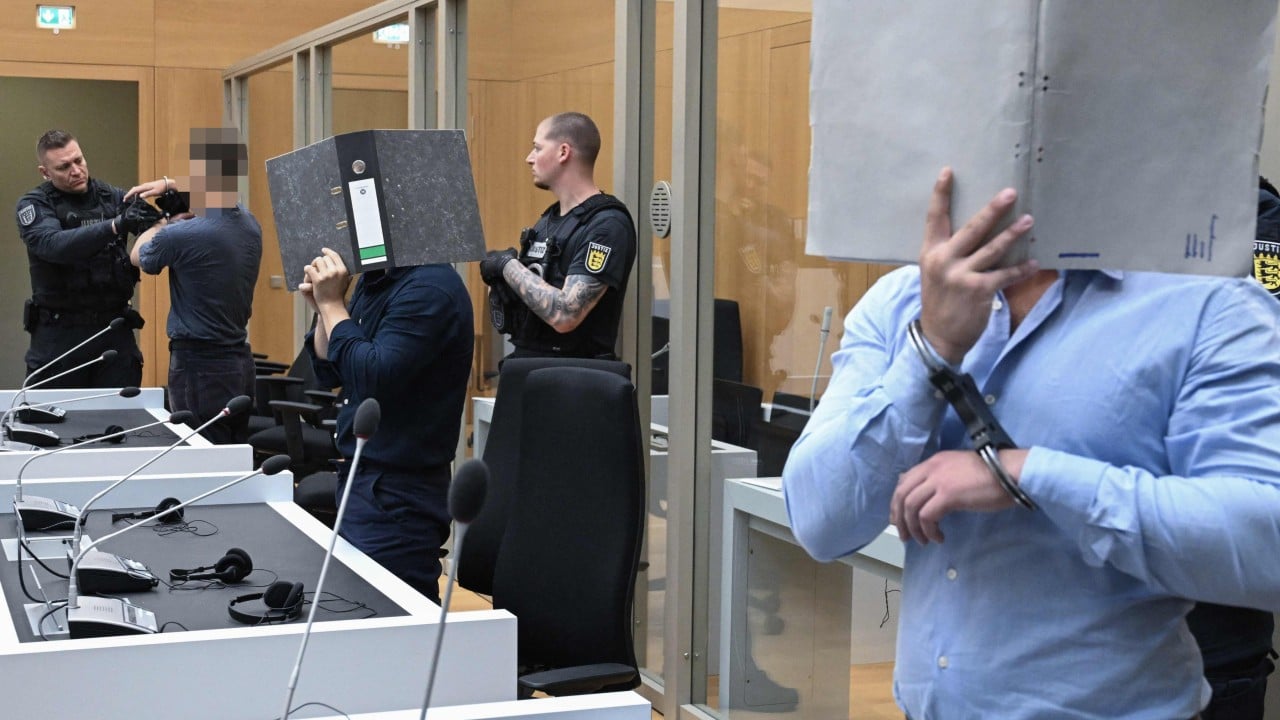
The recent conviction in a Stuttgart courtroom marks a quiet but unsettling milestone in the shadow war stretching across Europe. A Ukrainian man has been sentenced to fifteen months in prison for his role in a Russian-linked sabotage operation, a verdict that underscores the fragility of modern logistics. While the mainstream reporting focuses on the individual sentence and the two acquitted co-defendants, the reality is far more uncomfortable. This was not a sophisticated operation by a team of highly trained operatives. It was a cold, calculated experiment in using the infrastructure of everyday commerce to conduct state-level warfare.
The plot was rudimentary in its execution but sophisticated in its intent. Investigators discovered that the defendants had dispatched parcels containing GPS trackers through standard postal services. These were not random shipments. They were reconnaissance missions designed to map the intricate, high-speed routes used by German delivery companies. The goal was to understand the vulnerabilities in the supply chain—the exact transit times, the sorting hubs, and the security protocols—before escalating to the next, more dangerous phase: incendiary devices timed to ignite while in transit.
We are witnessing a shift in the nature of conflict. The state of modern intelligence operations has moved away from the cinematic image of dead drops in dark parks and toward the utilization of the gig economy and civilian logistics. By recruiting "throwaway agents"—individuals who may be coerced, desperate, or radicalized—foreign intelligence services can distance themselves from the physical act of sabotage. This provides them with plausible deniability. When these operations fail, the state behind them remains an abstraction, while the individuals involved face the machinery of justice.
The Stuttgart trial reveals the specific mechanisms of this hybrid warfare. By routing packages toward Ukraine, the organizers were testing how German infrastructure reacted to cross-border shipments. They were looking for blind spots. If a package with an incendiary device had been successfully introduced into a major courier's sorting system, the resulting fire could have caused massive disruption, financial damage, and, perhaps most importantly, a profound erosion of public confidence in the safety of the global supply chain. This is the hallmark of modern psychological warfare. It relies on the fear that the very systems we depend on for our daily survival can be turned against us.
There is a grim irony in the court’s decision to acquit two of the three men originally charged alongside the convicted individual. It highlights the difficulty of prosecuting these cases. When intelligence services utilize intermediaries in occupied territories, they create a web of obscurity. Witnesses vanish. Digital trails are obfuscated. Proving that an individual was acting under the specific direction of a foreign power requires a standard of evidence that is rarely achievable in an open courtroom. The authorities are left to fight a war on a battlefield where the rules of evidence are often an impediment to national security.
We must look past the headlines to understand the scale of the threat. The discovery of an explosive-laden drone near a cargo plane at Leipzig-Halle Airport earlier this month is a signal that these incidents are not isolated anomalies. They are components of a strategy intended to keep Western nations in a state of perpetual anxiety. When you force a society to constantly monitor its own infrastructure for signs of interference, you have already succeeded in degrading its efficiency and stability.
The recruitment process for these activities often takes place on platforms like Telegram, where anonymous handlers can reach out to vulnerable individuals with promises of financial gain or threats against family members in occupied regions. It turns the digital space into a recruitment office for sabotage. This is a challenge that traditional law enforcement is ill-equipped to handle. Intelligence agencies are playing a game of whack-a-mole, identifying and dismantling networks only after they have already begun to take root in the mundane reality of our parcel delivery systems.
We are forced to confront an uncomfortable truth about our interconnected world. The same speed and efficiency that allow us to receive goods within twenty-four hours also make those systems perfect vectors for disruption. Every logistics node, every sorting facility, and every delivery route is now a potential point of failure. The challenge is not merely technical. It is a fundamental question of how we maintain the openness of our societies while facing adversaries who treat that openness as a vulnerability to be exploited.
The sentence handed down in Stuttgart is, in a very real sense, a tactical loss for the prosecution. The individual will be released, having served his time in pre-trial detention. He returns to a world that remains fundamentally unchanged by his imprisonment. The network that recruited him—the handlers in Mariupol, the intelligence officers in the background—remains operational. They have learned from this failure. They are already refining their techniques, replacing lost assets, and looking for new conduits.
The danger of this era is that it feels manageable until it suddenly is not. We tend to view these events through the lens of legal outcomes, focusing on the sentencing and the judicial proceedings. But the court is not where this battle is being won or lost. It is being fought in the data streams of our courier networks and the dark corners of encrypted messaging apps. Every time we ignore the broader implications of these small-scale incidents, we cede another inch of territory to an invisible force that is determined to turn our own convenience into our greatest liability. We are waiting for a catastrophe to wake us up to the reality that the front line is not somewhere far away in a conflict zone. It is in the parcel waiting on your doorstep.