The sea is a heavy, dark weight. When you stand on the deck of a merchant vessel in the Middle East, the heat doesn't just sit on you; it presses into your lungs. To the uninitiated, the blue expanse of the Persian Gulf looks like an open road. To the men and women navigating it, it is a maze of invisible lines, political tripwires, and the constant, thrumming threat of a sudden, loud ending.
For weeks, the whispers in the shipping offices from Singapore to Rotterdam grew into a roar of anxiety. The headlines were blunt: A blockade. The Strait of Hormuz—the world’s most vital carotid artery for energy—was supposedly being choked shut. If that were true, the global economy wasn't just in trouble. It was terminal.
But the reality of modern warfare is rarely as simple as a door being slammed shut. It is more surgical. It is quieter. And, as it turns out, the panic was aimed at the wrong target.
The Chokepoint Myth
Imagine a straw. Through this straw, twenty percent of the world’s petroleum flows. That straw is the Strait of Hormuz. It is only twenty-one miles wide at its narrowest point. For decades, the nightmare scenario for every economist and naval strategist has been a literal blockage of this passage. We’ve been conditioned to look at the map and see a single point of failure.
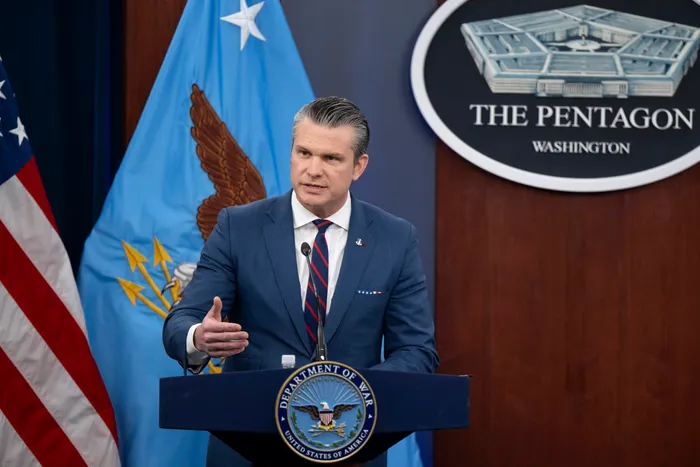
This fear is what led to the frantic scramble in the Pentagon and the foreign ministries of Europe this week. General Michael "Erik" Kurilla, the man tasked with overseeing U.S. Central Command, had to step into the light to perform a very specific kind of linguistic surgery. He had to tell the world that while the house was indeed under pressure, the front door remained open.
The distinction he made wasn't just pedantic military jargon. It was the difference between a regional skirmish and a global collapse.
The General clarified that the U.S. and its allies are not looking at a blanket blockade of the Strait. Instead, the focus is sharpened like a razor on specific Iranian ports. Think of it not as a wall across the highway, but as a series of spikes at the entrance of specific garages.
The Sailor’s View
Let’s step away from the maps and the gold-braided uniforms for a moment. Consider a hypothetical captain named Elias. Elias is sixty years old, has a heart condition he keeps secret from his employer, and is currently commanding a tanker carrying two million barrels of crude.
If the Strait of Hormuz is blockaded, Elias has nowhere to go. He is trapped in a bathtub with a ticking bomb. The insurance rates for his ship vanish instantly because no underwriter will touch a vessel in a war zone. His crew, mostly young men sending money back to families in Manila or Mumbai, start looking at the horizon for the white wake of an incoming fast-boat.
However, if the "blockade" is actually a targeted maritime interdiction of Iranian ports, Elias breathes. He stays in the international shipping lanes. He keeps his speed. The "invisible lines" shift. He knows that as long as he isn't pulling into Bandar Abbas or Bushehr, he is technically a spectator rather than a target.
This is the nuance the General was fighting to preserve. By specifying that the focus is on Iranian sovereign ports—the literal stone and mortar of their coastline—the U.S. is signaling a "containment" strategy rather than an "obstruction" strategy.
The Language of De-escalation
Words in a theater of war are not just information. They are ammunition.
When a high-ranking official uses the word "blockade," it triggers a cascade of legal and economic reactions. Under international law, a blockade is an act of war. It implies a total prohibition of all vessels, regardless of their flag or their cargo. By pivoting the language toward specific port-level restrictions, the military is trying to keep the "temperature" of the water just below boiling.
But why the confusion?
It stems from the complexity of modern maritime law. We like to think of the ocean as "The Commons," a place where everyone moves freely. In reality, it is a patchwork of Exclusive Economic Zones (EEZs), territorial waters, and international straits. The Strait of Hormuz is unique because even though it sits within the territorial waters of Iran and Oman, the right of "transit passage" is guaranteed for all ships.
If the U.S. were to block the Strait, they would be violating the very international norms they claim to protect. By targeting specific ports, they stay within a different legal framework—sanctions enforcement and counter-proliferation.
The Ghost Fleet
Behind this verbal maneuvering lies the real "why." Iran doesn't just export oil through official channels. They use what intelligence circles call the "Ghost Fleet"—aging tankers that turn off their transponders, paint over their names, and engage in ship-to-ship transfers in the middle of the night.
This is where the human element gets dark. The sailors on these ghost ships are often operating without standard safety protocols, under flags of convenience that offer zero legal protection. When a general talks about a "blockade of ports," he is talking about cutting off the hubs where these ghosts go to haunt.
It’s a game of shadows. The U.S. Navy uses P-8 Poseidon aircraft and high-altitude drones to track the heat signatures of these ships. They see the smoke from the stacks. They see the way the ship sits lower in the water after a secret midnight transfer.
The General's clarification was a message to these ghosts: We aren't stopping the world. We are stopping you.
The Ripple Effect on Your Morning
It is easy to dismiss this as "over there" news. It feels like a chess match played by people in windowless rooms in Virginia or Tehran. But the "invisible lines" in the Gulf are tethered directly to your life.
Every time the tension in the Strait ticks up, the price of a gallon of gas in Ohio or a liter of petrol in London reacts within minutes. Not because the oil has stopped flowing yet, but because of the fear that it might. Traders in Chicago sit in front of six-monitor setups, watching the same news feeds you do. They see the word "blockade" and they hit the "buy" button on futures contracts.
When General Kurilla stepped up to clarify that the Strait is open, he wasn't just talking to the Iranians. He was talking to those traders. He was trying to prevent a panic that could, quite literally, make it too expensive for a nurse in Bristol to drive to her night shift.
The Friction of Reality
There is a gritty, mechanical reality to these military statements. To "blockade" a port doesn't mean standing a ship in the middle of the harbor entrance like a car in a driveway. It involves a massive coordination of Aegis-class destroyers, satellite reconnaissance, and constant communication.
It is exhausting work. It is twenty-year-old sonar technicians staring at screens until their eyes bleed, trying to distinguish between a school of tuna and a midget submarine. It is the constant maintenance of engines that are being eaten alive by the high salt content of the Gulf.
The General’s clarification was also a relief to his own forces. A total blockade of the Strait would require an armada that currently doesn't exist in the region. It would be a logistical nightmare. Targeting ports is manageable. It is sustainable. It is a scalpels-over-sledgehammers approach.
The Weight of the Silence
What wasn't said in the briefing is perhaps more important than what was. By focusing on Iranian ports, the U.S. is admitting that the "Grey Zone"—that space between peace and all-out war—is getting smaller.
We are living in an era where the lines are blurred. Is a cyber-attack on a port a blockade? Is a "suspicious" mine in the water a blockade? Is an insurance hike that makes shipping impossible a blockade?
The General chose to stick to the traditional definitions. He chose to ground the conversation in geography—ports vs. straits. It was an attempt to bring clarity to a part of the world where the air is usually thick with dust and deception.
As the sun sets over the Gulf, the tankers continue to move. They look like slow-moving cities, lit up against the black water. On the bridge of those ships, the captains are listening to the radio, watching the news tickers, and waiting to see if the invisible lines they follow every day are about to become very, very real.
The Strait remains a passage. The ports remain a target. And the world continues to hold its breath, hoping the distinction remains clear.
One mistake, one misinterpreted order, or one stray shell could turn a "clarification" into a historical footnote. For now, the straw remains open, but the hands gripping it are tightening.
You can almost hear the strain of the metal.