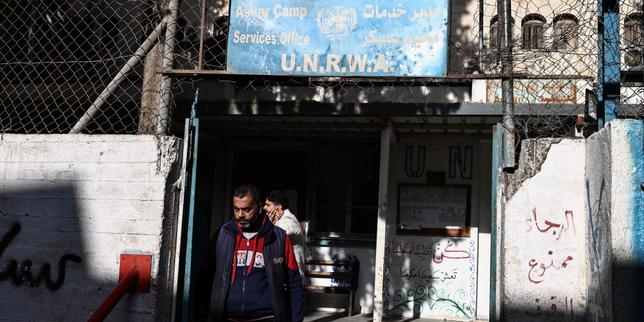
You think you understand the battle over Gaza, but you are likely missing the invisible front line. It is not happening in the tunnels or on the borders. It is happening inside the legislative chambers of Washington and the political offices of Berlin. The United Nations Relief and Works Agency, known to everyone as UNRWA, is facing an unprecedented existential crisis. It is not just a funding crisis. It is a highly coordinated, multi-million-dollar digital and political influence operation systematically designed to dismantle the organization from the outside.
For decades, UNRWA served as the primary life support system for millions of Palestinian refugees. It runs schools. It manages clinics. It distributes food. Yet, over the last few years, the agency has found itself transformed into a political lightning rod. Israel has long argued that the agency perpetuates the refugee issue rather than resolving it. But recently, that argument evolved into something much more aggressive. It became a global influence campaign targeting the nations that hold the agency's purse strings.
The primary targets are clear. Germany and the United States.
If you look closely at how public opinion shifted in these two countries, you see the fingerprints of a sophisticated playbook. It uses targeted social media bots, deep political lobbying, and carefully timed intelligence leaks. The goal is simple. Cut the cash, kill the agency. It almost worked.
Inside the Digital Machinery of Foreign Influence
The methods used to reshape the narrative around UNRWA are a masterclass in modern information warfare. Investigative reports and digital watchdogs like FakeReporter have exposed an intricate network of fake profiles, automated bots, and astroturfed advocacy groups operating across platforms like X, Facebook, and Instagram.
These campaigns do not just broadcast generic propaganda. They target specific individuals.
In the United States, hundreds of fake accounts posing as concerned voters, student activists, and local constituents flooded the feeds of lawmakers. They focused heavily on progressive Democrats and moderate Republicans. The messaging was precisely calibrated to exploit domestic political anxieties. To conservatives, the campaign painted UNRWA as a radical Islamist front funded by American tax dollars. To liberals, the narrative reframed the issue around transparency and human rights, claiming that UNRWA indirectly enabled the oppression of civilians by failing to police its own ranks.
The operation relied on deep cross-platform coordination. A fringe website would publish a poorly sourced blog post alleging a new neutrality violation by an UNRWA teacher. Within minutes, a network of automated accounts would amplify the link, tagging influential journalists and politicians. By the time fact-checkers could look into the claim, the narrative had already hardened. It became a talking point on cable news.
This is not a organic grassroots movement. It is a manufactured perception of widespread public outrage. The strategy aims to make supporting UNRWA a political liability for any Western politician who values their seat.
How Germany and the US Became Ground Zero for Lobbying
Why target Germany and the United States? The answer comes down to basic math. They are the financial backbone of the entire operation.
The United States has historically been the largest single donor to UNRWA, followed closely by Germany. When the Trump administration completely cut off American funding in 2018, Germany stepped up its contributions dramatically, effectively keeping the agency afloat. When the Biden administration restored US funding, the two nations combined accounted for a massive chunk of UNRWA’s annual budget.
If you want to neutralize UNRWA, you have to win in Washington and Berlin.
In Washington, the lobbying efforts have been direct and relentless. Groups like UN Watch and various conservative think tanks have spent years compiling dossiers on UNRWA staff members, tracking their social media posts, and presenting these findings directly to congressional committees. The shockwaves of October 7 provided the ultimate leverage. When Israel alleged that twelve UNRWA employees were directly involved in the attacks, the political response in Washington was instant. Congress quickly passed legislation banning any US funding to UNRWA, a restriction that remains a major hurdle.
In Berlin, the dynamic is different but equally intense. Germany’s complex historical responsibilities mean that any allegation of antisemitism or complicity in terrorism carries immense political weight. The German government faced immense pressure from domestic media outlets and opposition politicians who demanded absolute moral clarity.
For months, German funding hung in the balance. Berlin paused its disbursements to Gaza while demanding rigorous independent investigations. While Germany eventually resumed funding for UNRWA's operations in Jordan, Lebanon, Syria, and the West Bank, the political elite remains deeply fractured over whether to sustain long-term support. The influence campaigns successfully weaponized Germany's deepest political anxieties, forcing a nation that prides itself on principled humanitarianism into a defensive crouch.
Fact Checking the Neutrality War
To get to the bottom of this, we have to separate valid criticism from deliberate disinformation. Does UNRWA have a neutrality problem? Yes. Any organization employing over thirty thousand local staff in a highly volatile conflict zone will face issues with political radicalization and rogue individuals.
But the influence campaigns do not push for reform. They push for total elimination.
Let us look at the actual data versus the political rhetoric.
- The Infiltration Claim: Critics frequently assert that the entire institution is thoroughly compromised by Hamas. However, the independent review led by former French Foreign Minister Catherine Colonna found that UNRWA has established an extensive framework to ensure neutrality. The report noted that while improvements are constantly required, UNRWA’s mechanisms are often far more robust than those of other comparable international aid organizations.
- The Staff Accusations: When allegations surfaced regarding the involvement of staff in the October 7 attacks, UNRWA immediately terminated the contracts of the accused individuals before the formal investigation even concluded. The UN Office of Internal Oversight Services looked into nineteen individuals. In several cases, the evidence provided by Israel was insufficient to support the claims, though a handful of cases resulted in permanent separation due to potential involvement.
- The Textbook Controversy: A major pillar of the influence campaign in Europe focused on UNRWA school curricula, claiming they promote jihad and hatred. In reality, UNRWA uses the textbooks of the host government, meaning Palestinian Authority books in the West Bank and Gaza. UNRWA reviews these materials and adds supplementary guides to address problematic content, though watchdogs argue these measures do not go far enough.
The real mistake Western analysts make is viewing UNRWA as a standard NGO. It isn't. It functions as a proxy state, providing governance, education, and healthcare. If you pull the plug on UNRWA without a viable replacement, you create a catastrophic governance vacuum that inevitably gets filled by more radical actors.
Moving Beyond the Propaganda Noise
If you want to see past the spin and make sense of where this goes next, you need to look at structural realities rather than social media outrage. The current gridlock helps no one, and the humanitarian cost is compounding daily. The path forward requires a shift in how Western donors approach the problem.
First, stop relying on automated digital campaigns or partisan dossiers to dictate foreign policy. Western intelligence agencies in the US and Germany need to independently verify claims regarding neutrality breaches rather than reacting defensively to coordinated public relations pressure.
Second, demand institutional transparency without threatening systemic collapse. Funding should be tied to the strict implementation of the Colonna report's recommendations, particularly regarding the vetting of senior staff and the continuous monitoring of educational facilities.
Finally, recognize the geopolitical reality. There is currently no alternative to UNRWA's logistics network inside Gaza. Neither the World Food Programme nor private contractors possess the warehouses, local staff, or trust required to feed and educate millions of people. Defunding the agency based on an influence campaign does not eliminate the refugee problem; it merely guarantees that the humanitarian fallout will eventually land back on the doorsteps of Western donors.
The battle over UNRWA is a political proxy war. If Washington and Berlin continue to let digital influence operations dictate their humanitarian strategies, they lose their ability to act as credible brokers in the region. It is time to look at the facts on the ground rather than the noise on your screen.