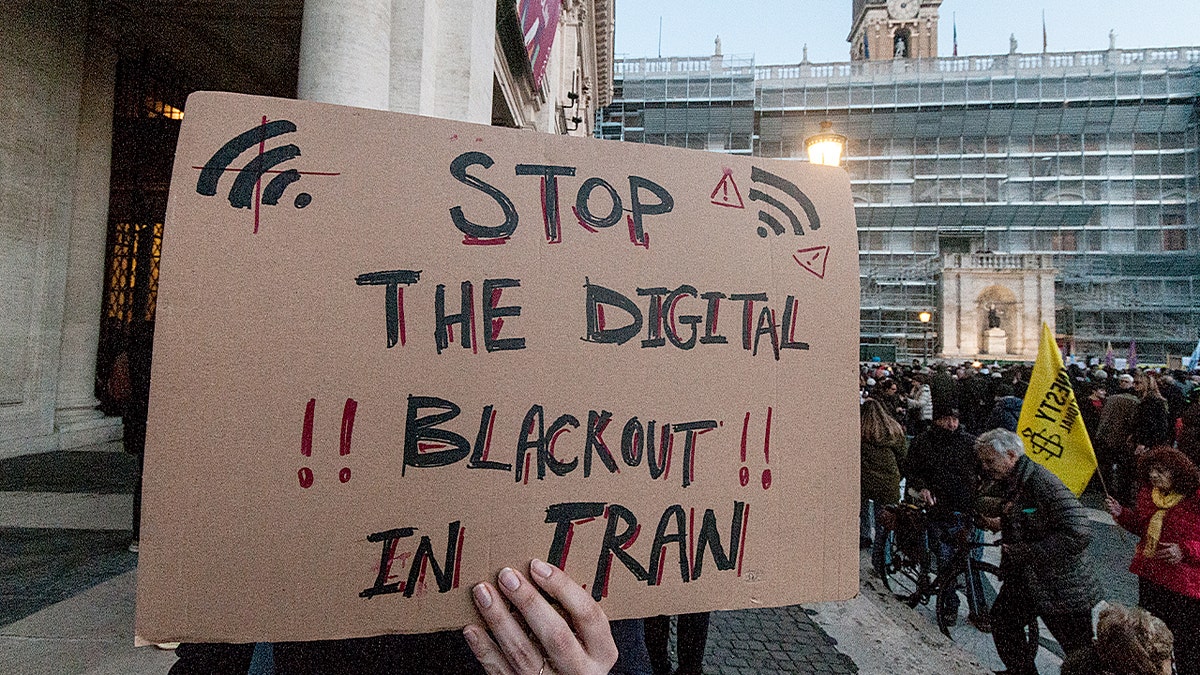
You try to send a simple WhatsApp message to your mother. It fails. You switch to Telegram. Nothing. You toggle your VPN, hoping the latest "bridge" hasn't been burned yet. The loading circle spins indefinitely. This isn't a glitch in your router. It's a deliberate, state-sponsored strangulation of human connection. For millions of people in Iran, the internet isn't a utility. It’s a battlefield.
Living under a digital blackout means your reality is dictated by a kill switch. When protests spark in the streets of Tehran or Mashhad, the first casualty isn't the truth—it's the bandwidth. The Iranian government has mastered the art of the "filternet," a dual-layered system that keeps essential services running on a local intranet while cutting the cord to the global web. You can pay your water bill, but you can't tell the world what's happening outside your window.
The mechanics of a national kill switch
Shutting down the internet for 85 million people isn't as simple as pulling a giant plug. It's more like a sophisticated game of digital whack-a-mole. The infrastructure is centered around the National Information Network (NIN). Think of it as a clean, state-approved sandbox. Inside this sandbox, speeds are fast and prices are low. Once you try to step outside to Google, Instagram, or X, the throttle kicks in.
Government agencies use Deep Packet Inspection (DPI) to look at the data traveling through the cables. They don't just see where you're going; they see what you're doing. If the system detects forbidden keywords or encrypted traffic that looks like a VPN, it kills the connection instantly. It's surgical. During the 2022 protests following the death of Jina Mahsa Amini, the world saw "internet curfews." Every afternoon, as people finished work and headed to the streets, the mobile networks would simply die. Total silence.
These shutdowns cost the Iranian economy billions. Businesses can't process payments. Logistics companies lose track of shipments. Tech startups, once the pride of Tehran’s "Silicon Garden," have seen their best talent flee to Europe or North America. But for the authorities, the price of a broken economy is worth paying if it keeps the lid on dissent. Power always trumps prosperity in the eyes of a nervous regime.
Why your VPN probably won't save you
If you live in the West, you probably use a VPN to watch a different region's Netflix. In Iran, a VPN is a lifeline. But the cat-and-mouse game has become exhausting. The authorities now block the protocols that most commercial VPNs rely on, like OpenVPN or WireGuard.
Users have to find "shadow" proxies or private servers hosted by tech-savvy friends abroad. Even then, the connection is flaky. You spend half your day just trying to get online. It's psychological warfare. By making the internet slow and frustrating, the state hopes you'll eventually give up and stick to the "safe" domestic apps. These domestic apps, like Rubika or Bale, are widely suspected of being surveillance tools. If you use them, you're essentially handing your chat history to the intelligence services.
Most people don't have a choice. If you want to use a ride-sharing app or check your bank account, you have to use the NIN. This creates a digital apartheid. Those with money and technical know-how can occasionally peek through the Iron Curtain. Everyone else is trapped in a curated, monitored bubble.
The myth of the global response
We hear a lot of talk from international tech companies and Western governments about "supporting the Iranian people." Most of it is empty. While the U.S. Treasury has issued licenses to allow tech firms to provide tools to Iranians, the reality on the ground hasn't changed much. Satellite internet, like Starlink, was touted as a savior. But how do you smuggle a bulky dish into a country where the Revolutionary Guard controls the borders? How do you pay for the subscription when your bank is disconnected from the global SWIFT system?
Elon Musk's promises made great headlines, but they didn't put terminals in the hands of the working class in Tabriz. Shipping hardware into a sanctioned country is dangerous and expensive. The few terminals that made it in are mostly used by organized groups, not the general public.
Broadcasting "freedom" from the outside is easy. Building the infrastructure to bypass a total blackout is a logistical nightmare that no one has truly solved yet. The tech giants are also wary. Providing tools that bypass state censorship can lead to their own services being permanently banned or their employees being targeted. It's a risk most shareholders aren't willing to take.
The human cost of the silent screen
Data points don't capture the fear of a blackout. Imagine you're a student. You have an exam tomorrow, but the research papers you need are hosted on a foreign server. You can't reach them. Imagine you're a journalist. You've filmed evidence of security forces firing into a crowd, but you can't upload the video. By the time the internet comes back, the news cycle has moved on. The evidence is stale.
The blackout also hides the scale of violence. During the 2019 "Bloody November" protests, the internet was cut for nearly a week. In that darkness, human rights organizations estimate that hundreds, possibly over a thousand, people were killed. Without real-time video, the world didn't react until it was too late. The silence is a shroud for the graveyard.
Even the simple things hurt. Digital isolation means you can't see your brother's wedding on Zoom. You can't play an online game with friends to escape the stress of a crashing currency. You're stuck in a room with only the state's voice for company. It's a claustrophobic existence that wears down the spirit over years.
Surviving the next shutdown
If you're watching this from the outside, stop thinking of internet freedom as a given. It's a fragile privilege. If you have friends or family in Iran, don't rely on one platform to reach them. Diversify.
- Use decentralized tools: Apps like Briar or Bridgefy use Bluetooth and Wi-Fi mesh networks to send messages when the internet is completely down. They only work over short distances, but they're vital for local coordination.
- Support Snowflake: This is a system by the Tor Project that allows people in censored countries to use your browser's connection as a bridge. It's a simple browser extension that makes a massive difference.
- Stay updated on proxy addresses: If you manage a server, look into hosting a private Shadowsocks or V2Ray proxy. Share the credentials only through secure, private channels.
- Don't stop talking: The goal of a blackout is to make the people feel forgotten. Keep sharing their stories even when the feed goes quiet.
The Iranian digital blackout isn't just an Iranian problem. It's a blueprint. Autocratic regimes around the world are watching Tehran. They're learning how to throttle, how to filter, and how to silence. If they can get away with it there, they'll try it everywhere else. The battle for the internet isn't about faster speeds or better apps. It's about whether we're allowed to speak to each other without a government agent sitting in the middle. Right now, in Iran, the answer is a resounding "no." We shouldn't accept that as the final word.