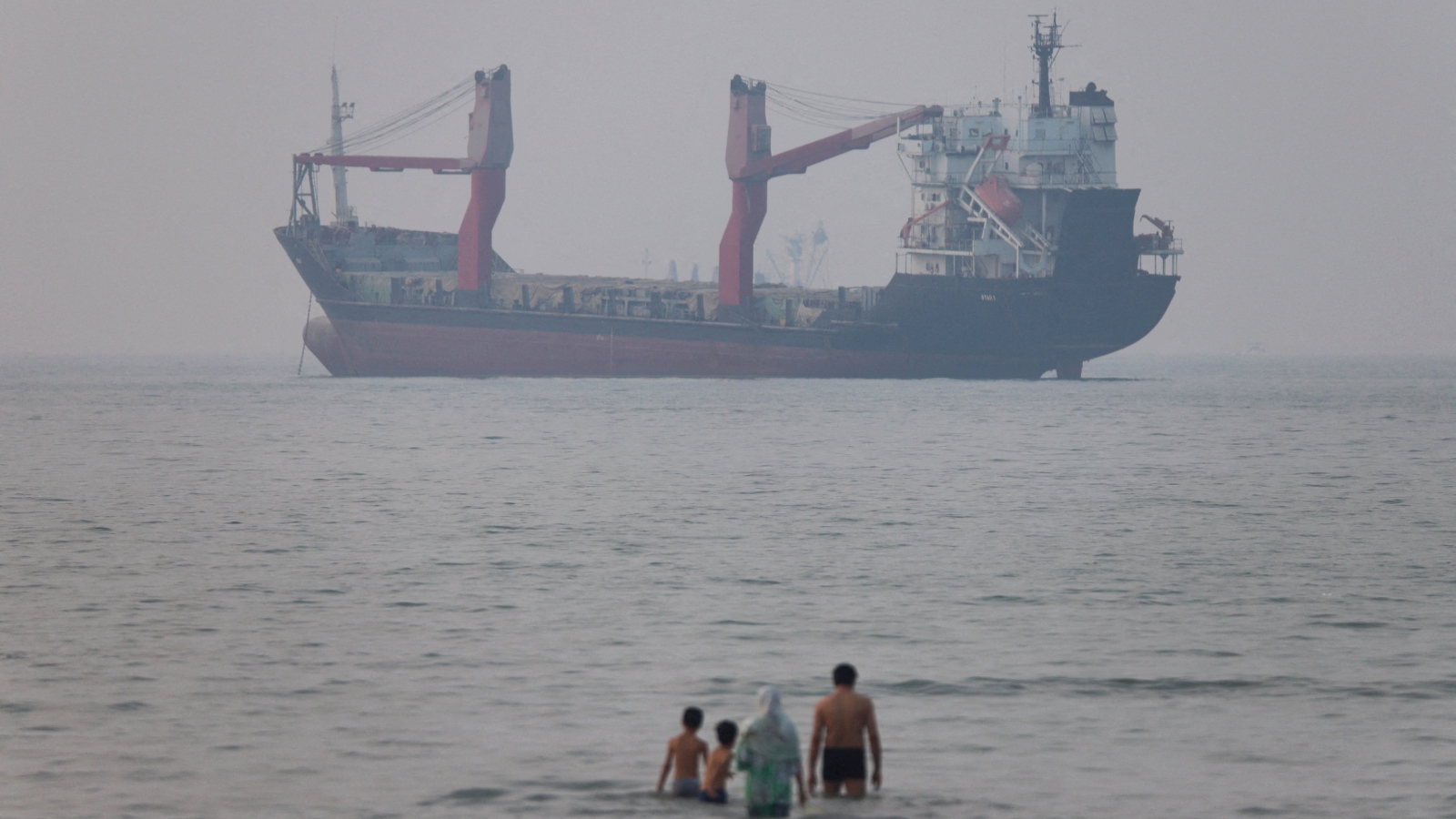
The Strait of Hormuz is the jugular vein of global energy. Right now, Tehran and Muscat are quietly rewriting who gets to control the bleed.
The Islamic Revolutionary Guard Corps announced that Iran and Oman reached a formal revenue-sharing agreement over the critical waterway. If you think this is just standard diplomatic paperwork, you're missing the entire board. This bilateral pact turns a vital geographical chokepoint into a co-managed financial asset, leaving Washington scrambling to respond. Recently making waves recently: The Long Wait Across the Border.
Let's break down what's actually happening behind closed doors, why Oman is taking a massive gamble, and what this means for global oil markets.
The Real Breakdown of the Iran-Oman Arrangement
For roughly a month, officials from Tehran and Muscat held intense, behind-the-scenes negotiations. While foreign ministries initially played down the talks as an "interim framework" for shipping safety, the IRGC dropped the real details through state media. More information on this are covered by The Guardian.
The agreement covers two critical pillars:
- Territorial division: Specific allocations for each country's share of the strait's waters.
- Revenue splitting: A concrete financial structure detailing how Iran and Oman divide earnings generated from transit through the channel.
Hossein Mohebbi, spokesperson for the IRGC, stated clearly that the passage belongs to Iran and Oman. They aren't asking for international permission anymore. They are drawing lines on a map and setting up a joint toll system.
Why Oman Just Picked a Complicated Side
Oman has historically played the role of the ultimate neutral mediator in the Middle East. They are the trusted go-between for Washington and Tehran. So why agree to a joint revenue framework with Iran?
It comes down to survival and pragmatism. By partnering directly with Tehran on the management of the channel, Muscat secures a direct stake in keeping trade flowing safely on its own doorstep. But this strategy puts Oman in a deeply awkward spot with the United States. Washington wants a complete return to pre-war conditions where no regional tolls or restrictions exist. Oman taking a cut of the traffic fees completely shatters that American objective.
Meanwhile, tankers continue to navigate a minefield. Iran recently blacklisted dozens of ships suspected of skirting its blockade via ship-to-ship transfers, proving that Tehran intends to enforce its new rules with an iron fist.
The Washington Obstacle
Don't expect cargo ships to flood through the channel tomorrow. Tehran made its stance unambiguous: the Strait of Hormuz stays shut under any circumstances unless the United States accepts their baseline conditions.
Those conditions aren't small. Iran demands that Washington lift its naval blockade, drop crushing economic sanctions, unfreeze foreign assets, and honor the terms of a memorandum of understanding signed earlier in June. The White House responded by doubling down on economic pressure, rolling out fresh sanctions targeting foreign firms trading in Iranian petroleum.
Washington claims these financial penalties will force Tehran's surrender. Iranian leadership calls it lawlessness and pushes forward with regional alliances anyway.
What This Means for Energy Markets
Global markets hate uncertainty, but they love concrete data points. Brent crude prices dipped recently as traders parsed the news. Even though a full reopening is miles away, the mere existence of a functioning bilateral framework between Iran and Oman signals a shift toward structured containment rather than endless escalation.
If you are tracking energy costs or supply chain vulnerabilities, keep your eyes on Muscat. If Oman manages to operationalize this transit corridor despite American pushback, the playbook for controlling global maritime choke points is changed forever. Watch how European capitals respond to private warnings about service fees
Why the Iran and Oman Strait of Hormuz Revenue Deal Changes Everything
news
Geopolitics rarely moves in a straight line, but every once in a while, a single agreement alters the map. Iran and Oman just struck a deal to share revenues from the Strait of Hormuz. Most mainstream coverage missed the actual mechanics of this pact. They focused on the surface tension, ignoring the deep structural shift happening in Middle Eastern trade routes.
If you trade, ship, or invest in global commodities, this affects your portfolio right now. Let's break down what's actually happening behind closed doors.
The Reality of the Strait of Hormuz
You've heard about the Strait of Hormuz on the evening news for decades. It's a tiny choke point where roughly a fifth of the world's petroleum supply passes daily. Ships creep through narrow waters. Supertankers burn diesel while crews watch the radar screens.
Iran sits on the northern shore. Oman guards the southern approach. For years, tension defined this corridor. Western navies patrolled the shipping lanes. Tehran rattled sabers about closing the passage whenever sanctions bit too hard.
Then came the quiet pivot.
Oman has always played the diplomatic middleman in the Gulf. They talk to everyone. They host secret talks. By partnering with Iran on revenue sharing for transit and logistics in the strait, Oman isn't just cutting a business deal. They're institutionalizing regional cooperation that bypasses Western oversight.
What the Agreement Actually Means
Stop listening to pundits who call this a sudden alliance. It's pragmatic economics driven by necessity. Iran needs cash flow that dodges rigid international banking controls. Oman wants to solidify its position as the premier maritime logistics hub outside the immediate Persian Gulf basin.
Under the framework, joint revenue collection mechanisms are being established for specific commercial services, port handling fees, and security coordination zones near Musandam and Bandar Abbas.
- Financial routing: Transactions are shifting toward bilateral currencies and non-dollar frameworks.
- Logistics integration: Omani ports like Duqm are linking directly with Iranian supply chains.
- Security handover: Local maritime actors are taking charge of policing regional traffic, squeezing out distant foreign fleets.
This isn't charity. It's a calculated move to monetize one of the busiest maritime highways on earth without asking Washington or London for permission.
Why Traditional Analysis Fails
Most analysts look at this through a purely military lens. They ask if Iran can shut down oil tankers tomorrow. That's the wrong question. The real story is financial sovereignty.
When regional powers build their own revenue-sharing models for critical infrastructure, they chip away at the post-World War II financial architecture. Insurance syndicates in London and clearing houses in New York lose their monopoly leverage.
I've watched maritime supply chains shift over the last decade, and the trend is clear. Nations bordering critical straits are tired of absorbing the economic risk while Western financial institutions pocket the transaction fees and dictate the rules.
If you own shipping stocks or rely on petrochemical imports, your risk assessment models are outdated. You have to account for localized maritime tolls, alternative insurance pools, and shifting regulatory compliance.
The Broader Economic Ripple Effects
Energy markets hate uncertainty. Yet, counterintuitively, formalized regional agreements often stabilize physical flows even as they alienate outside powers. By giving both Tehran and Muscat a direct financial stake in the smooth, uninterrupted flow of commercial traffic, the incentive structure flips.
Revenues depend on volume. If ships don't move, nobody gets paid.
Oman's diplomatic genius lies in creating structures that make conflict unprofitable for all parties involved. Iran gets a functional economic valve release. Traders get a predictable tariff schedule negotiated regionally rather than imposed unilaterally.
Take a look at how regional bunkering services are pricing fuel. You'll notice Omani ports capturing a larger share of maritime refueling contracts from traditional hubs like Fujairah. That's not an accident. It's the direct commercial output of this new geopolitical alignment.
Adapting to the New Maritime Order
You can't wish these changes away. Global trade is fracturing into regional blocks, and maritime choke points are ground zero for this evolution.
Start auditing your supply chain exposure today. Check your maritime insurance policies for clauses related to regional transit fees administered by non-traditional authorities. Monitor the Omani rial and bilateral trade volumes between Muscat and Tehran as primary indicators of how fast this revenue-sharing model scales.
The old rules of Gulf logistics are gone. Pay attention to the balance sheets, ignore the political theater, and adjust your strategy before the market forces your hand.