The standard Washington talking point runs on pure comfort. Open any foreign policy journal, and you will read the same comforting lullaby: Iran cannot sustain a protracted conflict because its economy is brittle, its currency is collapsing, and its people are one spark away from torching the regime.
It is a neat narrative. It is also entirely detached from reality.
I have spent the better part of two decades watching western analysts misread asymmetric adversaries through the lens of spreadsheet economics. They look at inflation rates and sanctions waivers, and they conclude that a nation under pressure must inevitably fold. That is not analysis; that is wishful thinking disguised as strategy.
Iran is not built like a western liberal democracy, nor is it functioning like a traditional centralized state that panics when the quarterly ledger hits the red. What policy planners miss is that the Iranian state apparatus was engineered precisely for scarcity. They do not manage a modern consumer economy; they manage a garrison state. And a garrison state does not bleed out in a forever war—it adapts, hardens, and turns the endurance of pain into a weapon of mass attrition.
The Economics of Permanent Siege
Listen to the consensus: sanctions are starving Tehran of the cash it needs to project power. The Rial is a punchline. Youth unemployment is staggering.
Now look at what is actually happening on the ground.
When you isolate an economy for forty years, you do not destroy it; you force it to build an immune system. Tehran stopped trying to integrate into the global financial architecture a generation ago. Instead, they built parallel trade corridors through Iraq, Syria, Lebanon, Yemen, and the Caspian basin. They run shadow fleets of dark tankers that move crude to non-aligned buyers across Asia with chilling efficiency.
Western think tanks love to calculate GDP losses as if Tehran cares about consumer purchasing power. They do not. The clerical establishment and the Islamic Revolutionary Guard Corps do not fund their proxy network by taxing local bakers or tech startups. They operate a sprawling, semi-autonomous corporate empire that controls vast swaths of domestic industry, smuggling rings, and energy infrastructure, entirely insulated from conventional banking oversight.
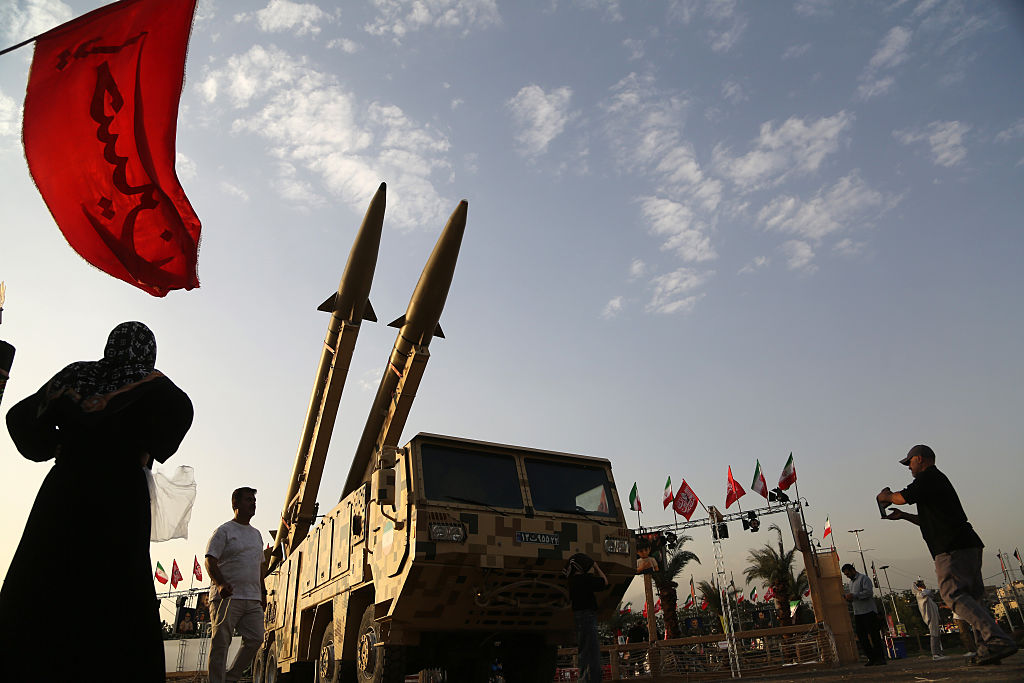
When you measure a state by how well its citizens can buy imported luxury goods, you miss how effectively its military wing can fund a drone factory in Isfahan using local currency and domestic supply chains. The inputs for modern asymmetric warfare are cheap, and Iran produces them at scale, locally. They do not need a strong currency to build a delta-wing loitering munition. They need steel, basic electronics, and cheap fuel—all of which they have in abundance.
The Geography of Asymmetric Endurance
Strategic depth is not a buzzword; it is a physical reality that western interventionists consistently underestimate.
Look at a map without western blinders. Iran is a fortress wrapped in a mountainous rim, sitting astride the throat of global energy transit. For decades, western strategy relied on forward-deployed bases across the Persian Gulf to project overwhelming conventional dominance.
Here is the dirty secret of modern defense economics: asymmetric defense is absurdly cheap, while conventional power projection is ruinously expensive.
When you spend millions of dollars on an interceptor missile to knock down a cheap propulsion-driven drone, you are losing the math problem every single second of the engagement. Tehran knows this. Their entire military doctrine is built on making the cost of engagement so punishingly high for the adversary that third parties eventually pack up and go home.
They do not need to defeat a carrier strike group in a blue-water naval battle. They just need to make the risk of remaining in the Persian Gulf politically and economically untenable for Washington's allies. A forever war on their doorstep is home turf for them. For everyone else, it is a slow-bleeding drain on political capital and treasury reserves.
The Myth of the Imminent Revolution
Every time protests ripple through Tehran or Shiraz, western television networks dust off the same tired script about the twilight of the regime. Commentators start measuring drapes and predicting an imminent popular uprising.
This is amateur hour.
Revolutions require more than anger; they require an alternative power center, a fractured security apparatus, and a population that believes a new order can protect them. None of those conditions exist in Iran today. The security state—centered on the IRGC and the Basij—is deeply entrenched, heavily weaponized, and structurally incentivized to crush dissent ruthlessly. They understand that if the regime falls, the ruling elite faces summary annihilation. That concentrates the mind wonderfully.
More importantly, decades of western pressure have fostered a bunker mentality where even reform-minded citizens often rally around the flag when external threats loom. You cannot bomb a population into democratic alignment, and you certainly cannot starve them into loving free markets. External aggression acts as the ultimate glue for a fractured domestic polity. It validates every paranoia the hardliners have preached since 1979.
The Real Danger of the Consensus Trap
The most dangerous delusion in international relations is the belief that time is automatically on the side of the status quo.
Washington assumes that if it just keeps the economic pressure dial turned to maximum, Tehran will eventually crack, capitulate, and negotiate away its regional network. This is a fairy tale. While western administrations cycle through every four-year election cycle with shifting priorities and fading attention spans, Tehran plays an infinite game. Their timeline is measured in generations, not legislative terms.
If we continue to view Iran through the distorted mirror of conventional statecraft, we will keep sleepwalking into strategic dead ends. The sooner we admit that their tolerance for pain vastly outstrips our appetite for sustained commitment, the sooner we can stop pretending that the next round of sanctions will finally break them.
They are not surviving the forever war. They are winning it by attrition.
Stop waiting for the regime to collapse. It is time to deal with the adversary that actually exists, not the one sketched out in optimistic policy briefs.