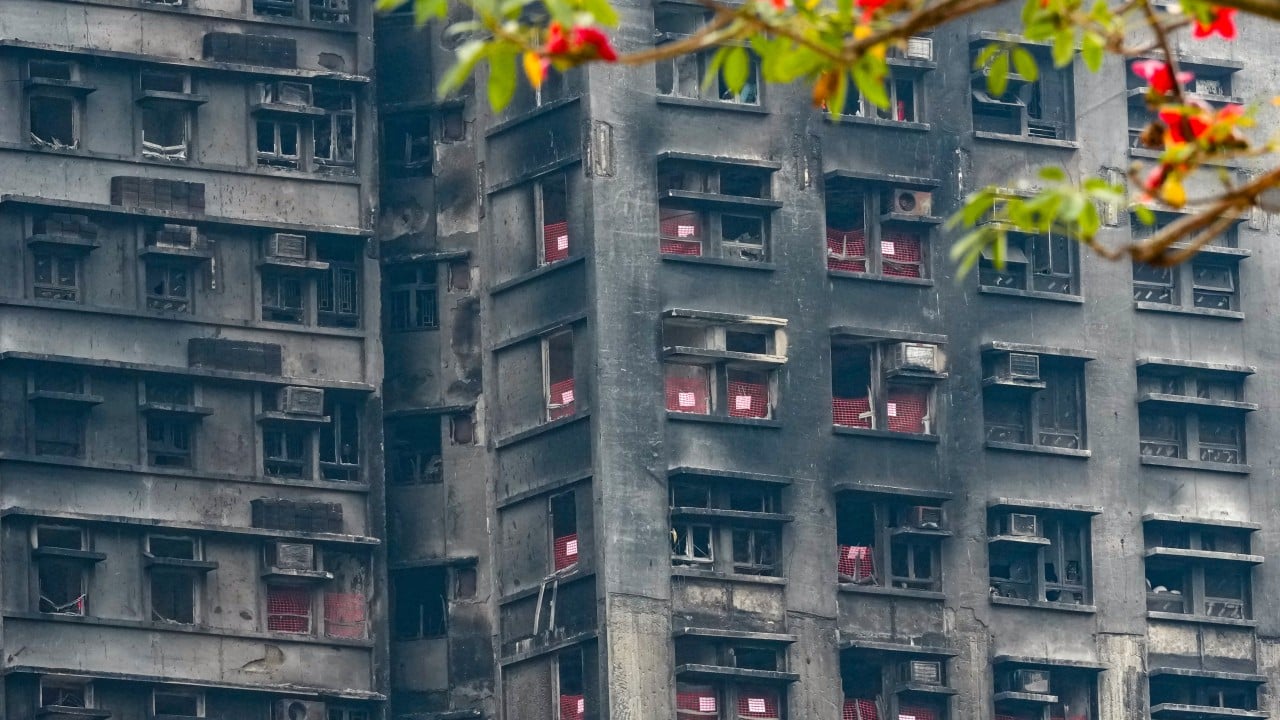
The bureaucratic wall surrounding Wang Fuk Court has finally reached a breaking point. For months, residents of the Tai Po housing estate have sought a simple exercise of their statutory rights—the convening of an Owners' Corporation (OC) meeting. They have been met with a masterclass in administrative stonewalling. Recent leaked correspondence confirms that the estate’s administrator has officially rejected the request from owners to hold an Extraordinary General Meeting (EGM), citing technicalities that many legal experts argue hold little water under the Building Management Ordinance.
This is not just a localized dispute over a meeting date. It is a symptom of a systemic power imbalance in Hong Kong’s private housing management. When an administrator, paid for by the owners' fees, uses those very fees to fund a legal defense against the owners’ wishes, the spirit of the law has been inverted. The residents of Wang Fuk Court are now finding out that owning a flat does not necessarily mean owning the right to decide how the building is run. If you enjoyed this post, you might want to check out: this related article.
The Strategy of Denial
The rejection hinges on a narrow interpretation of the 5% threshold required to trigger an EGM. In most residential developments, if 5% of the shares come together, the chairman of the management committee is legally obligated to call a meeting within 14 days and hold it within 45. However, at Wang Fuk Court, the administrator has pointed to alleged discrepancies in signatures and the validity of proxy designations to dismiss the petition entirely.
This is a classic gatekeeping maneuver. By challenging the "form" of the request rather than the substance, management companies can delay accountability for years. Every week of delay is another week where the status quo remains unchallenged, and where controversial contracts or maintenance schedules can be pushed through without the oversight of the general body of owners. For another look on this development, check out the recent update from Al Jazeera.
The email at the center of this firestorm reveals a cold, clinical dismissal of the residents' petition. It does not offer a path toward a valid meeting. It simply shuts the door. For the hundreds of families living in the estate, this is an affront to their financial stake in the property. They are being told, in no uncertain terms, that their signatures are not good enough.
Money and Management Under the Surface
To understand why a management body would fight so hard to avoid a meeting, one must look at the ledger. Major works projects are often the catalyst for these tensions. When millions of dollars in renovation or maintenance contracts are on the line, the power to select contractors and approve budgets is the ultimate prize.
At Wang Fuk Court, rumors of upcoming large-scale expenditures have circulated for months. Residents fear that without an EGM, they will be handed a massive bill for projects they never voted on. This is where the "why" becomes clear. An EGM represents a threat to the administrative monopoly on financial decision-making. If the owners can meet, they can vote. If they can vote, they can replace the management committee or the administrator itself.
The administrator's rejection isn't just about a meeting; it’s about survival. By blocking the EGM, the current leadership buys time to finalize contracts that may become legally binding before the owners ever get to sit in a room together. This is a race against the clock, and currently, the bureaucracy is winning.
The Legal Grey Zone of the Building Management Ordinance
The Building Management Ordinance (BMO) was designed to empower owners, but it is riddled with loopholes that a savvy administrator can exploit. Specifically, Section 18 and Schedule 3 provide the framework for meetings, yet they offer no immediate penalty for an administrator who refuses to comply.
The only recourse for the Wang Fuk residents is the Lands Tribunal. This is a costly, slow, and exhausting process. It requires hiring lawyers and spending months in a legal queue while the very issues the owners want to discuss continue to fester. The system assumes that all parties will act in good faith. When that faith is broken, the BMO offers more questions than answers.
Consider the "deadlock" scenario. If an administrator refuses to recognize a petition, the owners must prove the signatures are valid in a court of law. This shifts the burden of proof onto the residents, who do not have access to the official shareholder rolls that the management office keeps under lock and key. It is a circular trap. You need the records to prove your petition is valid, but you can only get the records if the management office—the party you are challenging—decides to give them to you.
A Growing Trend of Residential Insurgency
Wang Fuk Court is not an isolated incident. Across the New Territories, we are seeing a rise in "owner activism." This isn't about politics in the traditional sense; it’s about the politics of the pocketbook. People are tired of seeing their management fees rise while the quality of service stagnates and their voices are ignored.
The tactic of rejecting EGM requests is becoming the standard "playbook" for embattled management committees. They use the estate’s own funds to hire expensive law firms to draft these rejection letters. Effectively, the owners are paying for the bullets being fired at their own democratic rights. It is a perverse financial loop that has left many feeling helpless.
The Architecture of Accountability
If we want to fix this, the conversation has to move beyond the specifics of one email in Tai Po. The Home Affairs Department (HAD) often acts as a mediator in these disputes, but their powers are largely advisory. They can attend meetings and offer "suggestions," but they cannot compel an administrator to follow the law. They are a paper tiger in a jungle of high-stakes real estate management.
Real change requires a mechanism where a refusal to hold a meeting based on a valid petition results in an automatic, daily fine for the management company. Without a financial sting, there is no incentive for these administrators to cooperate. They will continue to hide behind "procedural irregularities" until the owners simply give up out of exhaustion.
The residents of Wang Fuk Court have indicated they will not go quietly. They are currently organizing a second petition, one designed to be "bulletproof" against the administrator’s previous objections. They are double-checking every signature against land search records at their own expense. This is the level of effort required just to have a conversation in your own building.
The Price of Silence
The standoff at Wang Fuk Court serves as a warning to every property owner in Hong Kong. Your deed is only as strong as your ability to exercise the rights attached to it. When an administrator can unilaterally decide that 5% of the owners do not have a voice, the concept of private ownership begins to erode.
The next few weeks will be telling. If the administrator rejects the second petition, the matter will almost certainly head to the Lands Tribunal. This will turn a dispute over a meeting into a full-scale legal war. It is a war that the owners did not start, but it is one they cannot afford to lose. The transparency of the estate's finances and the integrity of its future maintenance depend entirely on whether that meeting room door is finally unlocked.
Owners must stop viewing management fees as a passive tax and start seeing them as a subscription to a service that must be held to account. The administrator works for the owners, not the other way around. Until that fundamental power dynamic is restored, the emails of rejection will keep coming, and the residents will continue to pay for their own exclusion.
The immediate next step for any resident facing this level of obstruction is to bypass the internal management office and file a direct complaint with the HAD while simultaneously seeking a pro-bono review of their petition by a licensed surveyor or a lawyer specializing in property law. You cannot win a game where the opponent also acts as the referee. You have to change the field of play.