Every time a tech titan’s name gets dragged into the rumor mill regarding an English Premier League club, the financial press loses its mind. Social media floods with mock-ups of crimson jerseys bearing Prime branding, and analysts start running spreadsheets on global merchandising pipelines. The lazy consensus is simple and seductive: drop a multi-billionaire tech founder into a historic football club, open the firehose of capital, and watch trophies follow automatically.
It is a fairy tale for people who understand neither modern football economics nor the operational reality of running a multi-club ecosystem.
Jeff Bezos acquiring a stake in Liverpool Football Club sounds like a masterstroke on paper. In reality, it would trigger a structural mismatch so violent it could break the club's unique cultural operating model.
Let's dismantle the fantasy right now.
The Silicon Valley Myth of Infinite Scaling
For the past decade, financial commentators have treated football clubs like software startups waiting for an aggressive growth sprint. The premise goes that traditional clubs are poorly managed lifestyle assets run by parochial executives who leave money on the table. Bring in the creator of Amazon, inject customer-obsessed logistics, optimize the global funnel, and scale revenues upward.
I have spent the last fifteen years advising private equity funds and sovereign wealth entities on sports acquisitions. I have watched boards burn millions trying to apply SaaS metrics to a Saturday afternoon tribal ritual.
Football is not a platform business. It does not scale according to standard network effects.
When you add a user to AWS, your marginal cost drops. When you add a fan to Liverpool, your marginal cost of maintaining competitive excellence skyrockets. Player wages are tied to finite, hyper-inflated talent pools. You cannot code your way around a hamstring tear in the 89th minute at Goodison Park.
If Bezos were to buy a substantial stake, the immediate expectation from the fan base would be an unprecedented transfer spending spree. But Amazon's entire corporate DNA is built on ruthless cost efficiency, ruthless process optimization, and a bottom-line obsession with margins. Do you genuinely believe the man who optimized every fulfillment center to shave off fractions of a cent is going to casually authorize a nine-figure bid for a rotational midfielder based on pure gut feeling?
Corporate efficiency is the exact opposite of what wins football matches. Winning requires calculated, high-variance gambling.
The Fenway Sports Group Blueprint Cannot Be Rewritten by an Algorithm
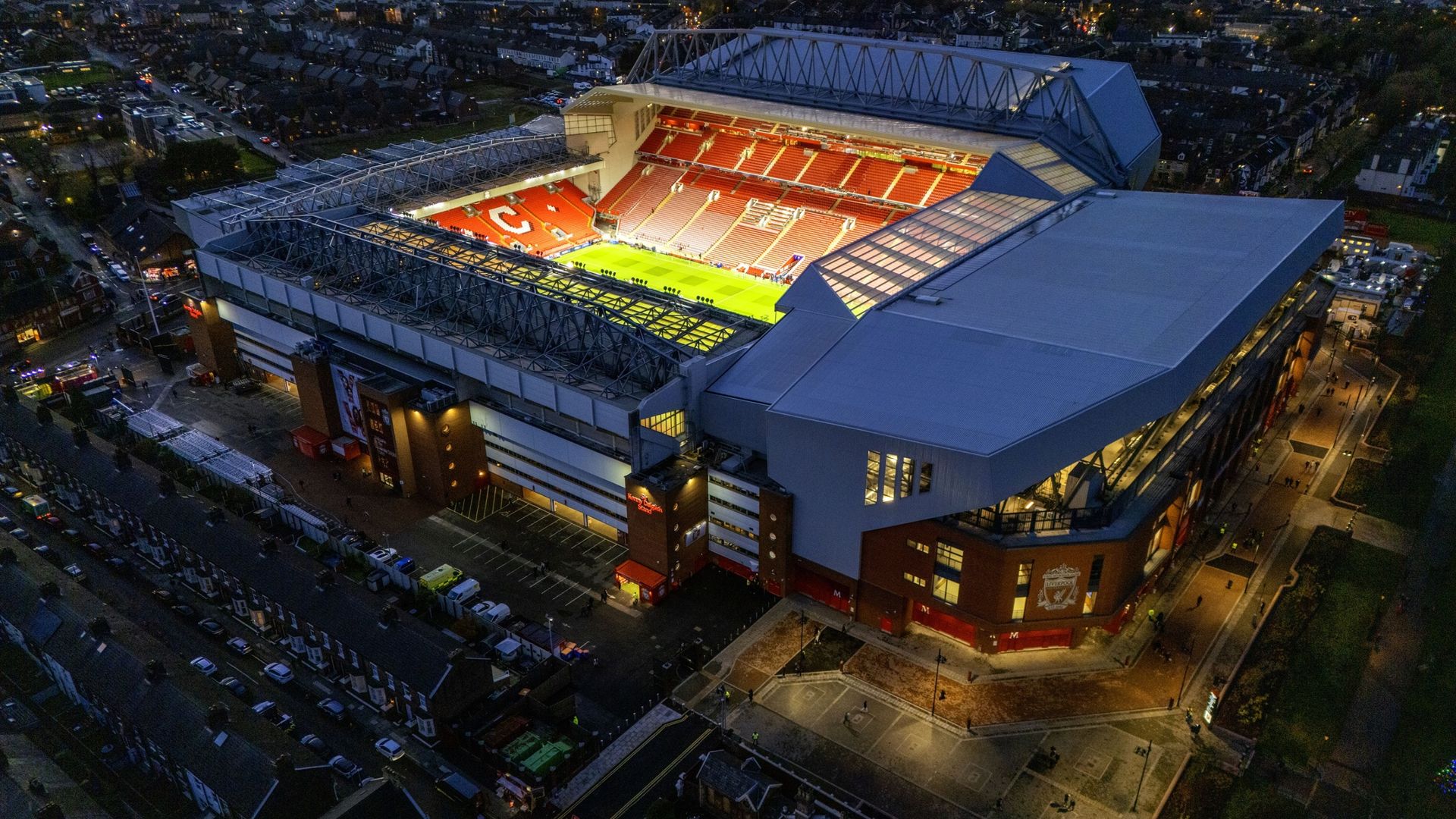
Fenway Sports Group understands this friction better than almost any ownership group in professional sports. They took over a broken Liverpool in 2010 and built a sustainable machine using data-driven recruitment, self-funding infrastructure upgrades, and strict wage-to-revenue discipline. They turned Anfield into a modern commercial engine without mortgaging the club's future to state-backed sugar daddies.
Critics call FSG cheap. They label them conservative. That is the perspective of a casual observer who only tracks net spend in the summer transfer window.
FSG's approach is actually a masterclass in risk mitigation. They treat Liverpool as an independent, self-sustaining ecosystem. The moment you introduce an owner with infinite personal capital who wants to disrupt the ecosystem through direct cash injections, you destroy the internal financial discipline that keeps the club compliant with UEFA regulations and Premier League Profit and Sustainability Rules.
Sure, the Premier League's financial controls are shifting toward squad cost ratios, capping spending as a percentage of club revenues. Under these rules, a billionaire writing personal checks to bypass revenue generation is legally handcuffed anyway. Bezos's wealth becomes a glorified paperweight under modern regulatory frameworks.
You cannot outspend your way past the rules anymore. You have to out-smart, out-scout, and out-develop. And on those metrics, FSG's institutional knowledge vastly outstrips anything an e-commerce giant's corporate playbook can offer.
The Cultural Collision Course
Football clubs are not warehouses. They are civic institutions held in trust by the communities that bleed for them.
Imagine a scenario where the club's front-of-shirt sponsor becomes an aggressive corporate logistics banner, where ticket prices are dynamically optimized based on real-time demand surges, and where the historic traditions of the Kop are treated as friction points in a customer journey map.
The backlash would make the European Super League protests look like a polite garden party.
Liverpool operates on a razor-thin emotional margin. The connection between the supporters and the pitch is direct, visceral, and historically rooted in working-class defiance against corporate extraction. Introducing the world's most recognizable symbol of late-stage digital capitalism into that dynamic is an invitation to civil war.
Even worse is the multi-club ownership trap. Bezos has zero historical footprint in European football administration. Entering the ecosystem via a minority or controlling stake in Liverpool means stepping straight into the political meat grinder of the FA, UEFA, FIFA, and the independent football regulator. This is a sphere where relationships, political maneuvering, and historical alliances matter far more than API integrations or supply chain logistics.
The Real Question We Should Be Asking
Instead of asking whether Bezos can afford Liverpool, the financial media should be asking a much harder question: why are modern football clubs becoming entirely unviable for anyone who isn't a nation-state or a multi-club conglomerate?
The truth is that the valuation of elite Premier League clubs has detached from rational economic return. At a valuation pushing past four or five billion pounds, the capital outlay required to buy a controlling stake yields a meager return on investment if you rely solely on broadcast rights, matchday revenue, and commercial partnerships.
The only people buying these assets now are either looking for geopolitical soft power or attempting to build interconnected global portfolios of players across five continents. Liverpool does not fit neatly into a multi-club assembly line. It is too big, too proud, and too idiosyncratic to be a feeder team or a brand synergy experiment for a tech conglomerate.
If you want a tech billionaire to run your football club, be careful what you wish for. You might get the efficiency, the corporate sanitized stadiums, and the algorithmic scouting reports. But you will lose the soul that makes the ball hitting the back of the net worth caring about in the first place.
Leave the logistics to the warehouses. Leave the football to the people who understand that chaos and passion cannot be optimized.