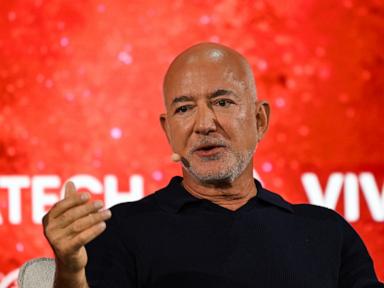
Amazon is bringing its satellite internet service, newly rebranded as Amazon Leo, to South Africa by 2027. By partnering with local internet provider Herotel, Jeff Bezos has managed to secure a clear path into Africa's most advanced economy, leaving Elon Musk's Starlink stuck on the outside looking in. It is a stunning commercial maneuver. Musk was born in Pretoria, yet his own satellite constellation remains dark across South African territory while thriving in nearly two dozen other African nations.
The contrast between the two operations is stark. Musk chose to turn a regulatory compliance issue into a loud, public ideological battle. Bezos, on the other hand, treated South Africa's complex black-ownership requirements as a systems engineering problem to be solved through corporate architecture. By bypassing the regulatory bottleneck entirely, Amazon has managed to secure first-mover advantage in a critical, untapped market. For a closer look into similar topics, we suggest: this related article.
A Masterclass in Regulatory Engineering
South Africa's telecommunications sector is governed by strict rules designed to redress the systemic economic inequalities left behind by apartheid. Under the Independent Communications Authority of South Africa (Icasa), any company seeking an electronic communications service license must be at least 30% owned by historically disadvantaged groups.
For years, this rule has been an absolute brick wall for Starlink. SpaceX operates as a tightly controlled, highly centralized entity that resists surrendering local equity. Musk has publicly railed against the policy, calling the requirements racially discriminatory and choosing to wait for the South African government to blink. He assumed his technological superiority would force their hand. For further background on this topic, in-depth coverage can be read at Engadget.
He was wrong. The government did not blink.
Amazon observed this stalemate and executed a brilliant end-run. Instead of applying for its own Icasa license and attempting to navigate the equity-transfer minefield, Amazon chose not to hold a license at all.
The company signed a distribution agreement with Herotel, an established local player that already holds the necessary telecommunications licenses and fully complies with the 30% local ownership threshold. Herotel will package and distribute the satellite broadband under a newly created brand called evry.
Amazon Leo global business head Trevor Vieweg confirmed the strategy directly, stating that Herotel would hold the licenses in this agreement. Amazon is simply selling the capacity to a licensed local conduit. No equity was ceded. No political public relations campaigns were launched.
The Standout Standoff
The irony of Musk being locked out of his home country is not lost on local industry observers. Starlink is a highly successful product with more than 10,000 satellites currently in orbit. It is reliable, fast, and already functional across much of the southern African region. Yet, in South Africa, thousands of consumers have had to resort to importing Starlink kits registered in neighboring countries like Mozambique or Rwanda, operating them via roaming workarounds that Icasa has repeatedly threatened to shut down.
Musk’s approach has been stubborn. He has used his social media platform to accuse the ruling African National Congress of actively blocking his service. This combative stance has alienated regulators and policymakers who might otherwise have searched for a compromise.
Amazon's entry proves that the regulations were never a barrier to entry; they were simply a set of operational parameters. The South African government was so pleased with Amazon’s cooperative approach that Communications Minister Solly Malatsi actively stood alongside executives from Amazon and Herotel to announce the deal.
This is a massive political win for a government under pressure to bridge the digital divide without abandoning its transformation goals. It demonstrates that international tech giants can work within the country's legislative frameworks if they are willing to utilize local partnerships rather than demanding special treatment.
Inside the Corporate Web
To understand how deep this deal runs, one has to look closely at the corporate connections. Herotel is owned by Maziv, a major fiber infrastructure group in South Africa.
In a telling twist, Vodacom—the country's largest mobile network operator—recently finalized a transaction to acquire a 30% stake in Maziv. This means Amazon's satellite play is deeply integrated into the country's existing telecommunications royalty.
+--------------------------------------------------+
|                   Amazon Leo                     |
+--------------------------------------------------+
                         |
                         v (Distribution Agreement)
+--------------------------------------------------+
|               Herotel / evry                     |
+--------------------------------------------------+
                         |
                         v (Subsidiary of)
+--------------------------------------------------+
|                   Maziv                          |
+--------------------------------------------------+
                         ^
                         | (30% Equity Stake)
+--------------------------------------------------+
|                  Vodacom                         |
+--------------------------------------------------+
This structural web provides Amazon with a massive advantage. Mobile operators like Vodacom do not see Amazon Leo as an existential threat to their terrestrial networks. Instead, they see it as an extension of their footprint.
Vodacom can use Amazon’s low-Earth orbit satellites to connect remote cellular towers where laying physical fiber is economically impossible. It is a highly effective partnership.
The commercial architecture ensures that instead of fighting the local telecom giants, Amazon is enabling them.
The Infrastructure Deficit
Despite the brilliant corporate strategy, Amazon is still playing a massive game of catch-up in space.
By mid-2026, Amazon Leo had only around 390 operational satellites in orbit. Starlink has a head start of several years and thousands of satellites.
Amazon’s planned constellation requires more than 3,000 satellites to achieve true global coverage, and its commercial launch in South Africa is slated for 2027.
| Feature | Amazon Leo (evry) | SpaceX Starlink |
|---|---|---|
| Satellites in Orbit (2026) | ~390 | 10,000+ |
| South African Launch Date | 2027 (Planned) | Indefinitely Blocked |
| Regulatory Strategy | Partner-led (Herotel) | Direct Licensing (Stalled) |
| Local Presence | Fully Compliant via Partner | Non-compliant |
| Target Speeds | Up to 400Mbps (Res.) / 1Gbps (Biz) | ~100–220Mbps (Standard) |
A lot can go wrong in space logistics between now and 2027. Satellite deployment schedules are notoriously vulnerable to rocket availability, technical glitches, and supply chain bottlenecks.
Starlink’s technology is active, tested, and proven worldwide. Amazon Leo is still, to a large extent, a promise. But in business, a promised service that complies with local laws will always beat an active service that is legally barred from operating.
The Illusion of Ownership
There is a final, cynical angle to this victory. The local ownership rules were designed to ensure that South Africans, particularly those from marginalized backgrounds, own a piece of the incoming digital economy.
By routing its operations through Herotel, Amazon has successfully avoided giving up a single share of its actual global satellite business to local investors. The 30% black-ownership requirement is met only at the local distribution level.
This raises an uncomfortable question for South African policymakers. Have the rules actually achieved true economic transformation, or have they simply created a highly profitable middleman industry?
By forcing foreign satellite operators to channel their services through domestic licensed entities, the government has guarded the turnstile but allowed the core technology, assets, and global profits to remain firmly in Seattle. Amazon’s compliance is clever, but it highlights how easily modern multinational firms can navigate protective national laws without yielding any real structural power.
For Starlink, the message is clear. Musk's refusal to play the game has not protected his corporate sovereignty; it has simply handed his birth market to his fiercest rival on a silver platter.