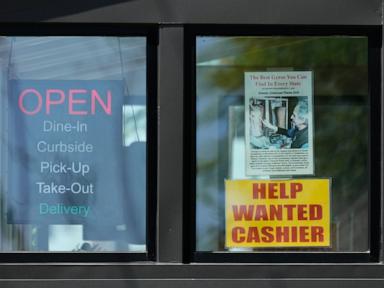
The financial press is asleep at the wheel again. The latest weekly jobless claims ticked up to 215,000, and right on cue, the mainstream economic chorus chimed in with its favorite comforting refrain: "Layoffs remain historically low, so the labor market is fundamentally strong."
It is a comforting narrative. It is also completely wrong. Also making news lately: The Anatomy of Algorithmic Extraction: A Brutal Breakdown of FIFA World Cup Ticketing.
Measuring the health of the modern American workforce by looking at initial jobless claims is like measuring the structural integrity of a house by looking at whether the roof has caved in yet. By the time a company resorts to mass, reportable layoffs that trigger a spike in state unemployment offices, the real damage has already been done.
The obsession with 215,000 jobless claims misses the tectonic shift happening inside corporate America. Companies are not laying people off en masse because they have discovered a far more insidious, cost-effective way to trim the fat without ever triggering a headline: quiet cutting. More details into this topic are explored by Investopedia.
The Death of the Mass Layoff and the Rise of Quiet Cutting
For decades, the corporate playbook for an economic slowdown was simple. You hired an expensive consulting firm, drew up a list of redundancies, and handed out pink slips on a Tuesday morning. The Department of Labor picked up the data point, the media reported a spike in jobless claims, and everyone adjusted their macroeconomic models accordingly.
That playbook is dead.
Today’s executive suite knows that public mass layoffs damage brand equity, crush internal morale, and tank stock prices in volatile markets. Instead of laying people off, they are squeezing them out.
Take a look at the widespread return-to-office (RTO) mandates of the past 24 months. Publicly, CEOs claim these mandates are about "collaboration" and "fostering corporate culture." Privately, any seasoned operations executive will tell you it is an attrition strategy. When a tech giant or a major financial institution mandates a hard five-day-a-week in-office policy—knowing that 20% of their workforce relocated during the pandemic—they are banking on voluntary resignations.
When an employee quits because they cannot or will not comply with a sudden geographic mandate, they do not show up in the weekly initial jobless claims. They do not qualify for unemployment insurance in most states because they left voluntarily. They simply vanish from the payroll, saving the company severance costs while keeping the headline-grabbing layoff numbers artificially low.
I have sat in boardrooms where this exact strategy was modeled out on spreadsheets. We called it "stealth restructuring." You do not fire people; you make their working conditions just difficult or uncertain enough that they choose to leave on their own accord. The mainstream media looks at the 215,000 jobless claims and prints a victory lap for the economy, completely blind to the fact that thousands of workers are being pushed out the back door.
The Premise of Jobless Claims Is Structurally Flawed
To understand why the consensus view is dangerous, you have to dismantle how initial jobless claims are actually counted.
To file an initial claim, an individual must have been laid off from a traditional W-2 position through no fault of their own. This metric completely ignores the massive structural shift toward the alternative workforce over the last decade.
Consider the gig economy, independent contractors, and fractional consultants. According to data from MBO Partners, the number of independent workers in the US has surged to over 60 million. When a company slashes its budget for freelance software developers, independent marketing consultants, or contract data analysts, those individuals do not file for traditional unemployment benefits. They cannot. Their contracts are simply not renewed.
Imagine a scenario where a mid-sized enterprise cuts its external contractor budget by 40%. On paper, that company has executed zero layoffs. Its internal HR headcount remains perfectly stable. The weekly Department of Labor report shows zero new claims from that organization. Yet, in reality, dozens of households have just lost their primary source of income.
By relying on jobless claims as proof of a resilient labor market, economists are using a 20th-century metric to evaluate a 21st-century workforce. They are celebrating low numbers in a building where the foundation is quietly eroding.
The Hidden Cost of the Silent Squeeze
The lack of spikes in jobless claims is actually a symptom of a highly dysfunctional labor market, not a healthy one.
When workers see their peers being quietly cut or squeezed out via RTO mandates, it creates a culture of profound risk aversion. People stop quitting their jobs. The voluntary quit rate—tracked by the Bureau of Labor Statistics as the JOLTS quits rate—has been steadily declining.
On the surface, low turnover sounds great for employers. In reality, it is a disaster for productivity. It leads to what organizational psychologists call "presenteeism" or "quiet quitting." Employees who are terrified of entering a cold job market stay put, doing the bare minimum to avoid getting fired, while companies accumulate dead weight.
Furthermore, the lack of labor mobility stalls wage growth. Historically, the fastest way for a worker to secure a meaningful salary increase was to jump to a competitor. When workers freeze in place out of fear, the competitive pressure on employers to raise wages evaporates.
So, while the headline numbers say 215,000 jobless claims is a sign of economic strength, the reality on the ground is a labor market defined by stagnation, anxiety, and suppressed wages.
Dismantling the Consensus: The Questions You Should Be Asking
If you want to understand the actual health of the economy, stop looking at the Thursday morning jobless claims report. The premise of the question "Are claims rising?" is entirely wrong. Instead, look at the metrics that corporate executives actually care about:
1. The Ratio of Full-Time to Part-Time Employment
Look closely at the monthly non-farm payroll data. Over the past year, a disturbing trend has emerged: full-time jobs are being replaced by part-time positions. A worker who loses a $90,000 salaried corporate job and takes two part-time retail gigs to pay the mortgage shows up in the data as a net positive for employment. In reality, their purchasing power has been decimated.
2. Average Weekly Hours Worked
When companies anticipate a downturn, they do not fire their core staff immediately. First, they cut hours. A secular decline in the average workweek length is a far more reliable leading indicator of economic distress than initial jobless claims, which are inherently lagging.
3. Corporate Severance Liability Pipelines
If you want real insider data, look at the financial reserves major corporations are setting aside for restructuring. Companies are quietly hoarding cash not for growth, but to fund targeted, rolling performance-management exits over the next four quarters.
The Brutal Truth for Professionals
If you are a professional navigating this market, operating under the assumption that "layoffs are low, so my job is safe" is a catastrophic mistake.
The absence of a formal mass layoff notice does not mean your position is secure. It means the mechanism of termination has changed. Performance management systems are being weaponized across industries. Annual reviews that used to result in "needs improvement" ratings are now resulting in immediate exit pipelines. Annual attrition targets that used to be capped at 5% are quietly being pushed to 12% or 15%.
The downside of acknowledging this reality is uncomfortable: it means you must operate with a permanent level of career paranoia. You cannot rely on corporate loyalty, and you certainly cannot rely on government data to tell you when it is time to refresh your resume.
Stop letting backward-looking government statistics lull you into a false sense of security. The labor market isn’t strong; it is just hiding its casualties.