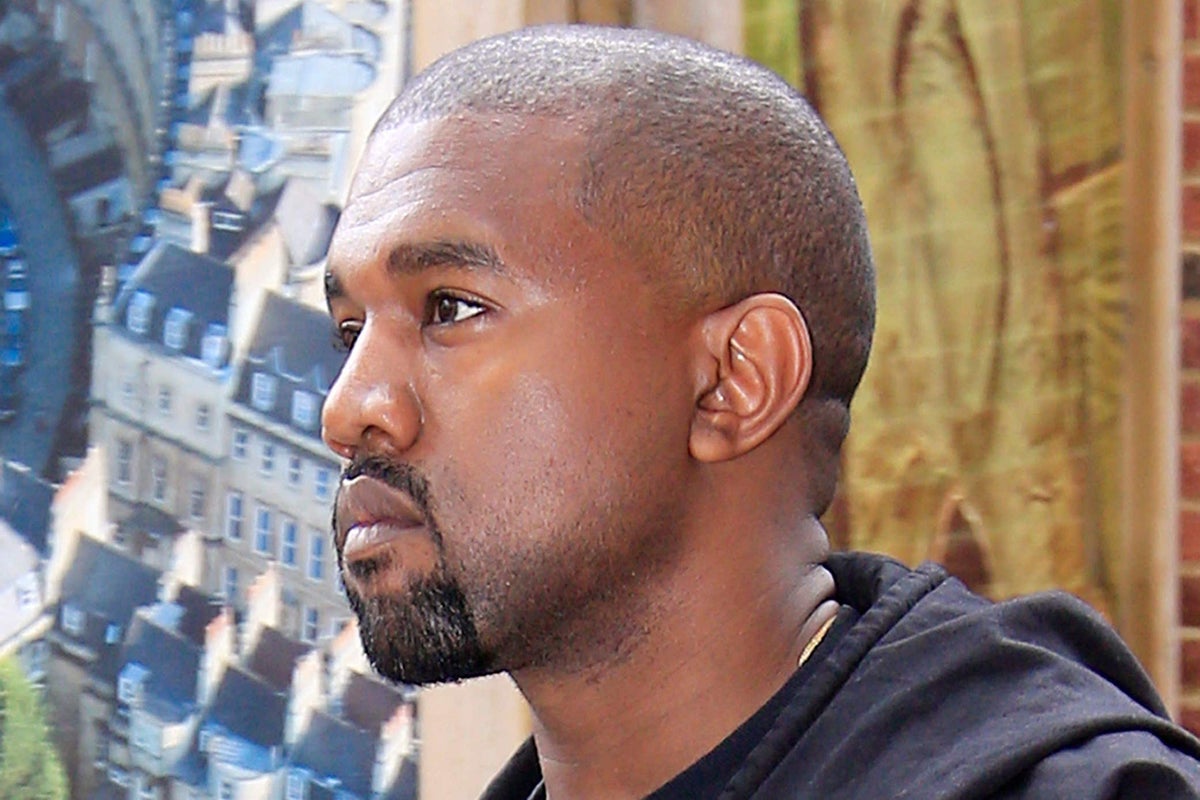
The lazy consensus across every major culture desk right now is that Kanye West booking a stadium run or appearance in Russia represents a desperate, tone-deaf stunt by a fading icon seeking oxygen outside traditional Western circuits. Media outlets frame it as a geopolitical catastrophe, a moral failure, or the erratic flailing of an artist whose career has allegedly hit terminal velocity.
They are entirely missing the point. Don't forget to check out our previous post on this related article.
I have watched public relations professionals panic over brand safety for fifteen years, blowing millions on sterile campaigns while real cultural gravity shifts entirely outside corporate boardrooms. Calling this move a PR disaster ignores how attention economies actually operate in a fractured, post-gatekeeper world. West is not playing by the rules of conventional celebrity management because those rules no longer apply to anyone commanding true leverage.
The Geography of Modern Relevance
For decades, the western music apparatus maintained a monopoly on cultural validation. If you were not touring major arenas in London, New York, and Los Angeles with corporate sponsorship locking down your logistics, you were considered off the grid. That framework is dead. If you want more about the context of this, Entertainment Weekly offers an excellent breakdown.
When an artist steps completely outside the sanctioned touring circuit, the establishment screams about isolation and irrelevance. But look at the numbers. Traditional Western markets are saturated, heavily filtered, and increasingly governed by algorithmic homogenization and sanitized festival line-ups. By moving directly into alternative geopolitical spheres, West bypasses the middlemen, the bureaucratic promoters, and the moral policing of Western booking agencies.
This is not about desperation. This is about total sovereignty.
Critics argue that performing in regions cut off from standard Western trade routes destroys an artist's commercial viability. That argument assumes commercial viability still relies on corporate brand deals and morning show appearances. It does not. West operates on direct-to-consumer gravitational pull. He does not need a licensing deal with a multinational beverage brand when his merch drops sell out globally within minutes strictly off the back of raw internet chaos.
The Myth of Brand Safety
Every time a celebrity steps outside the narrow corridor of acceptable behavior, PR agencies rush to publish pieces on brand safety. They treat artists like fragile corporate assets that need constant protection from their own impulses.
Let us be entirely honest about what brand safety actually means. It means boring, predictable, risk-averse conformity designed not to offend anyone while standing for nothing whatsoever.
West destroyed the concept of traditional brand safety years ago, and his career only accelerated because of it. Every time the media predicts his complete cancellation, his cultural footprint widens. Why? Because authenticity in the modern era is jagged, unpredictable, and entirely immune to institutional scolding. Audiences are exhausted by manufactured perfection. They crave raw human agency, even when—and often because—it is messy.
Imagine a scenario where a legacy pop star issues a carefully scripted apology video vetted by a crisis management firm in Los Angeles. It generates zero cultural impact, gets forgotten in forty-eight hours, and costs a fortune in retainer fees. Now imagine West dropping a cryptic piece of production software or walking unannounced into a stadium in a market Western media considers toxic. The entire global news cycle pivots instantly.
That is not an accident. That is an asymmetric attention weapon.
The Economic Reality of Alternative Circuits
Let us address the financial mechanics behind these international moves. Standard touring is a financial trap for independent artists once promoters, venue monopolies, insurance, and marketing overhead take their exorbitant cuts.
When you strip away the standard infrastructure, you discover entirely new revenue flows. Emerging or isolated markets have massive, starved consumer bases willing to pay premium prices for direct cultural contact because they are routinely ignored by mainstream Western routing. The infrastructure may be unconventional, but the margins on direct engagement are staggering.
Critics love to talk about lost sponsorship revenue. What they fail to mention is that West stopped depending on corporate sponsors years ago. When you own your masters, your fashion lines, and your distribution channels, corporate endorsements are pocket change compared to the leverage of pure, unfiltered attention.
The Death of the Gatekeeper
The real panic underlying the mainstream reaction to this Russian tour rumor is not moral outrage. It is fear.
Cultural institutions are terrified that an artist can exist entirely outside their jurisdiction and still command global headlines. For generations, the media acted as the sole tollbooth on the highway of fame. If you misbehaved, your access was revoked. Your records stopped getting reviewed; your tours stopped getting covered; you ceased to exist in the polite fiction of the mainstream press.
West proved that the tollbooth is empty. He does not need mainstream media permission to reach billions of people. He can bypass every traditional gatekeeper on the planet and speak directly to his audience through sheer cultural momentum.
When you understand that, the entire narrative shifts. This is not a stumble. It is a calculated stress-test of the global entertainment monopoly. And every time the establishment hyperventilates over his movements, they prove they still have zero control over the board.