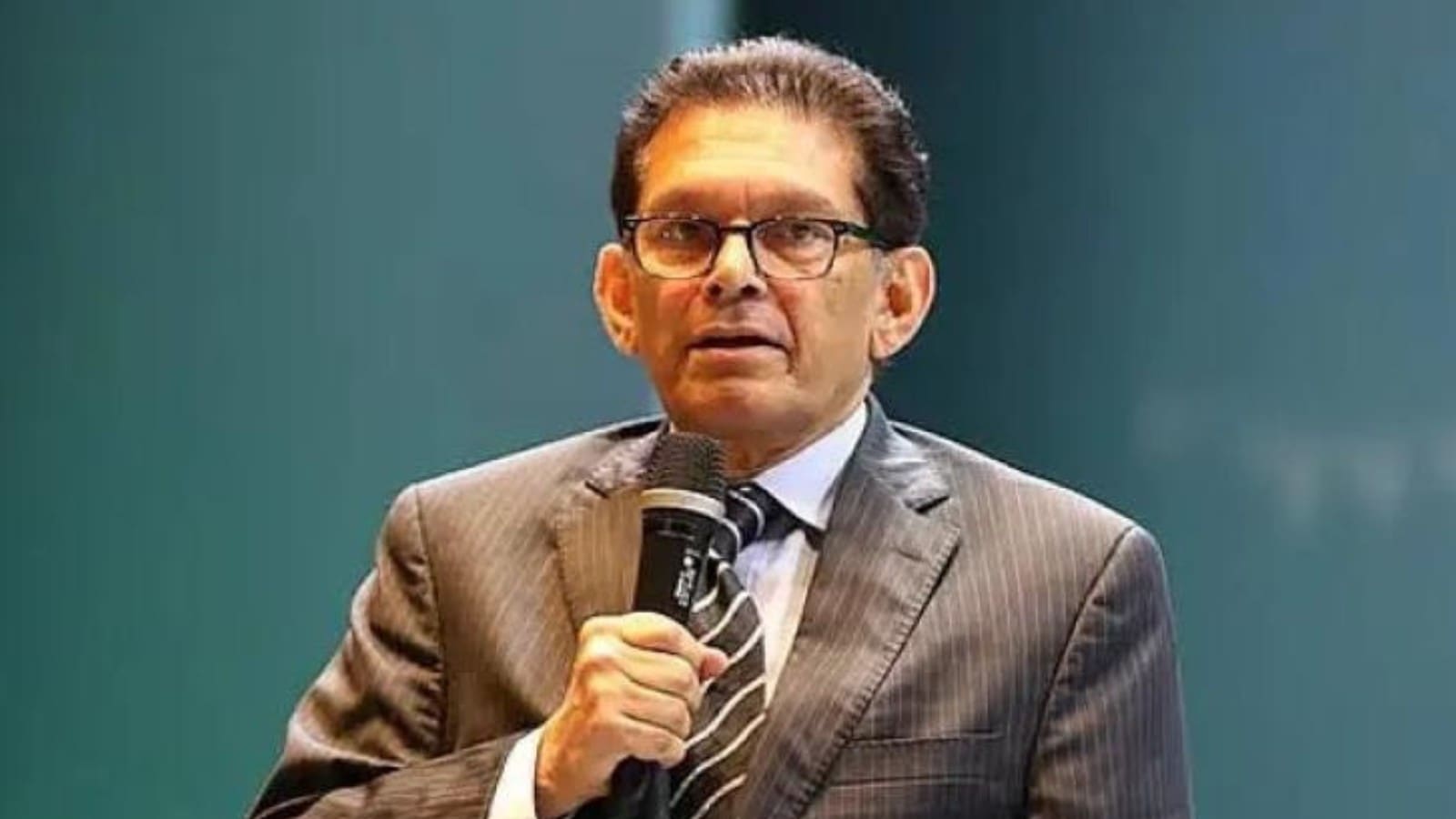
The mainstream diplomatic press is doing what it always does when a career bureaucrat wins an internal popularity contest: throwing a parade for a paper tiger.
On June 2, 2026, Bangladeshi Foreign Minister Khalilur Rahman defeated Cyprus’s Andreas Kakouris in a 99-to-91 vote to become the president of the 81st United Nations General Assembly. The media coverage was instantly predictable. Headlines screamed about a historic win, a seasoned multilateral diplomat stepping up to guide the world body through intensifying global crises, and a bold six-priority agenda designed to fix everything from artificial intelligence to climate change.
It is a comforting narrative. It is also completely wrong.
The belief that the President of the General Assembly can fundamentally reform the UN or solve entrenched geopolitical conflicts is a dangerous delusion. I have watched international bodies burn billions of dollars on high-minded resolutions that do nothing more than gather dust in Geneva basements. The institutional architecture of the United Nations ensures that the General Assembly remains a glorified talking shop. Khalilur Rahman is an incredibly capable career diplomat with four decades of experience, but he has just inherited the most powerless bully pulpit on earth.
The Mirage of General Assembly Power
To understand why the hype around Rahman’s election is flawed, look at the math and the mechanisms.
The UN General Assembly operates on a system of non-binding resolutions. Think of it as a global advisory board. The real power rests entirely within the UN Security Council, where five permanent members hold absolute veto power. When the mainstream media reports that Rahman will "steer the world body through a pivotal year," they ignore the structural reality that the General Assembly cannot enforce peace, cannot punish aggressors, and cannot override the strategic self-interest of major nuclear powers.
Current UNGA President Annalena Baerbock praised Rahman, noting that the role is "no longer simply procedural." This is standard diplomatic spin. While it is true that the president can set the tone of debate and influence behind-the-scenes discussions, the officeholder possesses zero executive authority.
Imagine a scenario where the board of a multi-billion-dollar corporation elects a non-executive chairman who has no power over the budget, cannot fire the executive team, and cannot enforce company policies. That is the presidency of the General Assembly.
The Flawed Six-Priority Agenda
Rahman announced a sweeping six-point plan for his one-year term, focusing on:
- Peace and security
- Accelerating the Sustainable Development Goals (SDGs)
- Climate action
- Human rights
- Emerging technology governance
- UN reform
This list reads like a generic template generated by a committee of risk-averse public relations interns. By attempting to solve everything in a twelve-month tenure, a leader guarantees they will solve nothing.
Take the promise of UN reform. The UN80 initiative and the Pact for the Future are frequently cited as vehicles for real change. But true structural reform requires amending the UN Charter. That requires a two-thirds vote in the General Assembly and the unanimous approval of the Security Council's permanent five members. Does anyone honestly believe that the United States, China, Russia, France, or the United Kingdom will willingly surrender their veto power because a smooth-talking foreign minister from Turtle Bay asks nicely?
Furthermore, Rahman won the presidency with a razor-thin majority of 99 votes out of 190 cast. That is not a sweeping mandate for radical transformation. It is a deeply divided assembly. Nearly half of the voting nations preferred his opponent. Rahman will spend his first six months simply trying to manage regional factions rather than executing an ambitious agenda.
The Secretary-General Distraction
Commentators are making a massive deal out of the fact that Rahman’s presidency coincides with the selection of António Guterres’s successor, whose term ends on December 31, 2026. They claim Rahman will oversee this critical transition.
This completely misrepresents the selection process. Article 97 of the UN Charter states that the Secretary-General is appointed by the General Assembly upon the recommendation of the Security Council.
The General Assembly does not pick the leader of the UN. The Security Council picks a candidate behind closed doors, and the General Assembly rubber-stamps it. Rahman’s role in this process is fundamentally clerical. He will preside over meetings and hand over the gavel, but the decision will be made by a handful of great powers haggling over geopolitical concessions in private dining rooms.
The Paradox of Peacekeeping
Rahman’s supporters point heavily to Bangladesh’s extensive history as a top contributor to UN peacekeeping missions as proof that he can revolutionize global security.
This argument confuses troop supply with strategic deployment. Bangladesh excels at providing disciplined, professional personnel for peacekeeping operations. However, peacekeeping forces can only deploy where a peace already exists to be kept, and where the host government and the Security Council allow them to go. Peacekeepers do not stop great-power proxy wars, and they do not have the mandate to aggressively enforce peace in active combat zones. Rahman’s background provides him with deep operational knowledge of how blue helmets function on the ground, but it gives him zero leverage to deploy them where they are needed most if the Security Council remains deadlocked.
Stop Asking for Leadership, Start Admitting the Truth
The public trust in international institutions is collapsing not because the leaders lack pedigree, but because the institutions themselves are built on a flawed, post-World War II premise that no longer matches the distribution of global power.
If we want an honest assessment of the 81st UNGA session, we must stop asking how a new president will save the system. Instead, we must ask how any leader can operate effectively within a broken one.
Rahman’s career diplomat status is actually a double-edged sword. He is a creature of the system. He knows the rules, he knows the etiquette, and he knows how to draft a beautifully worded, completely un-enforceable resolution. But systems are rarely disrupted by the people who spent forty years climbing to the top of them.
The downside to a realistic, cynical view of the UN is that it offers no easy answers or feel-good stories. It forces us to admit that global governance is fractured and that realpolitik will always trump multilateral idealism. Khalilur Rahman will undoubtedly conduct his duties with grace, humility, and flawless diplomatic protocol starting this September. But when his one-year term concludes, the world will face the exact same conflicts, the exact same funding deficits, and the exact same institutional gridlock.
The gavel changes hands. The reality on the ground stays exactly the same.


