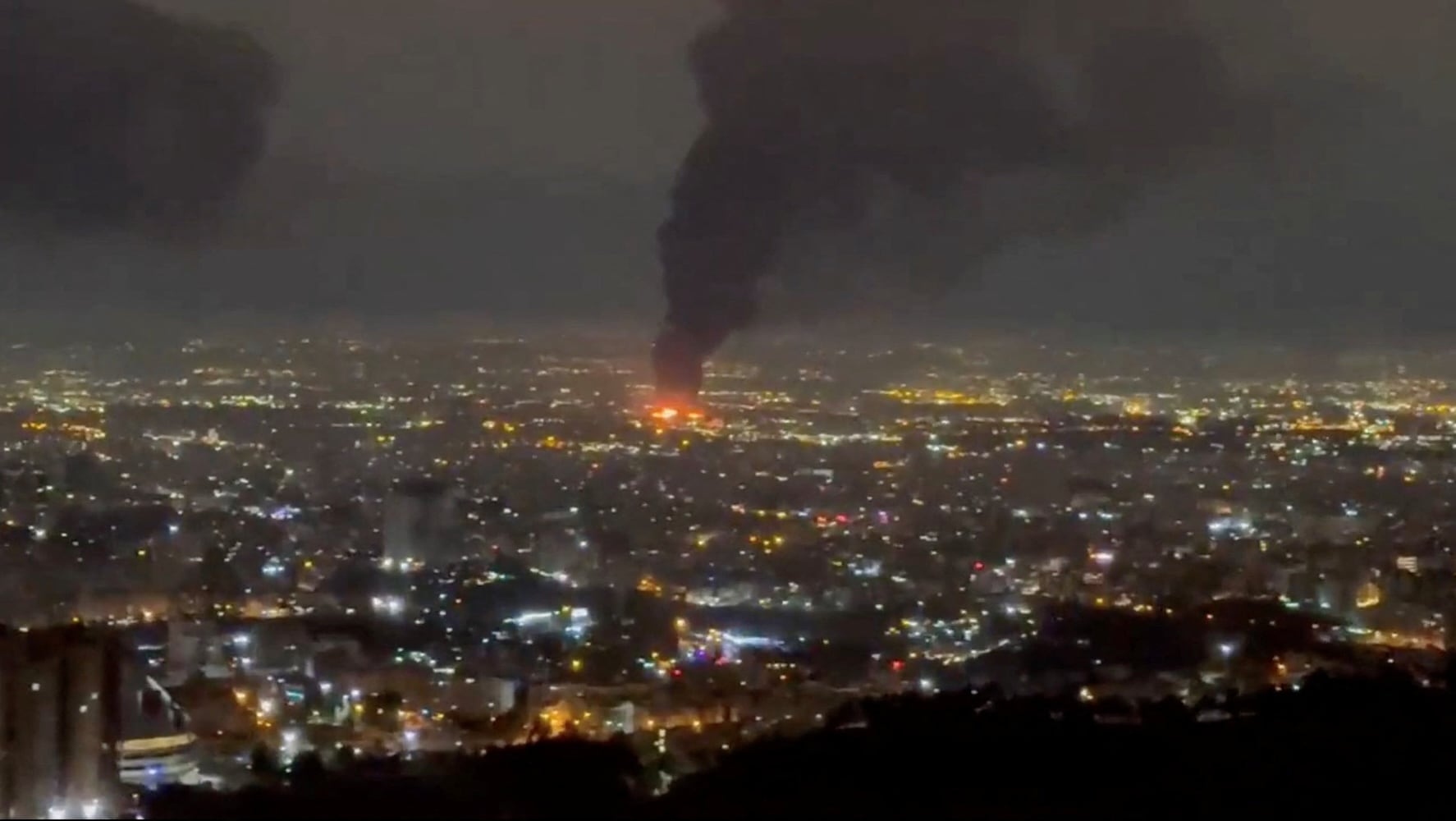
The operational reality of modern suppression of enemy air defenses (SEAD) and strategic strike missions is governed by the "Sensor-to-Shooter" latency and the "Probability of Kill" ($P_k$) on mobile targets. Recent intelligence assessments indicating that the United States can only confirm the destruction of approximately one-third of Iran’s targeted missile arsenal expose a fundamental breakdown in the kinetic chain. This discrepancy is not merely a failure of ordinance; it is a structural limitation of over-the-horizon (OTH) warfare against a peer-level adversary utilizing asymmetric dispersal tactics.
The Architecture of Iranian Strategic Depth
Iran’s missile program operates under a doctrine of "passive defense," which prioritizes survivability through geographic fragmentation and subterranean hardening. To understand why 66% of the targeted arsenal remains unconfirmed or intact, one must analyze the three structural layers of their deployment model.
- The Subterranean "Missile Cities": Unlike Western silos, which are often static and identifiable via satellite synthetic aperture radar (SAR), Iranian complexes are tunneled deep into the Zagros mountain range. These facilities serve as both storage and internal launch rails. The geological overburden renders standard GBU-31 Joint Direct Attack Munitions (JDAMs) ineffective, requiring specialized deep-earth penetrators that are limited in inventory.
- Transporter-Erector-Launcher (TEL) Fluidity: The shift from liquid-fueled to solid-fueled missiles, such as the Kheibar Shekan, has compressed the pre-launch signature window. Liquid-fueled missiles require a fueling caravan that creates a high-visibility thermal and logistical footprint. Solid-fueled variants can be moved, leveled, and fired in under 15 minutes.
- Urban Integration and Decoy Proliferation: The Iranian tactical manual utilizes "civilian-adjacent" staging areas. By mixing high-fidelity decoys—constructed with heat-reflective coatings and realistic radar cross-sections—with actual TELs, they force an "Attacker’s Dilemma." The cost of a single AGM-158 JASSM (Joint Air-to-Surface Standoff Missile) exceeds $1 million, while a high-end decoy costs less than $10,000. This creates a cost-imbalance ratio that favors the defender.
The Verification Bottleneck and Intelligence Latency
The statement that only a third of the arsenal is "confirmed" destroyed highlights a crisis in Battle Damage Assessment (BDA). In a high-threat environment, BDA relies on a hierarchy of sensor data that is currently being disrupted by Iranian electronic warfare (EW) and environmental factors.
The BDA Hierarchy Failure
Confirmation of a kill requires "Type 1" evidence: visual or multi-spectral proof of a secondary explosion or a destroyed chassis. The current attrition gap stems from three specific technical bottlenecks.
- Cloud Cover and Persistence: Satellite passes are predictable. Iran synchronizes TEL movement with orbital windows or heavy meteorological cover. Without persistent, low-altitude Unmanned Aerial Systems (UAS) loitering over the target zone—which is high-risk due to Iran’s Bavar-373 air defense systems—the U.S. is forced to rely on intermittent "snapshots."
- The "Shadow Move" Tactic: Intelligence suggests Iran utilizes a "shuttle" system where launchers fire and immediately retreat into pre-surveyed mountain apertures or camouflaged civilian warehouses. If the strike occurs five minutes after the launch, the launcher has already relocated 2-3 kilometers from the origin point.
- Signature Mimicry: The use of corner reflectors and active emitters on non-combat vehicles creates "ghost targets." When a strike hits one of these emitters, the sensor may register a hit, but the lack of a secondary fuel or warhead explosion prevents "confirmed" status.
The Calculus of Interception vs. Attrition
The inability to destroy the arsenal on the ground shifts the burden of defense to terminal interception (e.g., THAAD, Patriot PAC-3, and Aegis BMD). This shift is mathematically unsustainable in a prolonged conflict.
The Exchange Ratio Equation ($E_r$) defines the sustainability of the defense:
$$E_r = \frac{C_a \times N_a}{C_i \times N_i \times P_k}$$
Where:
- $C_a$ = Cost of the Attacking Missile
- $N_a$ = Number of Attacking Missiles
- $C_i$ = Cost of the Interceptor
- $N_i$ = Number of Interceptors fired per target (typically 2 for $P_k$ optimization)
- $P_k$ = Probability of Kill
When the U.S. fails to achieve ground attrition, it enters a cycle where it spends $4 million (two interceptors) to negate a $250,000 Iranian ballistic missile. A 33% attrition rate means 66% of the enemy's mass remains active, forcing the U.S. to deplete its finite interceptor stockpiles at a rate four times faster than the adversary's production capacity.
Geographic and Logistical Constraints of the Persian Gulf
The Iranian missile threat is not a singular point-source problem but a distributed network. The geography of the Hormuz Strait allows for "Short-Flight-Time" trajectories.
The first limitation of U.S. strike capability in this region is the "Sanctuary Gap." To stay outside the range of Iranian shore-based anti-ship cruise missiles (ASCMs), U.S. carrier strike groups must operate further out in the Arabian Sea. This increases the flight time for strike aircraft (F/A-18E/F or F-35C), necessitating more mid-air refueling and reducing the number of "sorties per day" that can be dedicated to hunting TELs.
The second limitation is Target Saturation. Iran possesses the largest missile arsenal in the Middle East, estimated in the low thousands. If 66% remains operational after an initial "decapitation" strike, the remaining volume is sufficient to overwhelm the radar processing limits of a standard Aegis destroyer. This is known as the "Saturation Threshold," where the number of incoming threats exceeds the number of simultaneous target tracks the fire control system can manage.
Structural Flaws in the Current Strategic Assessment
The reliance on "confirmed" kills as a metric for success is a legacy of 20th-century warfare that fails to account for Functional Attrition.
A missile does not need to be physically obliterated to be removed from the battlefield. If the command-and-control (C2) nodes are severed, or if the specialized fuel transport trucks are destroyed, the TELs become static, useless assets. However, current intelligence reporting often overlooks these "soft kills" because they do not produce the high-definition thermal signatures required for "confirmed" status in a congressional or public report.
This creates a distorted view of Iranian capability. While the "third" confirmed destroyed may seem low, the actual combat effectiveness of the remaining two-thirds may be significantly degraded by logistical strangulation. Conversely, assuming "soft kills" have occurred without visual proof is a dangerous intelligence "mirror-imaging" trap.
The Strategic Pivot to Left-of-Launch Operations
The data suggests that kinetic strikes alone cannot solve the Iranian missile problem. To bridge the 66% gap, the strategic focus must shift toward "Left-of-Launch" interventions.
- Cyber-Electromagnetic Activities (CEMA): Instead of physical destruction, targeting the digital backbone of the TEL’s guidance system. A missile that launches but fails to reach its target due to GPS spoofing or internal software logic errors is effectively "destroyed" in terms of mission outcome.
- Supply Chain Interdiction: Iran’s domestic production relies on specialized carbon fibers and high-end semiconductors sourced through various front companies. Focusing on the "Work-in-Progress" (WIP) inventory within the manufacturing sector yields a higher long-term attrition rate than chasing individual mobile launchers in the desert.
- Infiltrated Sabotage: Introducing "trojan" components into the solid-fuel chemical precursors or guidance gyroscopes. This turns the 66% of remaining missiles into potential liabilities that may explode on the launch rail, creating a psychological deterrent within the Iranian Rocket Forces.
The attrition deficit is a symptom of a technical mismatch. The U.S. is applying high-precision, high-cost kinetic solutions to a low-cost, high-volume, hardened-and-dispersed problem set. Until the sensor-to-shooter loop can achieve persistent coverage and distinguish between decoys and high-value targets in real-time, the "two-thirds" survival rate of the Iranian arsenal will remain a fixed variable in any conflict simulation.
The immediate tactical requirement is not more ordinance, but a surge in low-cost, attritable ISR (Intelligence, Surveillance, and Reconnaissance) drones capable of operating inside the "Engagement Zone" to provide the continuous tracking necessary to turn "unconfirmed" leads into "confirmed" neutralizations.
Would you like me to analyze the specific interceptor stockpile depletion rates relative to Iran's annual missile production capacity?