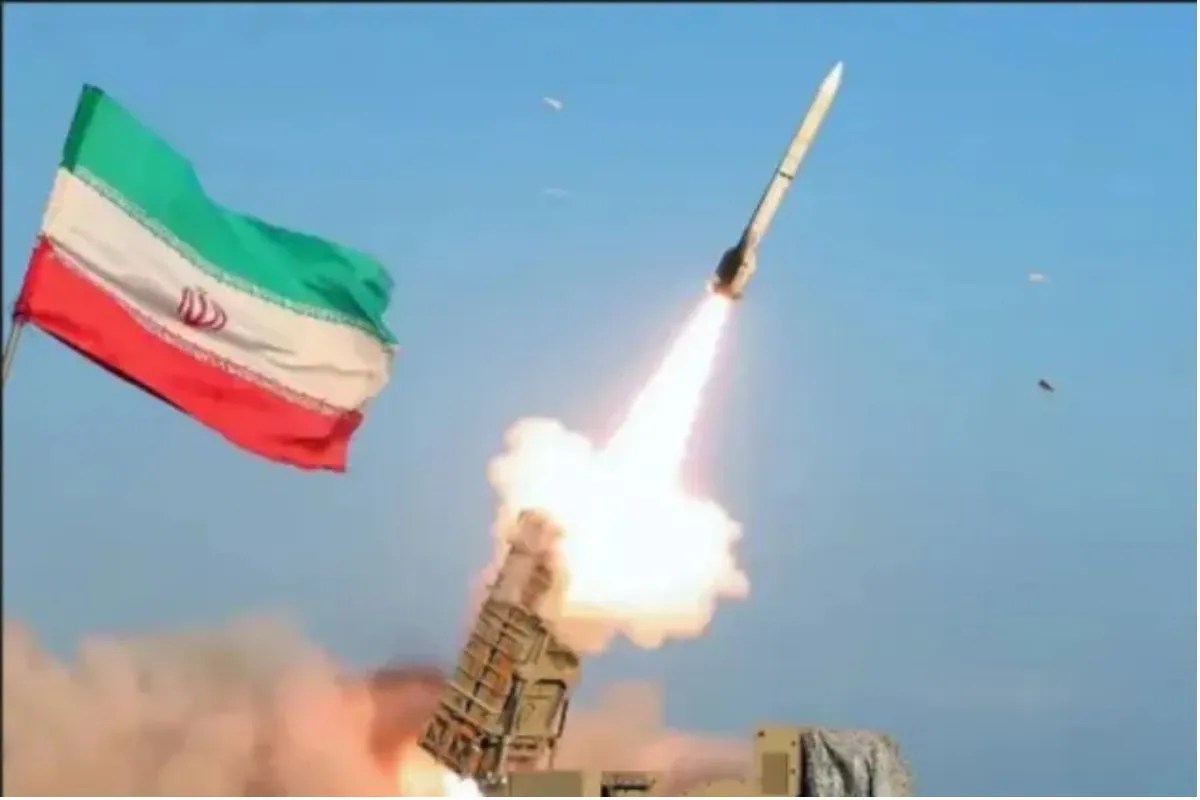
The strategic calculus of asymmetric deterrence in the Persian Gulf operates on a strictly transactional cost-imposition model. When state actors engage in kinetic exchanges within this corridor, the objectives are rarely territorial; instead, they are designed to recalibrate the threshold of tolerable risk. The recent escalatory spiral involving United States Central Command (CENTCOM) forces and Iran’s Islamic Revolutionary Guard Corps (IRGC) provides a clear look into this operational logic. Following U.S. strikes targeting Iranian coastal infrastructure and air-defense nodes, Tehran executed a synchronized counter-strike framework, claiming vector paths toward 85 distinct U.S. military assets across Bahrain and Kuwait.
Evaluating these events requires stripping away state-media rhetoric and analyzing the structural realities of the engagement. The target selection, vector mechanics, and defensive interceptions reveal an intentional calibration. Iran is attempting to balance domestic political necessity with regional deterrence, all while avoiding a full-scale conventional war that its economic baseline cannot sustain.
The Geography of the Strike Architecture
The operational theater of this exchange is defined by two primary nodes housing substantial U.S. forward-deployed capabilities: the Naval Support Activity (NSA) Bahrain—the headquarters of the U.S. Fifth Fleet—and the Ali Al Salem Air Base in Kuwait. By routing counter-strike vectors toward these specific geographies, the IRGC sought to test the defensive envelopes of highly fortified American installations.
The metric of "85 targets" cited by IRGC command structures represents a calculated aggregation of specific points within a larger facility footprint, rather than 85 separate geographic bases. This distinction is vital for understanding the tactical reality. In modern near-peer auditing, a single installation contains numerous high-value target points, including:
- Command and Control (C2) Nodes: Fixed communication arrays and localized operations centers.
- Logistical Nodes: Fuel storage bladders, ammunition supply chain transfer points, and maintenance hangars.
- Aviation Infrastructure: Hardened aircraft shelters, taxiways, and active runways.
By utilizing a saturation mix of low-cost loitering munitions and ballistic missiles, the offensive strategy relied on volume to stress localized air-defense networks. In Kuwait, for instance, the interception of two ballistic missiles and 13 unmanned aerial vehicles (UAVs) demonstrates the multi-tier nature of the assault. The primary operational bottleneck for regional defenders in these scenarios is not interception accuracy, but rather missile-defense magazine depth—the physical limitation of how many interceptors are available versus incoming low-cost threats.
The Maritime Chokepoint Cost Function
The structural driver behind this kinetic friction resides in the Strait of Hormuz, an economic chokepoint through which approximately one-fifth of global petroleum and liquefied natural gas (LNG) transits. The strategic bottleneck can be mapped via an asymmetric cost function:
$$C_{total} = I_{risk} + L_{transit} + P_{premium}$$
Where $I_{risk}$ represents the physical risk to hulls, $L_{transit}$ represents the delays caused by rerouting or hyper-cautious navigation, and $P_{premium}$ represents the immediate spike in war-risk insurance premiums imposed by maritime underwriters.
When the IRGC targets commercial shipping—such as the recent projectile strike on the LNG carrier Al Rekayyat—it directly manipulates this cost function. For Iran, threatening maritime transit serves as a powerful lever of economic deterrence. Because its conventional naval power cannot match a U.S. carrier strike group, Tehran relies on a swarm network of over 60 fast-attack craft, coastal anti-ship cruise missile (ASCM) batteries, and sea-mining capabilities.
The U.S. counter-strikes targeted precisely these components in coastal hubs like Bandar Abbas, Mahshahr, and Qeshm Island. By degrading these specific assets, CENTCOM aimed to lower Iran's ability to manipulate the maritime cost function, protecting the international shipping lanes that underwrite global energy stability.
Defensive Envelope Analysis and System Degradation
The tactical outcome of the IRGC counter-strike highlights the asymmetric gap between offensive claims and defensive realities. While state-directed reports emphasized the scale of the launches, the actual kinetic yield inside the targeted boundaries was heavily mitigated by integrated air and missile defense systems.
The downing of an American MQ-9 Reaper drone over the southern Bushehr province demonstrates that Iran retains localized anti-air capabilities. However, its overall power-projection envelope faces significant friction when confronting Western multi-layered defenses, such as the MIM-104 Patriot batteries and Phalanx Close-In Weapon Systems (CIWS) deployed to protect Gulf assets.
The primary domestic disruption reported from the Kuwaiti theater—localized power grid failures caused by falling missile shrapnel—reveals that the incoming vectors were broken up during their terminal phase, preventing direct hits on critical military infrastructure. This pattern highlights a recurring reality in modern missile warfare: saturation attacks can cause secondary infrastructure damage, but rarely achieve the structural destruction necessary to degrade forward-deployed U.S. command capabilities.
Strategic Implications for Regional Alliances
This escalation places small Gulf nations, particularly Bahrain and Kuwait, in a complex geopolitical position. These states must manage a delicate diplomatic balance:
[Host Nation Sovereignty]
       │
       ├──► U.S. Defense Commitments (Fifth Fleet / Air Assets)
       │
       └──► Proximity to Iranian Kinetic Vectors (Counter-Strike Risk)
Bahrain, as the host of the Fifth Fleet, provides the United States with essential naval positioning, but its proximity makes it a primary target for Iranian retaliation. Kuwait faces a similar vulnerability, serving as a major hub for U.S. Army forces.
The statements from neighboring states, such as the United Arab Emirates, criticizing Tehran’s inability to commit to de-escalation, reveal a growing regional frustration. Prolonged kinetic instability threatens local economic diversification plans, which depend heavily on foreign direct investment, tourism, and open shipping lanes. Consequently, while these smaller states rely on the U.S. security umbrella for survival, they are highly vulnerable to the fallout when that umbrella is directly targeted.
The current escalation cycle has reached a temporary equilibrium point, but the structural drivers of conflict remain unresolved. The collapse of backchannel diplomatic talks, coupled with the reinstatement of strict energy sanctions, means the underlying economic friction will continue to spark kinetic actions.
The immediate path forward will likely shift away from large-scale missile exchanges back toward gray-zone warfare. This involves deniable proxy actions, covert maritime sabotage, and cyber operations targeting industrial infrastructure. For energy markets and regional security planners, the baseline risk premium will remain elevated as long as the structural standoff over the Strait of Hormuz continues.