The envelope always sits in the exact same spot on the wooden counter. Right beside the jar of loose buttons and the stray school permission slips.
For Sarah, opening it used to be a routine as mindless as brushing her teeth. A glance at the figures, a quick mental subtraction against the joint account, and a quiet reassurance that next month’s mortgage payment was accounted for. Fixed at a sensible rate negotiated three winters ago, the numbers stayed obediently still. They did not shout. They did not change their minds in the middle of the night.
Then came the rustle of global bond markets halfway across the world, a phantom tremor that nobody at the local grocery store could see coming, yet everyone is suddenly forced to pay for.
Interest rates are not abstract digits living on a Bloomberg terminal in London or New York. They are living, breathing things. They crawl out of the financial pages and sit down at your breakfast table, rearranging your life with the casual cruelty of an uninvited guest.
Consider what happens next: the fixed-rate deal expires, and the quiet arithmetic of homeownership turns into a high-stakes puzzle.
The Invisible Engine
To understand why Sarah’s monthly statement is suddenly capable of inducing cold sweats, we have to look past the front door. We have to look at the machinery of debt.
Most people think banks hold money in vaults like ancient kings. They do not. Modern banking is a continuous, nervous game of borrowing and lending across borders. When governments and massive institutions issue bonds—essentially IOUs—they set the temperature for the entire financial climate. If global investors suddenly demand higher yields on government debt because inflation refuses to lie down, the cost of borrowing money everywhere climbs.
It is like a giant domino row set up across continents. A sell-off in sovereign bonds triggers a stampest of rising yields. That stampede hits wholesale funding markets. And finally, the shockwave arrives at the high street lender, who looks at a family like Sarah's and simply shrugs an apology.
Money has gotten expensive. And someone has to foot the bill.
For months, economists whispered about sticky inflation and stubborn central bank policies. They spoke in dry acronyms. But language designed to obscure truth often hides the human toll. When bond prices tumble, mortgage pricing spikes. It is that simple, and that brutal.
The Anatomy of a Squeeze
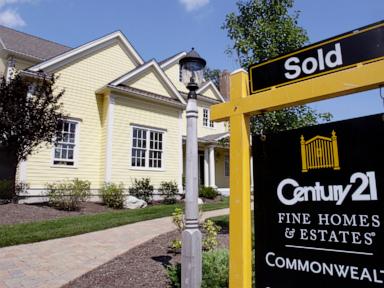
Sarah works as an occupational therapist. Her partner, Mark, manages a regional warehouse. Their combined income is respectable, steady, and thoroughly middle-class. They did not buy a mansion with marble floors or a penthouse overlooking the skyline. They bought a modest three-bedroom semi-detached house with a patchy lawn and a mortgage deal that felt safe.
Safety, it turns out, has an expiration date.
When their current product tier rolls off next month, the monthly repayments are projected to jump by nearly four hundred pounds. Four hundred pounds. That is not just a rounding error in a budget spreadsheet. That is a family vacation erased. That is the after-school art club cancelled. That is the emergency savings fund—already dangerously thin—getting hollowed out to feed a banking ledger.
Multiply Sarah and Mark by a few million households facing the exact same cliff edge across the country.
Suddenly, the macroeconomics of a global bond sell-off transform into a consumer crisis. Consumer spending slows to a crawl because nobody has disposable cash left after feeding the mortgage monster. Local cafés notice the empty tables on Tuesday afternoons. Hairdressers see clients stretching out their visits from every six weeks to every ten. The anxiety is contagious, drifting through office corridors and school playgrounds in hushed conversations about remortgaging strategies and tracker rates versus fixing early.
We are told not to panic. We are told markets fluctuate. Yet market fluctuations do not wash the dishes or explain to an eight-year-old why piano lessons are a luxury the household can no longer afford.
The Waiting Room of Anxiety
There is a strange psychological weight to financial limbo.
Right now, thousands of borrowers are sitting in the digital waiting room of banking apps, watching rates tick upward by fractions of a percentage point week by week, wondering whether to lock in a deal now or gamble that the storm will pass. It is the financial equivalent of watching a weather forecast where a hurricane is forming off the coast, and you are standing on the beach trying to decide if you should board up the windows or just buy an umbrella.
Guilt creeps in easily. People blame themselves. Did we buy too much house? Should we have saved more during those two years when interest rates scraped the floorboards like a discarded coin?
We forget that the game was played on a tilted board. For a decade, cheap money felt like a permanent atmospheric condition rather than an anomaly in economic history. Generations grew up believing that home loans stayed low because the modern world had somehow solved the business cycle.
It hadn't. It had simply pressed pause.
Now, the bill has arrived, stamped with the indifferent weight of global capital flows. Bond investors in Tokyo and Frankfurt are shedding assets because of shifting yield curves, and the vibration travels all the way down to Sarah's wooden kitchen counter, rewriting her family's future over a morning cup of instant coffee.
The Reckoning at the Edge
There is no neat bow to tie around this situation. No clever financial hack will magically erase the reality of mathematically higher borrowing costs.
When the structural foundations of the economy shift, individual households absorb the shock with quiet resilience. They cancel subscriptions. They turn down the thermostat. They work extra shifts. They absorb the blow because what choice do they have? A home is not just an asset to be traded on a spreadsheet; it is the physical anchor of a life. It is where children learn to ride bikes, where old dogs sleep out their final years, and where families build memories that cannot be repossessed.
The envelope still sits on the counter every month. The numbers inside are heavier now, carrying the invisible weight of global panic, political crosswinds, and market corrections.
Sarah picks it up, turns it over in her hands, and looks out the window at the gray afternoon sky, calculating the next move in a game she never asked to play.