The coffee was cooling in a chipped ceramic mug on a Formica table in suburban Ohio. Outside, the morning frost still clung to the dead grass of a modest front lawn. Inside, Sarah stared at a stack of unopened envelopes, her thumb tracing the edge of a credit card statement she already knew she couldn't pay in full.
For forty years, Sarah’s family voted straight-ticket Republican. It was an identity passed down like a silver heirloom or a sturdy work ethic, unquestioned and deep-rooted. But politics rarely stays abstract when the cost of a bag of groceries forces you to put back the milk. Also making waves lately: The Price of Iron and Oil in the Dark Waters of the Gulf.
That morning, something subtle broke. It wasn't a loud ideological epiphany. It was the quiet realization that the promises made from high podiums felt entirely disconnected from the cold kitchen floor.
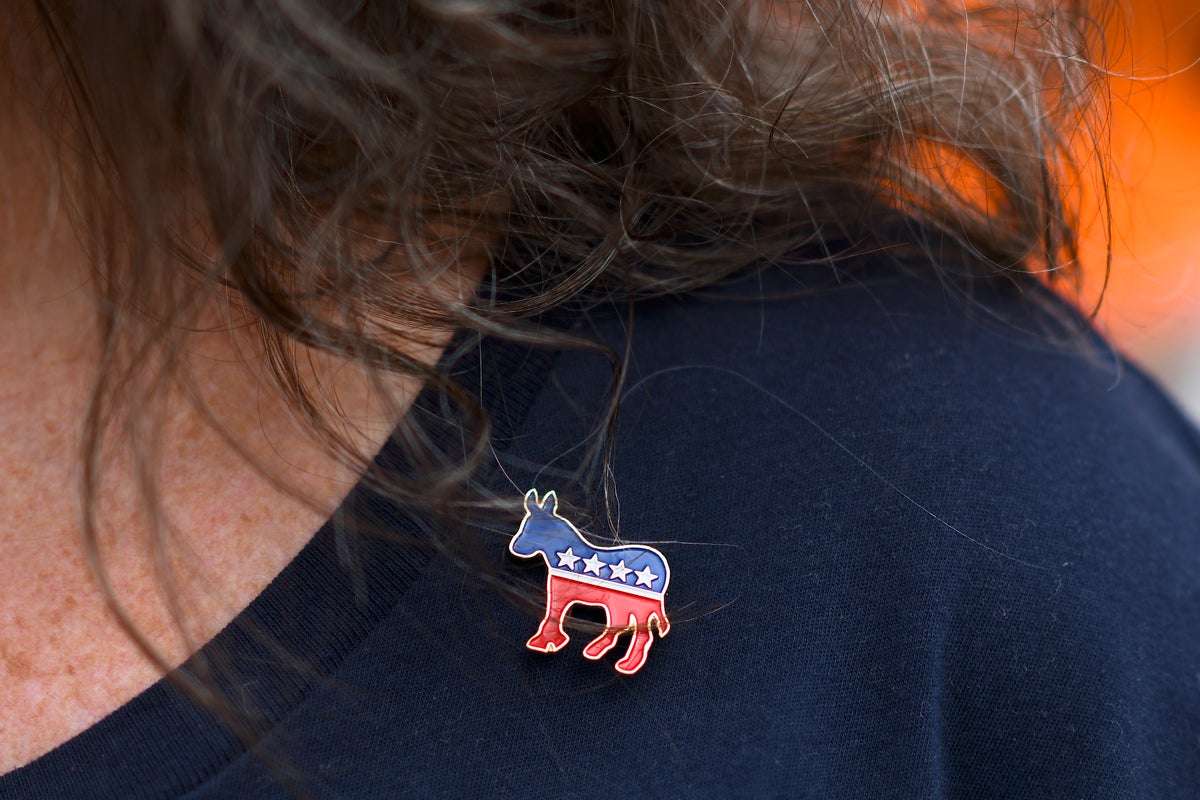
Across the country, millions of living rooms are witnessing this exact scene. We talk about politics as if it were a Sunday afternoon football match, a contest of distant teams fought with shouting heads on cable television. Yet the actual mechanism of power shifts not in television studios, but in these moments of private recalculation. Recent polling numbers point to a measurable drift, showing more Americans aligning with the Democratic party as midterms loom, sending a sharp warning flare to Donald Trump and his inner circle. More information regarding the matter are covered by The Washington Post.
Numbers on a spreadsheet, however, rarely tell the whole story.
To understand why political tides turn, you have to look past the macroeconomics and examine the human friction. Consider what happens when people who felt securely anchored in one political camp begin to drift. At first, it feels like betrayal. You look at your neighbors, you remember past votes, and you hesitate.
I remember sitting across from a lifelong precinct captain in a rust-belt diner several cycles ago, watching him struggle to fill out a registration card for the opposing side. His hands shook slightly. He wasn't abandoning a party out of sudden love for its platform; he was fleeing a sinking feeling of abandonment.
Politics, at its core, is a bargain. We lend our trust, our votes, and our voices in exchange for protection, stability, and a future that looks slightly brighter than the present. When that bargain fractures, the math changes.
The current data reflecting a surge in Democratic identification is not merely a statistical blip. It is a symptom of accumulated fatigue. For months, political analysts have tried to decode the erratic pulse of the American voter. They look at inflation indices, border security metrics, and approval ratings, searching for a single smoking gun. But voter behavior is rarely linear. It is emotional, reactive, and deeply personal.
Think of public trust as an old wooden bridge. You can drive heavy trucks over it for years, and it will groan, creak, and hold. You assume it will always hold. Then, one rainy Tuesday, a single compact car crosses, and the central timber snaps.
The Trump campaign now faces the reality of that snapped timber. Midterm elections are notoriously brutal for the party in power or the party wielding outsized influence over the legislative narrative, acting as a referendum on current discomforts. When voters feel the squeeze of rising costs and political chaos, they look for a counterweight. Right now, that counterweight is appearing in voter registration rolls, tilting ever so slightly toward the blue column.
Yet, numbers can be deceptive. A shift in party identification does not automatically translate into a ballot cast. It represents a state of mind, a willingness to listen to a different pitch, an openness to change.
In suburban districts from Phoenix to Philadelphia, independent voters and soft partisans are performing a mental calculus. They are weighing the turbulent theater of national politics against their own household budgets. They are asking a simple, devastating question: Am I better off than I was, and do these leaders even see me?
When the answer becomes a reluctant no, loyalty frays.
This brings us to the invisible stakes of the upcoming midterms. This is not just a contest over congressional seats or committee gavels. It is a referendum on whether the American political system can still process ordinary pain. If voters feel that their daily struggles are treated as punchlines for evening talk shows or weaponized talking points, they will seek refuge elsewhere, even in a party they spent a lifetime opposing.
The coffee gets cold. The bills remain. Sarah folds the statement, tucks it into a drawer, and looks out the window at the gray sky. She hasn't decided what she will do on election day yet, but the certainty that once defined her political home is gone.
And in that emptiness, the future of the country is quietly being rewritten.