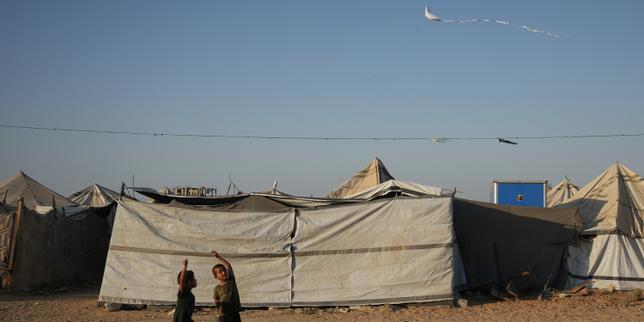
A simple paper toy shouldn't trigger military warnings. Yet, in the coastal enclave of Gaza, children flying kites face threats, surveillance, and air strikes. You've probably seen the iconic images of colorful kites dancing against a dusty Middle Eastern sky. In normal circumstances, that's childhood joy. In Gaza, those strings tie directly into decades of blockade, conflict, and psychological warfare.
Let's look at what actually happens when kids try to play outdoors there. The air isn't just filled with wind. It's crowded with drones. When youngsters launch homemade kites or balloons toward the border fence, military command centers across the barrier take notice.
The Childhood Ritual Under Surveillance
Play is a universal human right. Kids need to run, build, and imagine. But when your playground is one of the most densely populated strips of land on earth, imagination turns into survival strategy.
Children spend hours gathering scraps of plastic, lightweight wood, and string. They paste them together with whatever glue they can find. They launch them from rooftops or empty dirt lots. They watch the wind carry their creations toward the horizon.
For a brief moment, they forget the hum of overhead reconnaissance planes. They forget the electricity cuts. They forget the sound of explosions.
Then the warnings start.
Leaflets drop from the sky. Automated phone calls ring out to local families. Military spokespeople issue public statements online. The message is always clear. Flying toys near the border fence is treated as a security threat.
How a Paper Toy Became a Weapon Category
Things changed dramatically during recent border protests. People started attaching burning rags or small incendiary devices to the tails of kites and balloons. The goal was simple, even if controversial. They wanted to disrupt agricultural fields and military installations across the fence using the simplest wind-powered tools available.
It worked. Hundreds of acres of farmland and brush burned.
That tactical shift changed everything for children who just wanted to fly ordinary kites. Security forces stopped making distinctions between a harmless toy and an incendiary device. Radar systems and thermal cameras track every airborne object. Snipers and drone operators receive orders to target launch sites.
When you strip away the politics, you find kids caught in the middle. They aren't military strategists. They are just bored, traumatized children trying to reclaim a tiny piece of the sky.
The Psychological Toll on Families
Parents face an impossible dilemma in Gaza. Do you let your child go outside and risk a strike? Or do you keep them locked indoors, worsening their isolation and anxiety?
Mental health professionals working in the territory report sky-high rates of post-traumatic stress disorder among minors. Bedwetting, nightmares, and severe panic attacks are normal responses to abnormal conditions. Play is supposed to be the primary therapy for childhood trauma. When you criminalize play, you lock kids inside their own fear.
Mothers and fathers spend their days scanning the wind. They pull their kids down from rooftops. They confiscate kite string with a heavy heart. They know the risk is real. Bullets and shrapnel don't care who is holding the spool.
Beyond the Headlines
The international community often focuses purely on the rockets and the border walls. Mainstream news outlets cycle through predictable talking points whenever escalation happens. They rarely mention the small, daily tragedies. Like a child told that even the wind belongs to someone else.
If you want to understand the reality of life in the strip, look at the mundane details. Look at the restrictions on building materials, medical supplies, and children's toys. The ban on kites isn't just about fire damage. It's about control. It's about making sure no one forgets who holds the absolute monopoly on power in the airspace.
Next time you see a cheerful video of a kite festival in another part of the world, remember this contrast. Remember that in some places, catching a gust of wind is an act of defiance that can cost you your life.
Support local humanitarian organizations providing psychological first aid to children in conflict zones. Keep asking questions about the blockade. Demand that the basic human rights of kids—including the right to play safely—are respected without exception.