The rain in London does not care about your dignity. It finds the weak points in your umbrella, runs down the back of your collar, and turns the pavement into a gray mirror reflecting the weary faces of people waiting for buses that never seem to arrive.
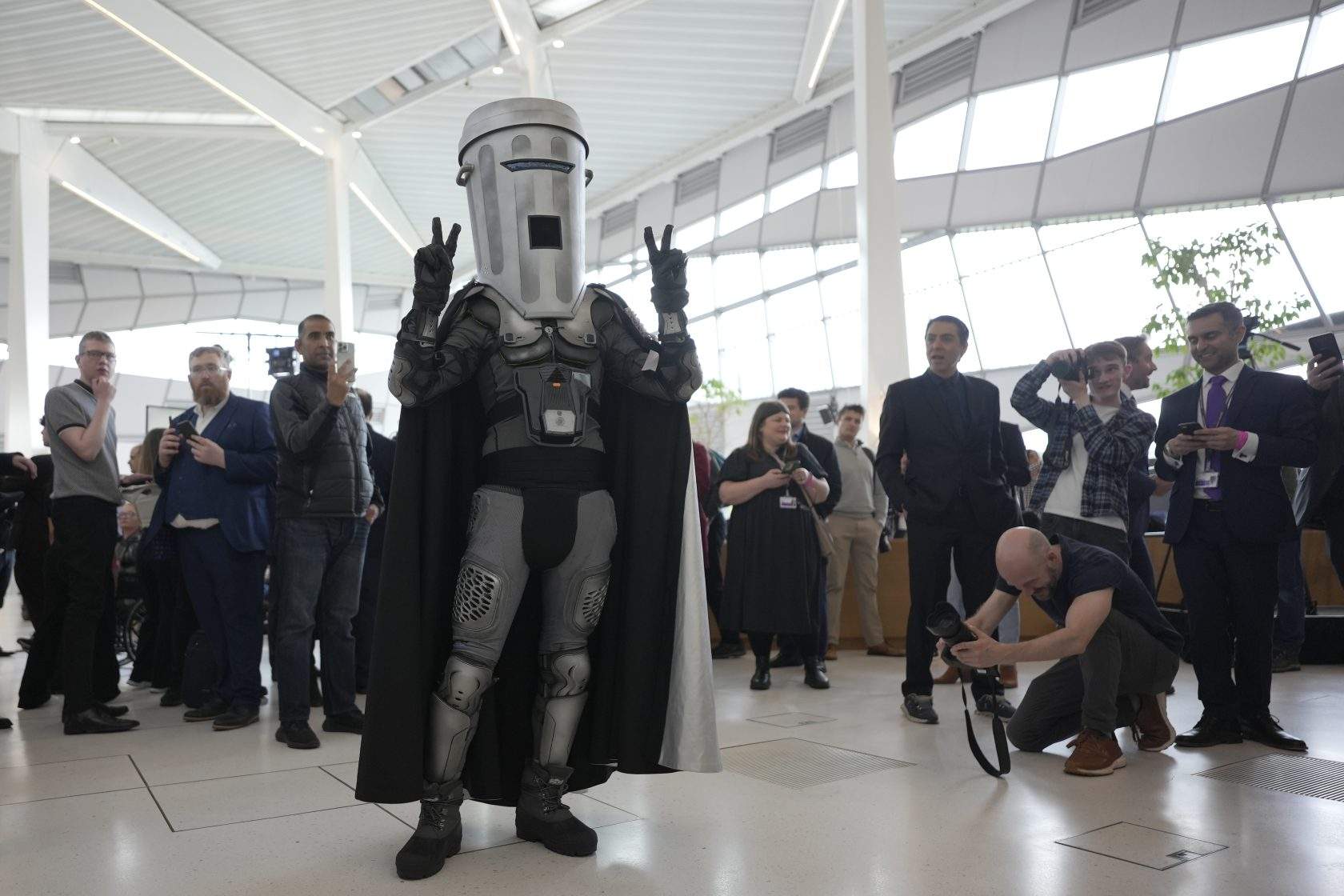
On a damp Tuesday outside a polling station, amidst the sea of navy suits, crisp campaign leaflets, and forced smiles that look like they were practiced in front of a bathroom mirror, stands a man wearing a silver bucket on his head.
His name is Count Binface.
He is not a subtle creature. His eyes peer out through a rusted slit of chrome, and a bright yellow recycling bin is bolted securely to his torso like medieval plate armor. Attached to his side is a plunger, presumably for high-stakes intergalactic diplomacy. He smells faintly of damp cardboard and stubborn optimism.
Most people walk past him with a quick, nervous shuffle. They adjust their trench coats, check their phones, and pretend the silver-domed apparition speaking fluent British English about planetary zoning laws does not exist. It is safer that way. Acknowledging the man in the trash can means acknowledging the absurdity of the entire ritual happening around him.
Because beneath the theater of British democracy—the red buses, the polished podiums, the endless marches through marginal constituencies—lies a quiet, creeping exhaustion. Voters are tired. They are tired of politicians who speak in focus-grouped paragraphs, promising a golden tomorrow while delivering a nickel-plated yesterday. They are tired of manifestos that read like insurance policies and debates that feel like custody battles.
Enter the Count.
Look closely at what happens when he steps up to a microphone. For a split second, the heavy gravity of the room shifts. Shoulders drop. Mouths twitch into genuine, helpless smiles. Even the seasoned television journalists, standing shivering in their waterproof jackets, struggle to keep a straight face.
That laughter is dangerous. It is the sound of the social contract cracking just enough to let some fresh air in.
Satire in politics is as old as the mud on Caesar's boots. When the system grows too solemn, too convinced of its own divine right, society invents a jester to pull down its trousers. In ancient Rome, it was the slave whispering memento mori into the general's ear. In modern Britain, it is a satirical candidate running against sitting prime ministers on a platform featuring the nationalization of Adele's homes and the strict pricing of motorway croissants.
Jonathan Harvey, the man inside the chrome helmet, understands something fundamental about the electorate that the political consultants in their glass towers refuse to acknowledge. People do not just want solutions; they want to be heard. And sometimes, the only way to point out that the emperor has no clothes is to show up wearing a kitchen utensil.
Consider what happens next. The votes are counted. The major party candidates retreat to their war rooms to parse the demographic shifts in the Home Counties. And Count Binface? He gets a few hundred votes, maybe a thousand. He shakes hands with police officers, gives a deadpan concession speech, and catches the night tube back to reality.
Nothing changes. And everything changes.
The numbers on the spreadsheet show a marginal blip. A statistical error. But the human record tells a different story. It tells us that a democracy is still breathing if it can laugh at itself. The day a country becomes too dignified to elect a man with a trash can on his head is the day it has lost its sense of humor, and with it, its capacity for self-correction.
The rain keeps falling on the pavement outside. The bus finally arrives, splashing a wave of dirty water over the curb. The politicians have gone inside to argue about tax rates and healthcare funding, leaving behind a damp trail of discarded flyers that will soon be swept into the gutters.
But out there in the damp chill, a silver helmet gleams under the streetlamp. A reminder that politics, at its core, is a human invention—and if we built it, we can reshape it. Even if we have to use spare parts from the hardware store to do it.