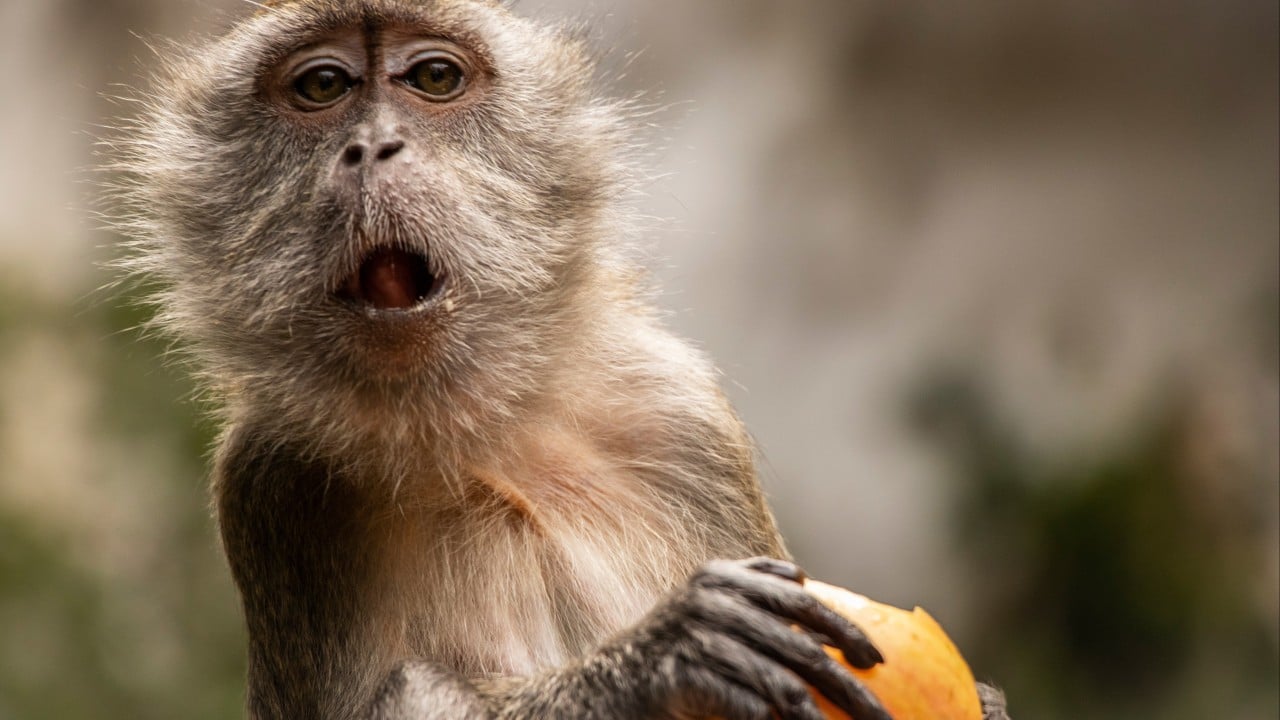
The financial press is doing it again. They see a price spike, panic, and mistake a desperate bottleneck for a roaring bull market.
Recent headlines are screaming about non-human primate (NHP) prices in China surging back toward pandemic-era highs. The mainstream narrative says this is a glorious sign of renewed vigor in drug research and development, a massive surge in preclinical spending, and a booming biotech sector.
They are looking at the data upside down.
Skyrocketing prices for cynomolgus macaques in Chinese research hubs are not proof of a thriving R&D ecosystem. They are a glaring distress signal. They reveal an industry trapped in a legacy infrastructure bottleneck, dangerously over-reliant on outdated testing models, and burning through capital on copycat drugs that will likely fail before they ever hit a human trial.
I have watched pharma giants and nimble biotechs alike blow millions of dollars securing animal cohorts for preclinical validation. The mentality is always the same: secure the monkeys at all costs, or our timeline slips. But nobody stops to ask if the timeline is leading them off a cliff.
Holding up high NHPs prices as a metric of industry health is like celebrating high oil prices during a supply crunch while EV competitors are quietly scaling up production next door. It is a fundamental misreading of the market.
The Supply Chain Illusion What Is Actually Driving the Spike
Let us correct the record on why these prices are moving. It isn't because a wave of revolutionary, first-in-class molecular discoveries suddenly hit Chinese labs. It is a structural chokehold mixed with speculative hoarding.
Preclinical testing relies heavily on the cynomolgus macaque (Macaca fascicularis). When the pandemic hit, China banned the export of these primates, effectively locking down its domestic supply for internal use. Meanwhile, the global market went into a tailspin, with US and European labs scrambling to source animals from Southeast Asia and Mauritius at astronomical markups—sometimes exceeding $30,000 per animal.
Now, as domestic Chinese drug developers attempt to ramp back up under intense state pressure to achieve biotech self-reliance, they are hitting a hard wall of restricted supply.
- The Breeding Lag: A lab-ready macaque takes four to five years to breed, reach maturity, and clear strict SPF (specific pathogen-free) certification. You cannot simply turn on a tap when venture funding returns.
- Consolidation Monopoly: Major Chinese contract research organizations (CROs) quietly spent the last few years buying up domestic breeding facilities. They didn't do this to advance science; they did it to corner the market and force captive biotechs into long-term, high-margin service contracts.
- Speculative Hoarding: Just like microchips or real estate, when an asset class looks scarce, institutional buyers over-order to hedge against future inflation.
This is an artificial bubble driven by supply constraints and corporate hoarding, not an organic demand curve driven by scientific breakthrough.
The Brutal Truth of the "Me-Too" R&D Trap
To understand why this bottleneck is so damning, you have to look at what these monkeys are being used for.
If these animals were being utilized to validate truly novel modalities—like complex multi-specific antibodies, advanced gene therapies, or highly targeted mRNA therapeutics—the high cost might be justifiable as an entry fee for high-stakes innovation.
Instead, the vast majority of preclinical R&D spending in the region is still poured into "me-too" drugs and biosimilars. These are fast-follower therapeutics designed to mimic drugs that have already succeeded in the West, aiming for a slice of the domestic market or a cheap licensing play.
Preclinical animal testing is already a brutal numbers game. Over 90% of drugs that clear animal trials fail when they enter human clinical phases.
When you apply that failure rate to copycat drugs, the economics become absurd. Companies are paying premium, bubble-era prices to test uninspired molecules on scarce primates, only to achieve the exact same result: predictable failure in Phase I or Phase II human trials because the efficacy isn't there, or the market has already moved on.
It is a massive misallocation of capital. It burns through runway while giving investors a false sense of progress based on "active preclinical pipelines."
Dismantling the Premise of the "Required" Primate Model
The industry treats the NHP toxicology study as an unshakeable commandment handed down by regulatory bodies. "The FDA and the NMPA require primate data for biologics," the compliance officers drone.
That premise is rapidly becoming obsolete.
The reliance on non-human primates is born out of historical convenience, not flawless biological alignment. While macaques share significant genetic homology with humans, their immune systems, metabolic pathways, and receptor affinities are distinctly different. Time and again, therapies show pristine safety profiles in cyno studies, only to trigger catastrophic cytokine storms or severe hepatotoxicity in human micro-dosing trials.
The tide is turning, even if conservative CROs refuse to admit it to their clients.
The passage of the FDA Modernization Act 2.0 in the United States explicitly removed the absolute mandate for animal testing prior to human clinical trials. It opened the regulatory door wide for alternative methods. Agencies are now actively looking for ways to bypass the primate bottleneck because they recognize the inherent flaws in the model.
The New Architecture of Preclinical Validation
The future of drug development belongs to companies that bypass the monkey market entirely. The alternatives are no longer science fiction; they are scaling rapidly and proving to be more predictive of human outcomes than a live animal ever could be.
| Technology | What It Replaces | Why It Is Superior |
|---|---|---|
| Organ-on-a-Chip (Microphysiological Systems) | Systemic toxicology models | Uses live human cells to replicate organ-level microenvironments, capturing human-specific toxicities that monkeys miss. |
| In Silico AI Modeling | Preliminary screening cohorts | Maps molecular interactions against vast human genomic datasets to predict off-target binding before a single wet-lab experiment occurs. |
| Human Organoids | Tissue-specific efficacy testing | Three-dimensional cell cultures derived from human stem cells that mimic actual human disease states, rather than artificial disease models induced in primates. |
By shifting capital away from $15,000-a-head monkey cohorts and into advanced human-centric platforms, forward-thinking biotechs can cut their preclinical timelines by 40% and drastically reduce the risk of late-stage clinical failure.
The Real Cost of Being Wrong
Let us be completely transparent about the contrarian approach. If you decide to buck the trend, reject the inflated CRO packages, and build your pipeline around human-centric alternative models, you will face friction.
Traditional regulatory reviewers who have spent thirty years looking at macaque blood panels will look at your organ-on-a-chip data with deep suspicion. You will have to fight harder, provide more validation data, and educate the bureaucratic apparatus. It takes courage to be the first company to submit an Investigational New Drug (IND) application without a stack of primate necropsy reports.
But the alternative is financial slow-death.
If you choose to participate in the current market frenzy, buying up overpriced animal cohorts just to satisfy an outdated milestone checklist, you are tying your company's valuation to a volatile, ethically fraught supply chain. You are letting your R&D velocity be dictated by the breeding cycles of wild animals captive in southern provinces.
Stop celebrating the return of pandemic-level pricing as a sign of biotech's resurrection. It is the final gasp of an inefficient, legacy methodology trying to survive in a world that is rapidly outgrowing it. The companies currently bragging about securing their primate supply for 2027 are the same ones that will be writing down massive losses in 2029 when their fast-follower biologics fail to replicate monkey data in human patients.
Get out of the monkey business. Build your pipeline on human data, or watch your capital burn.