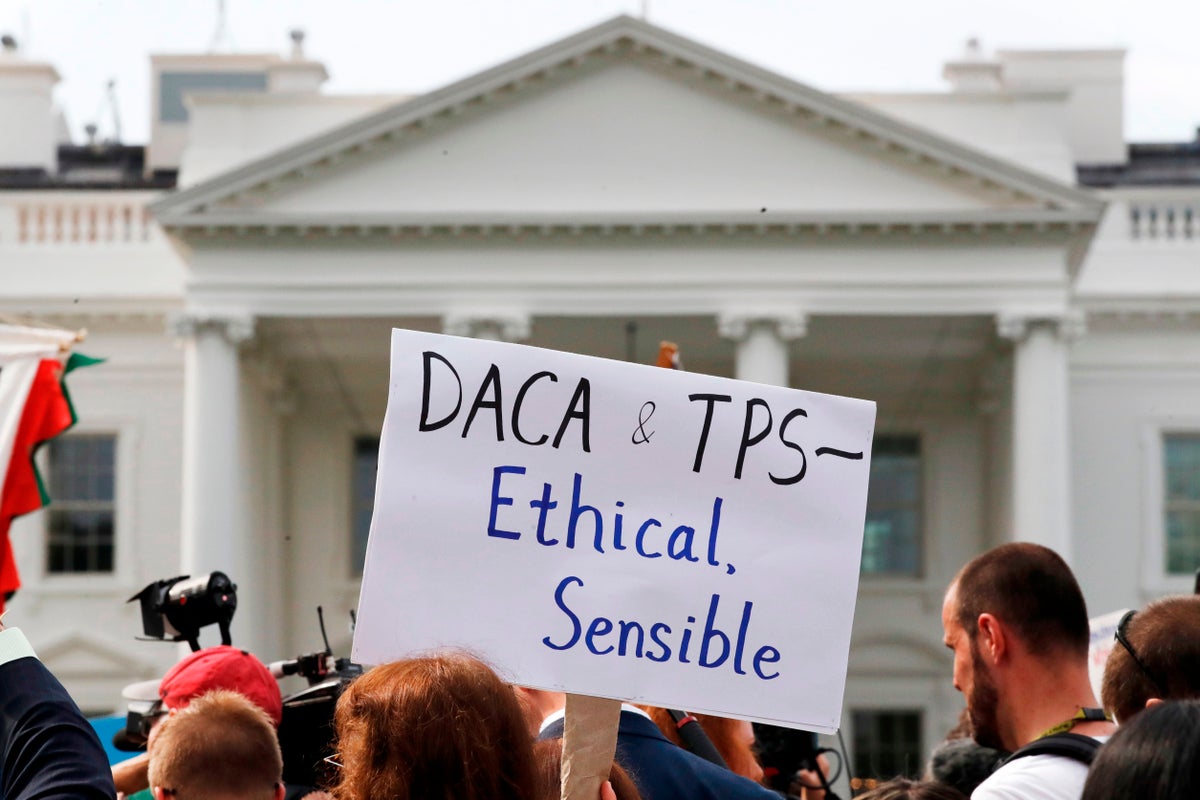
The Supreme Court is about to hear arguments on the legal protections for Haitian and Syrian migrants under Temporary Protected Status (TPS). The media is already spinning the predictable yarn: a heart-wrenching battle between humanitarian grace and cold-hearted judicial overreach. They are missing the point. The debate isn't about compassion. It is about the slow-motion collapse of administrative law and the "temporary" lie that has governed American immigration policy for thirty years.
The "lazy consensus" suggests that removing these protections is a radical departure from American values. In reality, the radical act is the executive branch’s habit of turning a transient emergency fix into a permanent, unauthorized residency program without a single vote from Congress. We have stopped debating law and started debating feelings, and that is exactly why the system is broken.
The Temporary Lie
Let’s define our terms with surgical precision. TPS was never meant to be a path to citizenship. It was designed as a pause button—a way to avoid sending people back into the immediate teeth of a hurricane or a civil war.
The keyword is Temporary.
When a designation for a country like Haiti or Syria is renewed for a decade or more, it ceases to be an emergency measure. It becomes a shadow immigration system. By indefinitely extending these protections, successive administrations have bypassed the legislative process. They’ve created a "legal" status that exists in a gray zone, providing no long-term certainty for the migrants and no accountability for the taxpayer.
I have watched policy wonks in D.C. scramble to justify these extensions by citing "ongoing instability." Newsflash: the world is unstable. If "instability" is the bar for permanent residency, then the statutory limits of TPS are functionally nonexistent. We are no longer following a statute; we are following a whim.
The Incentive Trap
The mainstream narrative ignores the feedback loop. When you signal to the world that "temporary" actually means "indefinite," you create a massive pull factor. You aren't just helping those already here; you are inadvertently marketing to those considering a dangerous trek across the hemisphere.
Critics will claim that ending TPS for these groups is cruel because they have "built lives here." That is true. They have. But that is the fault of the bureaucrats who refused to make a hard decision ten years ago. By kicking the can down the road, the government has set these families up for a much harder fall.
Imagine a scenario where a landlord tells a tenant they can stay for a weekend because their house flooded, then ignores them for twenty years, only to suddenly remember the lease agreement. The landlord is incompetent, but the tenant still doesn’t own the house. We are currently blaming the "lease" (the law) instead of the "landlord" (the Executive branch).
Breaking the Premise: The Wrong Questions
People keep asking: "How can we deport people to a country in crisis?"
That is the wrong question. The real question is: "Does the Executive branch have the authority to rewrite immigration law through administrative renewals?"
If the Supreme Court rules against the current protections, it won’t be because the Justices hate migrants. It will be because the Constitution does not permit the President to invent a permanent residency class out of thin air.
Common Misconception: TPS is a Right
TPS is a discretionary benefit. It is an act of sovereign grace, not an entitlement. When the conditions that triggered the status change—even if the new conditions aren't perfect—the status should end. If we want these individuals to stay permanently, there is a mechanism for that. It’s called a bill. It goes through Congress.
Common Misconception: Economic Collapse
Opponents of ending TPS argue that losing these workers will tank local economies. This is a classic "broken window" fallacy. While specific industries might feel a localized pinch, the rule of law is the ultimate economic foundation. A country that manages its borders and its legal statuses through predictable, legislated rules is far more stable than one governed by the shifting winds of executive orders.
The Brutal Reality of Reform
The contrarian truth is that the Supreme Court striking down these extensions might be the best thing that ever happened to immigration reform.
As long as TPS acts as a pressure valve, Congress has zero incentive to actually fix the system. Why take a hard vote on a pathway to residency when the President can just sign a piece of paper every eighteen months? By removing the "temporary" band-aid, the Court forces the legislature to finally do its job.
Yes, the transition will be messy. Yes, there will be individual cases that are genuinely tragic. But you cannot run a superpower on a series of administrative loopholes.
The Sovereignty Tax
Every time we ignore the expiration date on a "temporary" program, we pay a sovereignty tax. We erode the distinction between legal immigration and administrative fiat. We tell the millions of people waiting in line, paying fees, and following the rules that they are suckers.
The Syrian and Haitian designations have become symbols of a government that prefers the path of least resistance over the path of law. The Supreme Court isn't deciding the fate of migrants; it’s deciding if words still have meaning. If "temporary" can mean "forever," then no law is safe from administrative reinterpretation.
Stop looking for the humanitarian angle and start looking at the structural rot. We have built a house on sand, and we’re acting surprised that the tide is coming in.
Congress needs to vote. The President needs to follow the statute. The "temporary" lie needs to die.