You can smell a storm in Toronto before you see it.
The air loses its sharpness, turning thick and heavy with Lake Ontario moisture. It clings to your skin. The sky over the CN Tower shifts from a crisp summer blue to a bruised, cinematic purple. For a city built on hard edges and concrete grids, this sudden humidity always feels like a warning.
But on this particular afternoon, the heavy air is fighting a completely different kind of energy.
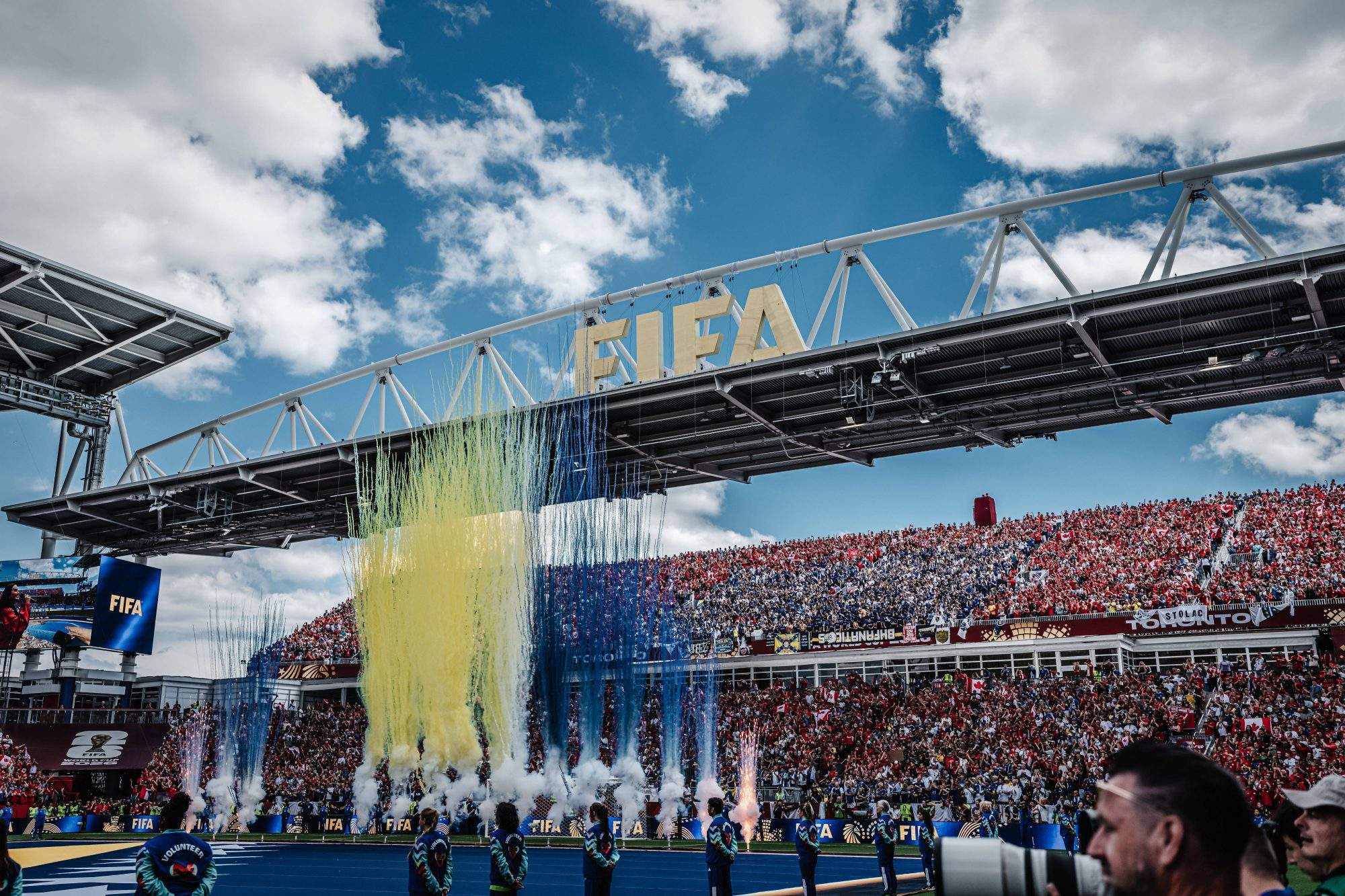
Walk down Front Street, and the usual commuter hum is buried under a wall of sound. Drums. Horns. Anthems sung in languages that usually only echo inside living rooms or subterranean bars. The World Cup is here, for its second historic match in the city, and Toronto has spent years preparing to show the globe its best self. The banners are immaculate. The transit system is braced. Millions of dollars have been poured into logistics, security, and hospitality.
Nature, however, does not care about tournament brackets or broadcasting rights.
While forty thousand fans scream inside the stadium, a massive meteorological front is rolling in from the west. It is a collision course of human ambition and atmospheric volatility. What happens when the world’s biggest party meets a classic Canadian summer squall? The answer isn't found in weather apps or municipal press releases. It is found on the streets, in the stands, and in the quiet, frantic war rooms where local officials are realizing that the script they spent a decade writing is about to be rewritten by the sky.
The Microcosm on the Concrete
To understand what is at stake, you have to look at someone like Mateo.
Mateo is a hypothetical fan, but he represents a very real, very vibrant slice of Toronto this week. He spent his life savings on a single ticket. He flew in from Bogotá, landed at Pearson International, and immediately submerged himself in the city’s dizzying multiculturalism. To Mateo, this match isn't just ninety minutes of soccer. It is a pilgrimage. It is proof that his culture belongs on the world's grandest stage.
Right now, Mateo is standing outside a fan zone, wrapped in his country's flag, eating a hot dog from a street cart while a cold breeze suddenly whips up from nowhere, sent ahead by the approaching storm.
He shivers, but he doesn't care. He is surrounded by thousands of people just like him. They have waited a lifetime for this moment. They are loud. They are joyful. They are entirely oblivious to the Doppler radar screens flashing red just a few kilometers away.
The core reality of hosting a global mega-event is that you are not just managing a stadium; you are managing a living, breathing ecosystem of human emotion. When a severe thunderstorm warning hits a standard Tuesday afternoon, people go home. They run from their office towers to the subway, order delivery, and watch the rain beat against their windows.
But when that same storm hits a World Cup matchday, nobody wants to leave.
The emotional investment is too high. Fans who have traveled across oceans will not willingly retreat into a hotel lobby. They will stay on the streets. They will crowd under flimsy patio awnings. They will dare the lightning to interrupt their joy. This creates a unique nightmare for city planners: a dense, highly localized population that is actively resisting the instinct to seek shelter.
The Invisible Architecture of Safety
Behind the scenes, far from the singing crowds, the atmosphere is tense.
Inside the city's emergency operation hubs, meteorologists, transit directors, and tournament organizers are staring at screens. They are tracking a line of severe cells capable of producing torrential downpours, damaging winds, and frequent cloud-to-ground lightning.
Consider the mathematics of a stadium evacuation. You cannot simply pull a fire alarm and expect forty thousand hyper-charged, multilingual fans to exit in an orderly fashion, especially when the environment outside the gates is hostile. It requires a delicate, highly synchronized ballet of communication.
The stadium itself is a masterpiece of modern engineering, capable of handling immense crowds, but a thunderstorm introduces variables that engineering cannot fully control.
First, there is the pitch. Professional soccer surfaces are designed to drain water at astonishing rates, often handling inches of rain per hour through sophisticated underground filtration systems. But even the best turf has a breaking point. When water pools on the grass, the ball stops rolling. The game changes from a display of world-class athleticism into an unpredictable, dangerous slip-and-slide. A player's knee twists on a waterlogged patch. A multi-million-dollar career hangs in the balance of a single puddle.
Then, there is the real danger: lightning.
In the sports world, lightning is the ultimate hard stop. Modern safety protocols dictate that if a strike occurs within a specific radius—usually around ten kilometers—the match must be suspended immediately. Players are ushered into tunnels. Fans in open-air sections are told to seek cover in the concourses.
But a stadium concourse during a weather delay is a strange, claustrophobic pressure cooker.
Thousands of people, wet and frustrated, crammed into concrete hallways designed for walking, not waiting. The beer lines grow long. The adrenaline that was supposed to be burned off on the pitch begins to curdle into anxiety. The singing stops, replaced by the collective glare of thousands of smartphone screens searching for updates. The economic engine of the event stalls. Television networks globally face dead airtime, scrambling to fill slots with recycled commentary while viewers around the world stare at images of an empty, rain-swept field.
The Beautiful, Messy Reality
Yet, there is a profound mistake in viewing this looming storm purely as a crisis.
We live in an era that worships predictability. We want our sports perfectly scheduled, our transit seamless, our experiences curated and sanitized. We buy tickets months in advance and expect the world to bend to our calendars. A thunderstorm is a blunt reminder that we are still guests on this planet, subject to its sudden, chaotic whims.
But watch what happens on the streets of Toronto as the first heavy drops finally begin to fall.
The wind slams through the concrete canyons, sending stray napkins and discarded plastic cups swirling into the air. The sky darkens to near-night. A crack of thunder rattles the glass facades of the financial district.
And then, the downpour arrives.
It does not dampen the mood; it amplifies it.
Fans do not run away; they crowd closer together. Under the concrete overhang of a highway overpass, two opposing groups of supporters—who an hour ago were exchanging tense glances—find themselves sharing a small patch of dry pavement. Someone starts a chant. A drum beat resumes, echoing off the underside of the expressway. A street vendor starts handing out plastic ponchos, his business suddenly booming as he laughs with a family from across the globe.
This is the hidden alchemy of a city under siege by weather. The shared discomfort breaks down the final barriers of strangerhood. The storm strips away the corporate polish of the tournament and reveals its true, raw heart. It becomes a story to tell later. Remember the second match? Remember when the sky opened up and we danced in the deluge outside the gates?
The match will eventually be played. The rain will stop, the water will drain into the lake, and the grass will dry under the stadium lights. The statistics will show who won and who lost, who scored and who went home brokenhearted.
But long after the final whistle blows, the people who were here will remember the afternoon the city shook. They will remember standing on the edge of the continent, watching the lightning split the northern sky, feeling very small, very wet, and entirely alive.