Ground shaking at a magnitude of 4.7 isn't usually a global catastrophe, but when it hits Europe's most restless supervolcano, people pay attention.
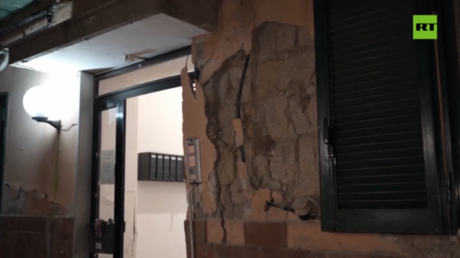
Italy's Campi Flegrei volcanic region just suffered its strongest tremor in four decades. The shockwave hit at 7:46 PM on a Friday, sending residents of Pozzuoli and Naples running into the streets. Power lines went dark. Elevators trapped panicked passengers. Chunks of masonry detached from aging structures, and roughly 290 people had to abandon their homes as authorities flagged unsafe buildings.
If you've ever wondered what it feels like to live right on top of a ticking geological clock, southern Italy provides a stark answer. Half a million people call this caldera home. They aren't going anywhere, either. Generations have built lives, opened businesses, and raised families inside the massive crater ring.
Understanding the Bradyseism Phenomenon
Why does the ground keep moving here? The culprit is bradyseism.
Think of the earth's crust in this part of Campania as a giant, hyper-sensitive sponge. Magma and hydrothermal fluids shift deep underground, pushing the surface upward or letting it sink over multi-year cycles. In the 1970s and 1980s, similar ground-lifting crises forced mass evacuations, particularly in the seaside town of Pozzuoli.
When people hear "supervolcano," they picture an apocalyptic Hollywood film wiping out half the continent. Volcanologists from Italy's National Institute of Geophysics and Volcanology (INGV) take a more measured approach. Most current tremors stem from gas and fluid pressures shifting below, rather than fresh magma rushing up to blow the lid off the crater.
Even so, structural safety is an immediate crisis. Civil protection minister Nello Musumeci urged extreme caution as emergency teams cordoned off damaged streets and inspected municipal properties. When a 4.7-magnitude jolt hits at a shallow depth of roughly 2.6 kilometers, older masonry simply cannot take the strain.
The Reality of Emergency Response in Old Cities
Handling an earthquake swarm in a densely packed historic zone creates a logistical nightmare. Narrow alleys block heavy machinery. Medieval structures lack modern seismic retrofitting.
When the ground rolled on Friday night, local municipal operations centers kicked into overdrive. Firefighters logged dozens of calls regarding structural cracks and debris-littered roadways. Around 130 families received immediate displacement orders while engineers evaluated whether their walls could withstand the ongoing aftershocks.
Dozens sustained minor injuries—mostly fractures and trauma from escaping in a panic. Considering the raw power of the tremor and the fragility of the local architecture, it's a miracle the casualty count stopped where it did.
What Comes Next for Residents
Volcanologists warn that the seismic swarm won't stop overnight. More secondary shakes exceeding magnitude 3 remain entirely possible. For the people living in the shadow of Vesuvius and Campi Flegrei, resilience is a daily requirement. They track seismic charts the way other cities check weather apps.
Authorities continue to update evacuation protocols and reinforce public structures. If you're traveling through the region or monitoring Mediterranean geology, keep an eye on official updates from the Italian Civil Protection Department. Preparing an emergency go-bag and knowing your nearest open assembly area isn't paranoia down here—it's just basic common sense.