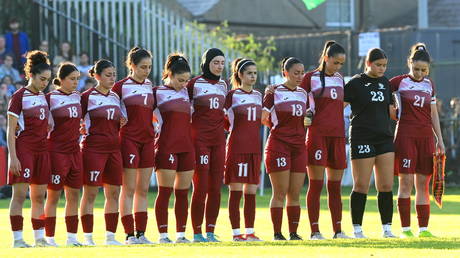
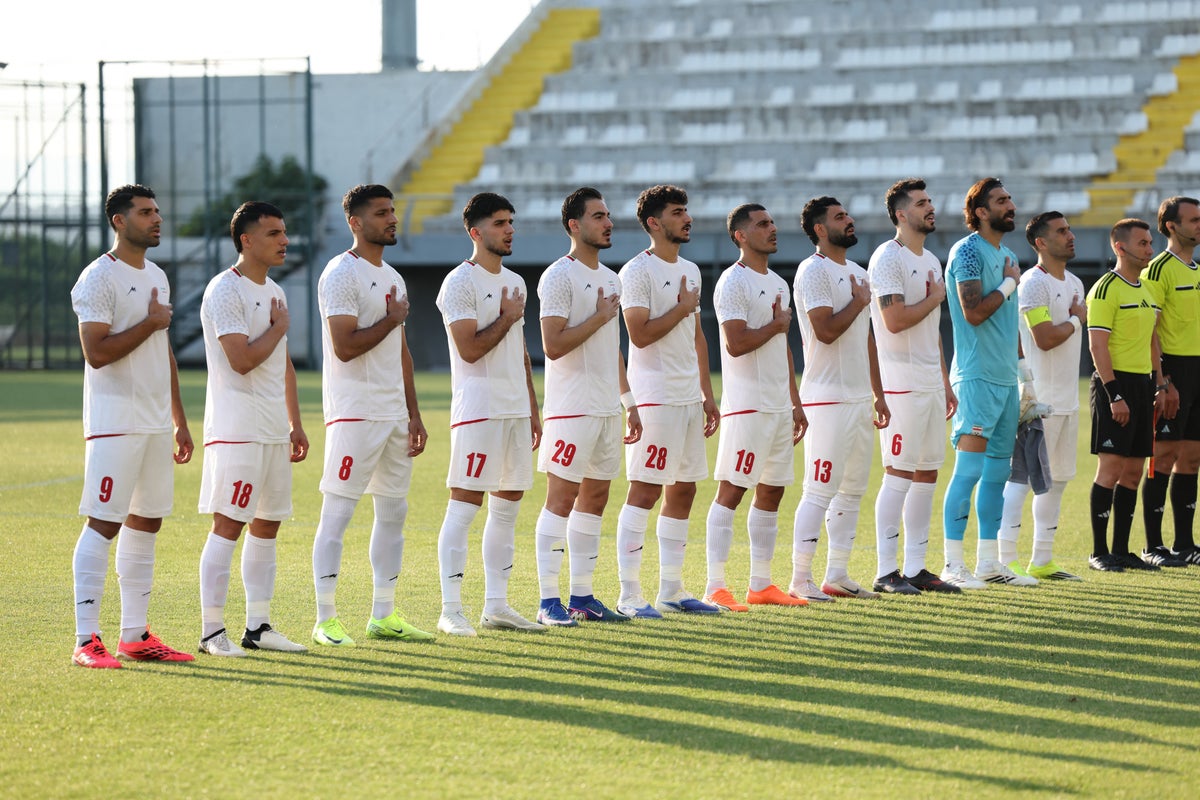
The arrival of 48 national football teams in North America marks the execution phase of the largest cross-border sporting event in history. Moving from a 32-team format to a 48-team matrix expands the operational footprint by 50 percent, creating unprecedented logistical friction across three sovereign nations: the United States, Canada, and Mexico. The success of this tournament depends not on athletic performance, but on minimizing the friction coefficient of transport, acclimatization, and supply-chain deployment across 16 distinct host cities.
The traditional tournament model relied on localized hubs—centralized clusters where teams faced minimal travel times between matches. The 2026 tri-nation framework dismantles this paradigm. Teams face a massive geographic spread spanning four time zones and extreme climatic variations, from the high altitude of Mexico City to the coastal humidity of Miami. Maximizing athletic output under these conditions requires an analytical breakdown of the three core pillars governing the arrival and stabilization phase: transit efficiency, physiological acclimatization, and structural security.
The Tri-Nation Transit Matrix: Quantifying Border and Distance Friction
The expanding tournament scale creates a geometric progression in travel complexity. To understand the operational strain, the logistics must be viewed through a network topology lens, where host cities act as nodes and team movements represent vectors.
[Group Stage Clusters] ---> [Cross-Border Transit Nodes] ---> [Match Day Venues]
         │                                 │                              │
         ▼                                 ▼                              ▼
Time Zone Shifts                    Customs Clearance              Microclimate Spikes
(Up to 4 Hours)                    (US / CAN / MEX)               (Altitude vs. Humidity)
The arrival phase introduces three distinct vectors of friction that teams must mitigate before the opening whistle.
1. The Customs and Immigration Bottleneck
Unlike previous tournaments hosted within the European Union or compact single-state borders (such as Qatar in 2022), the 2026 tournament requires constant navigation of distinct legal jurisdictions. National delegations—comprising roughly 50 to 70 individuals per country, including players, technical staff, medical personnel, and tons of specialized equipment—must pass through expedited but legally separate customs frameworks.
The primary vulnerability is the transit of specialized medical and rehabilitation equipment, cryogenic chambers, and proprietary nutritional supplements. Variations in border regulations mean that items permitted in the United States may face regulatory holds in Mexico or Canada. Teams that failed to secure pre-clearance bonds months in advance face immediate operational delays, disrupting tight training schedules.
2. Time Zone Disruption and Circadian Degradation
The geographic spread introduces a variable that sports science teams quantify as Circadian Travel Tax. Teams arriving from European, Asian, or African base camps face time zone shifts of up to nine hours. Crossing these lines disrupts melatonin production and alters core body temperature cycles, which directly degrades peak athletic performance.
The logistical countermeasure requires calculating a stabilization ratio: one day of low-intensity acclimatization for every time zone crossed. Delegations arriving late in North America compress this stabilization window, forcing players into high-intensity tactical sessions while experiencing elevated cortisol levels and impaired cognitive processing.
3. Domestic Charter Scaling
The sheer volume of concurrent team movements strains private aviation infrastructure. During the group stage, 48 teams move dynamically between base camps and match venues. This requires a dedicated fleet of commercial-grade charter aircraft operating on precise slots.
Because North American airspace is already among the most congested globally, minor weather disruptions at major hubs like Chicago O'Hare, Atlanta Hartsfield-Jackson, or New York JFK create cascading delays. A two-hour delay on a charter flight directly shortens the recovery window between matches, accelerating physical fatigue across a squad.
Physiological Adaptability: The Microclimate and Elevation Variables
Arriving in North America is not a uniform experience; it is an entry into highly distinct ecological zones. The tournament's macro-geography forces a confrontation with two primary physiological stressors: high altitude and extreme thermal heat indexes.
The following matrix categorizes the primary environmental stressors across key host regions and the physiological tax they levy on athletes:
| Host Region / City | Primary Environmental Stressor | Physiological Tax / Mechanism | Required Mitigation Window |
|---|---|---|---|
| Mexico City / Guadalajara | High Altitude ($>1,500\text{m}$) | Reduced $VO_2\text{ max}$, hypoxic stress, accelerated dehydration | 10 to 14 days for erythrocyte adaptation |
| US Gulf Coast / Miami | Extreme Thermal Index (High Humidity) | Impaired evaporative cooling, elevated core temperature, rapid glycogen depletion | 7 to 10 days for plasma volume expansion |
| Pacific Northwest / Canada | Moderate Oceanic | Minimal environmental stress; primary risk is travel-induced stiffness | 2 to 3 days for standard travel recovery |
The Hypoxic Constraint
Venues in Mexico, specifically Mexico City ($2,240$ meters above sea level) and Guadalajara ($1,566$ meters), present a severe hypoxic challenge. At these elevations, the partial pressure of oxygen is significantly lower, reducing the pressure gradient between the alveoli in the lungs and the pulmonary capillaries. The immediate result is a drop in an athlete's $VO_2\text{ max}$—the maximum rate of oxygen consumption—by approximately 1% for every 100 meters scaled above a 1,500-meter baseline.
Teams establishing their initial base camps at sea level before traveling to high-altitude matches commit a critical strategic error. Short-term exposure (arriving 24–48 hours before a match) limits the acute symptoms of altitude sickness but does nothing to restore aerobic capacity. True adaptation requires a minimum of 10 to 14 days, during which the kidneys increase erythropoietin (EPO) production, stimulating red blood cell synthesis to enhance oxygen-carrying capacity. Teams that balanced their arrival strategies by training at elevation prior to the tournament hold a distinct physical advantage in the opening rounds.
The Thermal Deficit
Conversely, teams assigned to clusters along the US Gulf Coast or the Northeast corridor face severe heat and humidity. High relative humidity prevents the evaporation of sweat from the skin—the human body’s primary mechanism for heat dissipation. When the wet-bulb globe temperature exceeds critical thresholds, athletes experience rapid increases in core temperature, leading to early cardiovascular fatigue and accelerated glycogen depletion.
To combat this, elite delegations utilize specialized heat-acclimatization protocols during their initial arrival phase. This involves training in environmental chambers or deploying deliberate dehydration-rehydration strategies designed to expand blood plasma volume, which lowers heart rates and improves sweat efficiency at lower skin temperatures.
Base Camp Architecture: Securing the Controlled Micro-Environment
The selection and occupation of a Team Base Camp (TBC) represents the foundational building block of the tournament campaign. A TBC is not merely a hotel and a training pitch; it is a highly secure, biologically isolated micro-environment designed to eliminate external variables.
The operational efficiency of a base camp depends on three critical parameters:
- Proximity Vector: The transit time between the team hotel, the training facility, and the primary airport hub must not exceed 20 minutes via secured police escort. Every minute spent in a motorcoach increases muscular tightness and mental fatigue.
- Pitch Standardization: Training surfaces must exactly mimic the pitch technology of the match stadiums. This means duplicating the grass species (e.g., hybrid perennial ryegrass vs. Bermuda grass blends), soil moisture levels, and even the firmness of the sub-base layer to prevent acute tendon and ligament injuries.
- Counter-Intelligence and Privacy: The expansion of commercial drone technology and digital espionage has changed the security paradigm around team arrivals. Modern base camps require sophisticated signal-jamming capabilities, physical screening perimeters, and restricted airspace authorizations to protect tactical preparations from media and opponent reconnaissance.
The structural challenge of the 2026 tournament lies in the scarcity of elite-tier facilities that meet these criteria simultaneously. With 48 teams competing for resources, a clear hierarchy emerges. Top-tier nations secured premium facilities—such as NFL team headquarters or MLS academies—leaving lower-ranked federations to rely on collegiate facilities that require significant retrofitting to meet international performance standards.
Strategic Allocation of Recovery Capital
As the group stage begins, the data indicates that physical degradation will occur at a faster rate than in any previous World Cup tournament. The teams that advance will not necessarily be the most talented, but rather those that manage their recovery assets with the highest mathematical precision.
The immediate operational priority for technical directors is the establishment of a localized recovery index for every player. This requires real-time monitoring of heart-rate variability (HRV), sleep architecture via wearable biometrics, and biomarkers of muscle damage such as creatine kinase levels. When a player’s metrics cross into a high-fatigue threshold, the coaching staff must possess the structural discipline to rotate the squad, even at the expense of short-term tactical continuity. The scale of North America penalizes physical over-extension with absolute certainty; managing the arrival and stabilization phase is simply the first step in surviving the tournament's vast geography.