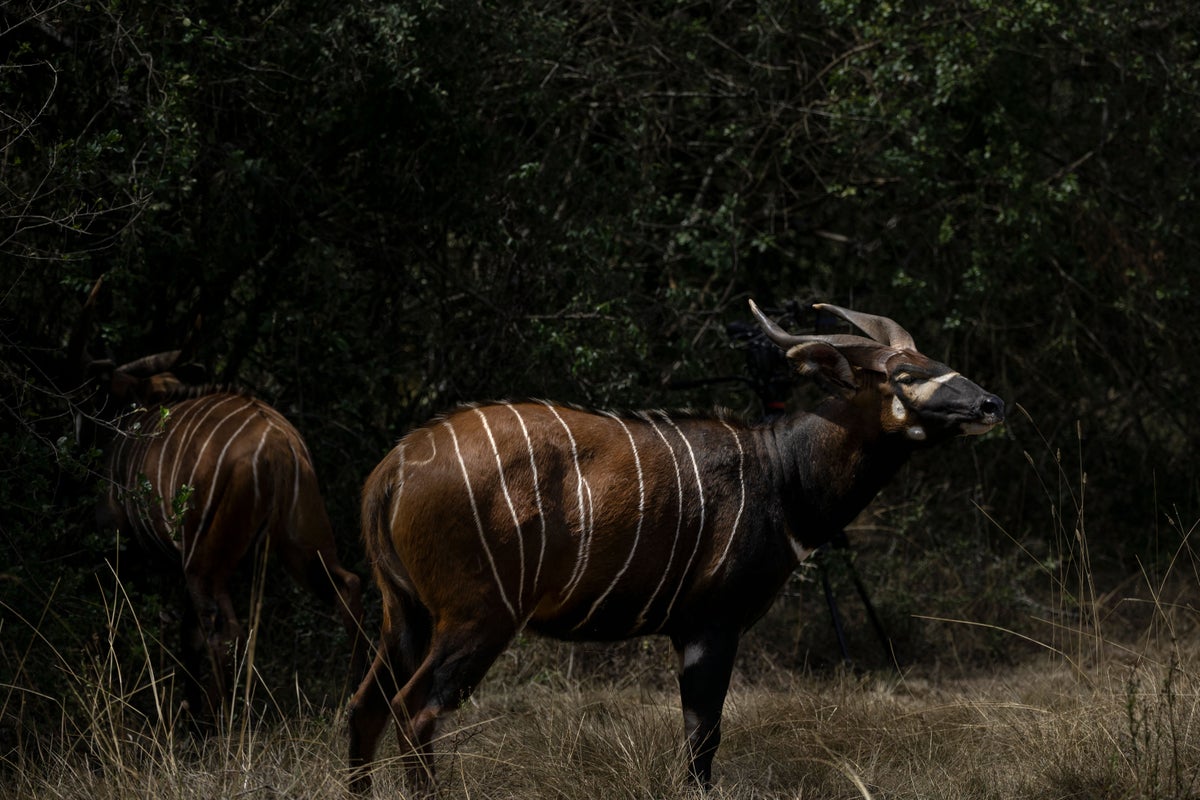
Ten mountain bongos recently touched down on Kenyan soil, ending a generational exile in the Czech Republic. This relocation from Safari Park Dvůr Králové to the Mount Kenya Wildlife Conservancy represents more than a simple logistics feat; it is a desperate attempt to pull a subspecies back from the edge of extinction. With fewer than 100 individuals remaining in the wild, the arrival of these animals is the primary hope for diversifying a stagnant gene pool. However, the success of this mission depends entirely on whether Kenya can protect these animals from the same threats—poaching and habitat loss—that wiped them out decades ago.
Survival in a Fragmented Forest
The mountain bongo is a ghost in its own home. Unlike their more common cousins in West Africa, the Eastern or mountain bongo is larger, heavier, and trapped in shrinking islands of high-altitude forest. By the early 2000s, the population had plummeted so severely that the animal was classified as critically endangered. The cause was a lethal cocktail of rapid human encroachment, the bushmeat trade, and the devastating rinderpest outbreaks of the late 19th and 20th centuries. Meanwhile, you can find related events here: The Nobel Peace Prize Transaction and the 287 Reasons Why Oslo is Bracing for Impact.
While the world looked elsewhere, the bongo effectively vanished from the wild. The forests of the Aberdares, Mount Kenya, and the Mau Forest Complex became silent. What remained of the species lived on in international zoos. This created a biological safety net, but it also presented a problem. Animals raised in the controlled environments of Europe and North America lose the survival instincts necessary for the African bush. They don't know how to dodge a leopard or which plants are toxic.
The current strategy involves a halfway house approach. These ten bongos aren't being dumped into the forest and left to fend for themselves. They are being moved into massive, fenced sanctuaries that mimic their natural habitat while providing a layer of security. The goal is to let them breed in a semi-wild state, ensuring that the next generation is "wild-born" and better equipped for a future release into the unfenced wilderness. To explore the full picture, check out the excellent article by Reuters.
The Genetic Bottleneck
Conservation is often a numbers game, and the math for the mountain bongo is brutal. When a population drops below a certain threshold, inbreeding becomes an inevitability. This leads to reduced fertility and a weakened immune system. The ten bongos from the Czech Republic are valuable because they carry genetic lineages that have been isolated from the Kenyan remnants for years.
Integrating these animals is a high-stakes clinical procedure. Scientists must carefully manage the breeding pairs to maximize genetic diversity. If they fail, the population might grow in number but remain biologically fragile, susceptible to a single disease outbreak that could wipe out the entire project. This isn't just about counting heads; it's about the quality of the DNA being passed down.
The Czech zoo has been a silent partner in this for years. They have maintained one of the most successful breeding programs for African ungulates in the world. Their contribution is the result of decades of meticulous record-keeping and animal husbandry. Moving these animals across continents involves massive crates, specialized aircraft, and a team of veterinarians monitoring heart rates and stress levels every minute they are in the air.
The Security Paradox
You can move all the bongos in the world, but if the forest isn't safe, you are just providing expensive meals for poachers. Kenya has made significant strides in wildlife protection, yet the pressure on its natural resources is higher than ever. The mountain forests are vital water towers for the country, but they are also targets for illegal logging and charcoal production.
The Mount Kenya Wildlife Conservancy has had to build a private army of sorts to protect the sanctuary. Community engagement is the only way this works long-term. If the people living on the edge of the forest don't see the bongo as an asset, the animal has no future. Conservationists are now tying the survival of the bongo to local economic benefits, such as jobs in eco-tourism and improved infrastructure.
It is a fragile peace. The demand for bushmeat persists in some regions, and the bongo's striking horns make it a trophy target. A single lapse in security can undo five years of breeding progress. The fences are a necessary evil, a temporary barrier against a world that has become increasingly hostile to large mammals.
Beyond the Zoo Walls
Critics of captive breeding programs often point to the high cost and low success rates of reintroduction. It is vastly more expensive to fly a bongo from Europe to Kenya than it is to protect one already in the wild. But for the mountain bongo, that ship has sailed. There aren't enough wild individuals left to sustain a recovery without outside help.
This project serves as a test case for "rewilding" in the 21st century. It challenges the notion that a species is "saved" just because it exists in a zoo. True conservation requires the restoration of the animal to its ecological niche. The bongo is a keystone species for the high-altitude forests; their grazing habits and movement patterns help shape the vegetation and support other life forms.
The journey of these ten animals is a heavy burden for a small herd. They carry the expectations of international donors, the pride of the Kenyan government, and the survival of their entire lineage. The transition period will be difficult. The climate in the Czech Republic is a far cry from the misty, humid slopes of Mount Kenya. The animals must adapt to different parasites, different forage, and a different rhythm of life.
The Human Factor in the High Forest
We often talk about conservation as if it happens in a vacuum, but it is deeply political. The Kenyan government has put its weight behind the National Mountain Bongo Recovery Action Plan. This isn't just about biology; it is about national identity. The bongo is a flagship species, a symbol of Kenya’s unique biodiversity that rivals the more famous "Big Five."
Success will not be measured by the arrival of these crates, but by the birth of the first calves in the sanctuary and their eventual migration into the open forest. The timeline is measured in decades, not years. This requires a level of institutional patience that is rare in the modern world. Funding must be consistent, and political will must remain firm even as other crises demand attention.
The mountain bongo is a specialist. It needs a very specific type of environment to thrive. As climate change shifts the boundaries of Africa’s mountain forests, the bongo’s available habitat may shrink even further. Conservationists are now looking at reforestation projects to expand the "green corridors" that allow bongos to move between different forest patches, preventing genetic isolation.
The crates have been opened. The animals have stepped out into the Kenyan air. Now, the real work of survival begins in the shadows of the forest canopy, where the mountain bongo must learn to be wild again. Success depends on a permanent commitment to guarding the forest as fiercely as we guard the animals themselves.