There is a specific kind of quiet that lives in the basements of old government buildings. It smells of damp concrete, ozone, and decades-old paper. I remember sitting in one of those rooms during a routine archival review, holding a yellowed Civil Defense pamphlet from 1962. The cover featured a cartoon duck telling children to duck and cover under school desks, as if a multi-megaton thermonuclear warhead could be negotiated with a sturdy piece of plywood. We laughed about it then. We called it naive.
We thought we outgrew our terror. We were wrong. We simply grew tired of it.
Fear is an exhausting emotion. The human nervous system was never built to sustain a high-alert panic for eight decades. When the Cuban Missile Crisis peaked in October 1962, people emptied grocery shelves, drove spikes into the earth for backyard fallout shelters, and stared at the October sky waiting for the sun to rise twice in a single afternoon. That was visceral. That was loud.
Today, the doomsday clock sits closer to midnight than it ever did during the height of the Cold War. Yet the grocery stores are full. The traffic on the interstate moves at its usual, maddening crawl. Nobody is digging shelters. Nobody is looking up.
Why? Because the human brain has an evolutionary flaw. It responds instantly to the growl of a tiger in the brush, but it goes completely blind to a slow-moving, invisible radiation leak in the geopolitical atmosphere. We have habituated ourselves to the end of the world.
Consider Elena, a fictional archivist living in Berlin, though she could just as easily be in Chicago or Seoul. She wakes up, makes coffee, checks her phone, and reads a routine headline about a suspended nuclear arms treaty or a modernized ICBM silo test three time zones away. She sighs, swipes the notification away, and worries about her commute. The headline is dry. It uses words like deterrence, escalation dominance, and strategic stability. These are linguistic anesthetics. They are designed to numb the mind so that statesmen can talk about mass annihilation with the detached clinical precision of accountants reviewing quarterly losses.
Language matters. When we sanitize the apocalypse, we invite it.
To understand how we lost our fear, we have to look at how we lost our imagination. In the nineteen-fifties and sixties, the threat had a face. It had sirens that wailed across American and European suburbs every first Wednesday of the month. It had black-and-white photographs of atomic shadows burned permanently into the stone of Hiroshima. The destruction was physical, immediate, and painfully clear.
Then the Cold War ended. The Soviet Union dissolved into a mess of economic ruin and political chaos, and the world breathed a collective, monumental sigh of relief. We packed up our nuclear anxiety and put it in the attic, assuming it was a relic of a more primitive age. We assumed history had ended and that liberal democracy had permanently won the day.
History, as it turns out, does not end. It merely takes a nap.
While we were busy building the internet, launching smartphones, and arguing about global trade, the nuclear architecture quietly rotted from the inside out. Bilateral treaties that took decades to negotiate were tossed aside like old contracts. New hypersonic delivery systems were developed, capable of bypassing missile defense grids in minutes. Nations that once sat at opposite ends of a bipolar standoff multiplied. The board game changed from a predictable two-player match to a chaotic, multi-sided poker game played in the dark.
And yet, public consciousness remained asleep.
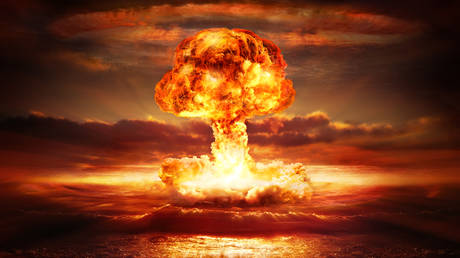
Part of this is due to the nature of modern risk. The threats we face today are abstract. They lack the cinematic clarity of a mushroom cloud rising over a city skyline. They exist in computer code, in missile telemetry, in the quiet backrooms of ministries where diplomats trade veiled threats about red lines. Because we cannot see the warheads sitting in our backyards, we assume they do not exist. We have outsourced our survival to automated warning systems and human operators who are just as fallible, tired, and stressed as anyone else.
We have normalization bias at work. If a threat persists long enough without materializing into an actual catastrophe, our brains categorize it as background noise. Living near an active fault line produces the same psychological phenomenon. The first year, every creak of the floorboards sounds like an earthquake. By the tenth year, you sleep right through the tremors.
The danger is that the earth does not care about our psychological fatigue.
When we lose our capacity to fear nuclear war, we lose our political urgency to prevent it. Fear, when properly channeled, is a powerful conservation tool. It forces accountability. It demands diplomacy. It compels leaders to step back from the brink because they know an electorate is watching, terrified and paying attention. When the public stops caring, leaders are given a blank check to posture, bluff, and play high-stakes chicken with the future of human civilization.
We are living in a moment of profound collective amnesia. We have forgotten that nuclear weapons are not political leverage. They are not bargaining chips. They are extinction engines. Every time we scroll past a headline about nuclear modernization without feeling a cold drop of sweat on the back of our neck, we normalize the unthinkable.
The silence isn't peace. It's the quiet before the flash.
The task ahead of us is not to surrender to panic, but to reclaim our imagination. We must look past the sterile terminology of military analysts and see the reality of what these weapons represent: the end of poetry, the end of history, the end of every sunrise we have ever taken for granted. We have to wake up before the choice is taken away from us entirely.