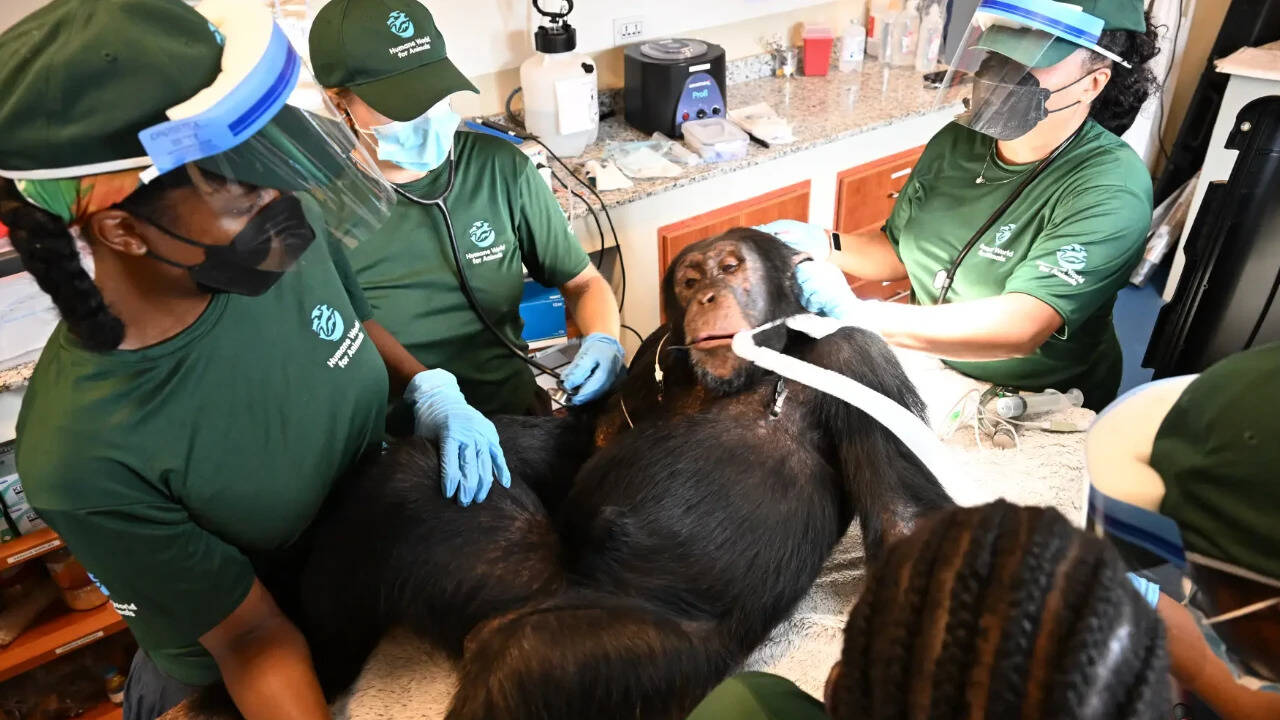
The legacy of biomedical research involving non-human primates requires a structured framework for post-experimental management, resource allocation, and geriatric veterinary care. At the Second Chance Chimpanzee Refuge in Liberia, a population of approximately sixty surviving chimpanzees—part of a larger historical cohort exceeding four hundred individuals utilized for hepatitis B vaccine research from the 1970s through the early 2000s—undergoes systematic health evaluations. Deconstructing this initiative reveals the operational, financial, and ethical mechanics required to transition a colony from an industrial research asset to a protected, long-term sanctuary population.
The Tripartite Burden of Post Experimental Aging
Evaluating subjects that have endured intensive biomedical intervention necessitates a protocol addressing three distinct physiological categories. For another look, check out: this related article.
Chronological and Pathological Aging
The cohort now occupies the geriatric bracket, typically averaging between thirty and thirty-five years of age. In Pan troglodytes verus, this life stage triggers accelerated skeletal degradation, reduced metabolic efficiency, and heightened oncological risk. The compounding vector of historical pathogen exposure—specifically chronic viral hepatitis carriage—interacts unpredictably with normal senescence.
Cumulative Interventional Trauma
Historical records for this population indicate hundreds of liver biopsies and thousands of sedative events. The longitudinal cost function of these interventions manifests as scar tissue accumulation, compromised vascular access, and chronic low-grade systemic inflammation. Veterinary teams must account for tissue resistance and altered pharmacokinetics during routine anesthesia. Similar analysis on the subject has been provided by Healthline.
Environmental Reintegration Stress
Transitioning from laboratory cages to semi-wild, mangrove-covered estuarine islands removes immediate human stressors but introduces natural pathogen loads, inter-group competition, and nutritional shifts. The psychological architecture shaped by early-life capture and prolonged confinement alters social group dynamics, requiring continuous monitoring of hierarchical friction and stress-induced cortisol elevation.
Diagnostic Methodologies and Resource Allocation
Executing comprehensive medical assessments on adult chimpanzees weighing upwards of forty to sixty kilograms demands specialized protocols to minimize mortality risks associated with chemical immobilization. The operational matrix relies on standardized diagnostic tiers:
Biochemical and Hematological Profiling
Blood and fecal assays establish baseline organ functionality, tracking hepatic enzyme elevations related to historical hepatitis B infections alongside renal clearance rates and metabolic panel markers.
Diagnostic Imaging
Ultrasound evaluations (ecographies) and targeted X-rays quantify soft tissue abnormalities, cardiac morphology shifts, and joint degeneration without requiring exploratory surgery. Mobility assessments isolate osteoarthritis severity, which directly impacts foraging efficiency and social integration within island environments.
Infrastructure Optimization
Performing diagnostics in a semi-wild sanctuary creates logistical friction. The construction of dedicated, modular handling structures directly on individual islands minimizes the requirement for complex transport logistics. This architectural intervention reduces capture myopathy risks, lowers operational overhead, and preserves the behavioral autonomy of the cohort.
The Economic and Operational Cost Function
Maintaining a retired primate population involves sustained fiscal commitments that scale non-linearly as animals age. The resource allocation equation comprises three mandatory inputs:
- Dietary curation involving locally sourced produce paired with specialized pharmaceutical and nutritional supplementation to mitigate geriatric deficiencies.
- Specialized veterinary personnel capable of executing complex anesthesia, diagnostic imaging, and emergency interventions in remote settings.
- Capital expenditures for habitat enrichment, island barrier maintenance, and modular medical holding infrastructure designed to withstand tropical environmental conditions.
When institutional sponsors withdraw or transfer liability—as observed when historical operators concluded their operational presence—long-term viability depends on permanent endowments, international animal welfare organizations, and structured public-private partnerships. The transition of the Liberian sanctuary to dedicated oversight under groups like Humane World for Animals illustrates the structural requirement for permanent legal and financial vehicles in wildlife retirement management.
Strategic Operational Outlook
The ongoing health evaluations in Liberia provide a replicable model for geriatric primate stewardship, establishing empirical data that informs global sanctuary standards. Future efficiency gains depend entirely on the deployment of remote monitoring telemetry, non-invasive biomarker collection via urinalysis substrates, and the decentralization of diagnostic infrastructure to reduce anesthetic dependency. Sanctuary management frameworks must shift from reactive intervention to predictive geriatric care, ensuring that populations displaced by historical biomedical paradigms achieve physiological stability through the remainder of their lifespans.