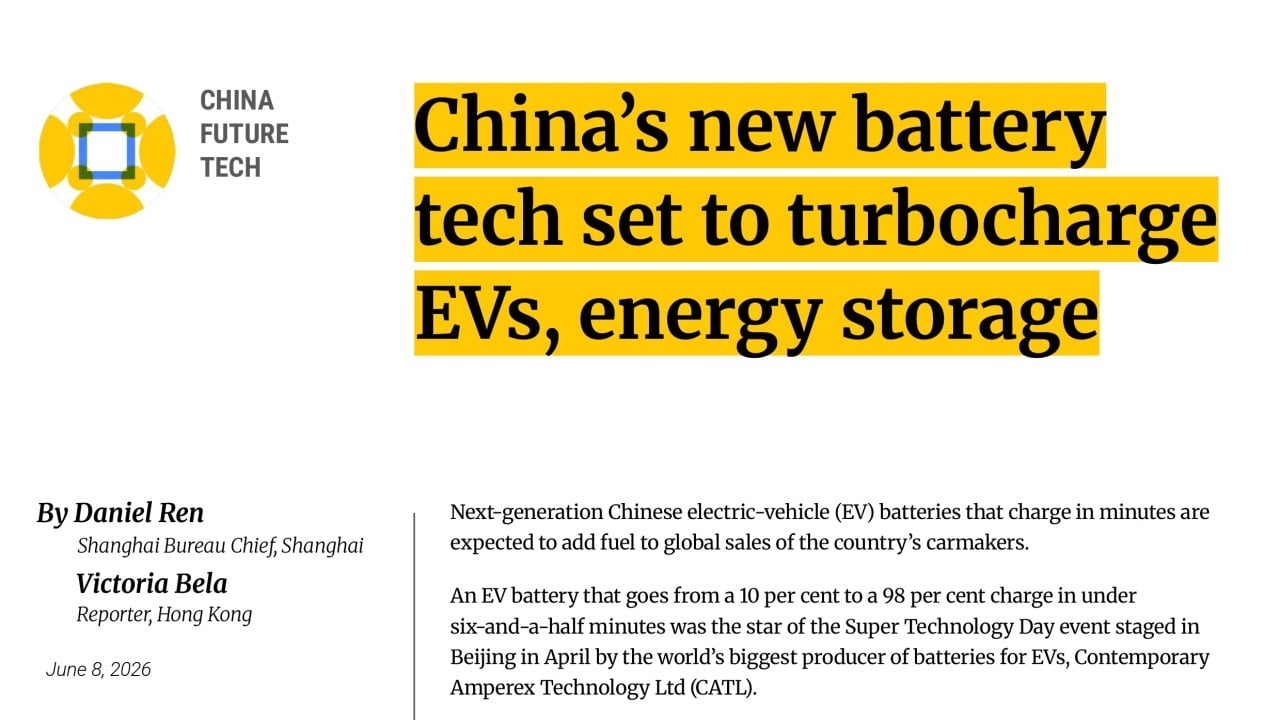
The global energy transition is bottlenecked by a single element: lithium. As electric vehicle (EV) penetration rates climb and grid-scale intermittent renewable generation demands unprecedented structural storage, the geopolitical and geological constraints of lithium-ion chemistries introduce systemic vulnerability. The emerging Chinese battery manufacturing strategy alters this calculus not by incremental optimizations of existing lithium iron phosphate (LFP) or nickel manganese cobalt (NMC) cells, but through a bifurcated architectural pivot. By scaling sub-7-minute ultra-fast charging lithium platforms for high-tier mobility while simultaneously moving sodium-ion chemistries into mass production for stationary grid storage and entry-level transport, Chinese manufacturers are decoupled from standard raw material constraints.
Understanding this transformation requires moving past promotional metrics and evaluating the core chemical, thermodynamic, and supply-chain mechanisms dictating this shift. The optimization problem for energy storage is defined by three interdependent variables: volumetric energy density ($\text{Wh/L}$), levelized cost of storage ($\text{LCOS}$), and C-rate capabilities determining charge-discharge velocities. While Western strategies remain heavily weighted toward maximizing volumetric density via solid-state lithium R&D, the Chinese industrial apparatus has prioritized structural cost-engineering and supply-chain insulation.
The Economics of Sodium Ion Scalability
The primary structural driver behind the acceleration of sodium-ion technology is the optimization of the raw-material cost function. Unlike lithium, which faces localized geographic concentration and highly volatile pricing cycles, sodium is universally abundant. However, translating abundance into a lower per-kilowatt-hour ($\text{kWh}$) cell cost requires resolving specific material bottlenecks, specifically at the anode.
The fundamental cost equation of a sodium-ion cell is dictated by the transition from synthetic graphite to hard carbon anodes. Synthetic graphite, standard in lithium cells, cannot effectively intercalate the larger ionic radius of sodium ($1.02,\text{Å}$ vs. $0.76,\text{Å}$ for lithium). Hard carbon, derived from non-graphitizable precursors, accommodates these larger ions but has historically suffered from high synthesis costs.
[Precursor Raw Materials] -> [High-Temp Carbonization] -> [Hard Carbon Anode Structure]
                                                                   |
  [Hard Carbon Cost Deflation: 65,000 RMB/ton (2024) ---------> 37,500 RMB/ton (2026)]
Industrial data from Chinese supply networks indicates a severe deflationary trajectory in these inputs. Hard-carbon production costs have trended from approximately 60,000–70,000 yuan per tonne in 2024 down to 35,000–40,000 yuan per tonne in mid-2026. This cost halving directly impacts the total cell manufacturing cost, allowing contemporary sodium-ion cells to project a long-term cost floor 30% below that of standard LFP.
This cost reduction is balanced by specific engineering trade-offs:
- Energy Density Thresholds: Current mass-production sodium-ion cells, such as contemporary iterations of the Naxtra platform, achieve gravimetric energy densities between $160,\text{Wh/kg}$ and $175,\text{Wh/kg}$. Compared to premium NMC cells ($250\text{--}300,\text{Wh/kg}$) or mature LFP ($180\text{--}200,\text{Wh/kg}$), sodium remains structurally heavier for an equivalent energy output.
- Volumetric Constraints: The lower density mandates larger physical pack volumes, restricting pure sodium-ion configurations to micro-EVs (A00-class platforms priced below 100,000 yuan) or commercial urban delivery fleets where physical space is less constrained than capital expenditure.
- The 600-Kilometer Range Strategy: To circumvent the density deficit in consumer vehicles, manufacturers utilize a hybrid packing architecture. By mixing sodium-ion and lithium-ion cells within a single thermal management enclosure, controlled by a dynamic battery management system (BMS) algorithm, passenger vehicles are targeted to achieve ranges up to 600 kilometers. The lithium cells provide the peak voltage and range buffer, while the sodium cells act as the foundational energy ballast.
Thermal and Kinetic Mechanics of the 7-Minute Charge
Simultaneously, the upper tier of the mobility sector is shifting toward extreme C-rates, characterized by the deployment of automotive cells capable of a full charge cycle in under 7 minutes. This corresponds to a continuous $5\text{C}$ to $6\text{C}$ charging profile. The physics of ultra-fast charging require solving two severe systemic issues: lithium plating and thermal runaway.
When a battery is subjected to high current densities, the diffusion rate of lithium ions through the electrolyte and into the graphite anode can lag behind the electrical current. This lag causes lithium ions to accumulate on the anode surface, metallic plating occurs, and internal short circuits form via dendrite growth.
To bypass this degradation mechanism, advanced Chinese cells utilize a multi-layer gradient anode structure coupled with highly conductive, low-viscosity solvents. The structural modifications decrease the tortuosity of the ion pathways, minimizing the diffusion resistance ($R_{\text{ct}}$).
The second challenge is thermodynamic. The heat generated within a cell during charging is proportional to the square of the current ($I^2R$). A $6\text{C}$ charge cycle generates exponentially more heat than a standard $1\text{C}$ or $2\text{C}$ cycle. Dissipating this thermal load requires a fundamental redesign of the vehicle’s cooling architecture:
- Dual-Side Liquid Cooling Plates: Moving from traditional bottom-only cooling to interleaved side-wall liquid cooling channels maximizes the surface-area contact with the cells.
- High-Voltage Architecture Shifts: Transitioning passenger vehicle powertrains from $400\text{V}$ to true $800\text{V}$ or $900\text{V}$ platforms allows the vehicle to accept high power inputs (e.g., $480,\text{kW}$) while maintaining lower current levels relative to total wattage, suppressing the $I^2R$ thermal penalty.
- Active Chemistry Stabilizers: Implementing surface coatings on cathodes prevents phase transitions at elevated operational temperatures, which typically range from $-40^{\circ}\text{C}$ to $+70^{\circ}\text{C}$ under extreme environmental stresses.
Stationary Storage and the Grid Integration Matrix
While the automotive sector commands public attention, the most immediate capital deployment occurs in stationary energy storage systems (ESS). As solar and wind installations scale globally, the grid experiences severe structural stress caused by the duck curve—a mismatch between peak renewable generation and peak consumer demand.
[Intermittent Solar/Wind Input] ---> [Grid Integration Bottleneck (Duck Curve)]
                                                  |
                                   [Sodium-Ion ESS Buffer (GWh Scale)]
                                                  |
                                   ---> [Stabilized Base-Load Output]
The requirements for utility-scale ESS differ fundamentally from automotive metrics. Mass and volume are secondary to cycle life, safety profile, and levelized cost. This is the operational domain where sodium-ion technology exhibits its strongest architectural fit.
A critical commercial milestone is the scheduled execution of large-scale commitments, notably the 60 gigawatt-hour ($\text{GWh}$) three-year procurement agreement between major manufacturing assets like Contemporary Amperex Technology Co. Limited (CATL) and energy storage integrators such as HyperStrong. The integration of these utility-scale assets alters grid economics through distinct operational capabilities.
Cycle Life and Degradation Kinetics
Modern sodium-ion ESS cells demonstrate a cycle life exceeding 10,000 complete charge-discharge loops while maintaining over 80% capacity retention. Because stationary storage does not require the absolute energy concentration of NMC, the molecular stability of sodium transition metal oxide cathodes minimizes lattice strain over decades of deployment.
Systemic Safety Profiles
Sodium-ion batteries exhibit superior thermal stability compared to lithium-ion alternatives. The critical temperature for thermal runaway in sodium chemistries is substantially higher, and the low-dissolution electrolyte configurations drastically reduce the probability of catastrophic gas generation during overcharge or physical breach conditions.
To scientifically isolate these vectors, recent industrial capital allocations include a 3 billion yuan ($440 million) dedicated energy storage testing facility in southern China. This facility acts as a hardware-in-the-loop simulator, mapping grid anomalies, phase faults, and thermal propagation pathways across full megawatt-scale containment blocks to prevent multi-cell failure cascading.
International Regulatory Realities
The expansion of stationary storage technology occurs in a tense geopolitical landscape. Unlike the automotive sector, which faces aggressive tariff barriers, localized sourcing mandates, and domestic protection subsidies across the United States and the European Union, the stationary ESS market operates under distinct regulatory pressures.
Western grid operators face immediate decarbonization targets alongside strict capital budgets, creating an economic pull for low-cost, high-volume Chinese storage platforms. To hedge against future trade friction, Chinese manufacturers are executing a dual strategy: securing domestic carbon footprint certifications—such as the national carbon pilot validations recently awarded to platforms like the EnerD+ systems—while simultaneously building joint-venture manufacturing facilities inside European economic boundaries, including planned operations in Germany, Hungary, and Spain.
Analytical Comparison: LFP, NMC, and Sodium-Ion
To contextualize the market positioning of these technologies, the operational and financial profiles of the three dominant battery paradigms are organized below by their foundational engineering parameters.
Premium NMC (Nickel Manganese Cobalt)
- Gravimetric Energy Density: $250\text{--}320,\text{Wh/kg}$
- Raw Material Sensitivity: High (Lithium, Cobalt, Nickel dependency)
- Primary Application: Long-range passenger EVs, aerospace
- C-Rate Capability: $1\text{C}\text{--}4\text{C}$ typical
- Relative System Cost: $100%$ (Baseline)
Standard LFP (Lithium Iron Phosphate)
- Gravimetric Energy Density: $180\text{--}210,\text{Wh/kg}$
- Raw Material Sensitivity: Moderate (Lithium dependency)
- Primary Application: Mass-market EVs, standard ESS
- C-Rate Capability: $1\text{C}\text{--}3\text{C}$ typical
- Relative System Cost: $65\text{--}75%$ of NMC
Emerging Sodium-Ion (Naxtra / Hard Carbon)
- Gravimetric Energy Density: $160\text{--}175,\text{Wh/kg}$
- Raw Material Sensitivity: Low (Sodium, Abundant Earth Metals)
- Primary Application: Stationary ESS, Micro-EVs, Grid-Scale Buffers
- C-Rate Capability: Up to $5\text{C}$ continuous
- Relative System Cost: $45\text{--}55%$ of NMC (Projected at scale)
Strategic Playbook for Global Energy Procurement
The shift toward a twin-track battery architecture introduces distinct structural risks and immediate operational opportunities for automotive original equipment manufacturers (OEMs), utility operators, and capital allocators. Navigating this transition requires a calculated deployment strategy.
For automotive OEMs targeting the entry-to-mid market segments, developing platform architecture that relies exclusively on lithium chemistries creates an unnecessary exposure to raw material volatility. The immediate priority must be the redesign of battery enclosures to support hybrid packing configurations. By integrating structural packs capable of accepting interchangeable modules of both sodium and LFP cells, manufacturers can dynamically shift their supply chain allocation depending on real-time commodity pricing of lithium carbonate versus hard carbon precursors.
For utility-scale energy storage procurers, capital allocation models must pivot away from evaluating energy storage assets purely on upfront capital expenditure ($\text{CapEx}$). The metric that matters is the lifetime levelized cost of storage ($\text{LCOS}$), factoring in thermal management overhead and degradation penalties.
Sodium-ion systems should be immediate candidates for projects positioned in extreme environments where ambient temperatures drop below $-20^{\circ}\text{C}$ or exceed $+40^{\circ}\text{C}$, as the chemistry maintains its kinetic efficiency without energy-intensive active climate control insulation. Contracts should be structured to lock in multi-year production capacities now, leveraging the deflationary curve of the hard carbon anode manufacturing scale-up to secure long-term price stability.