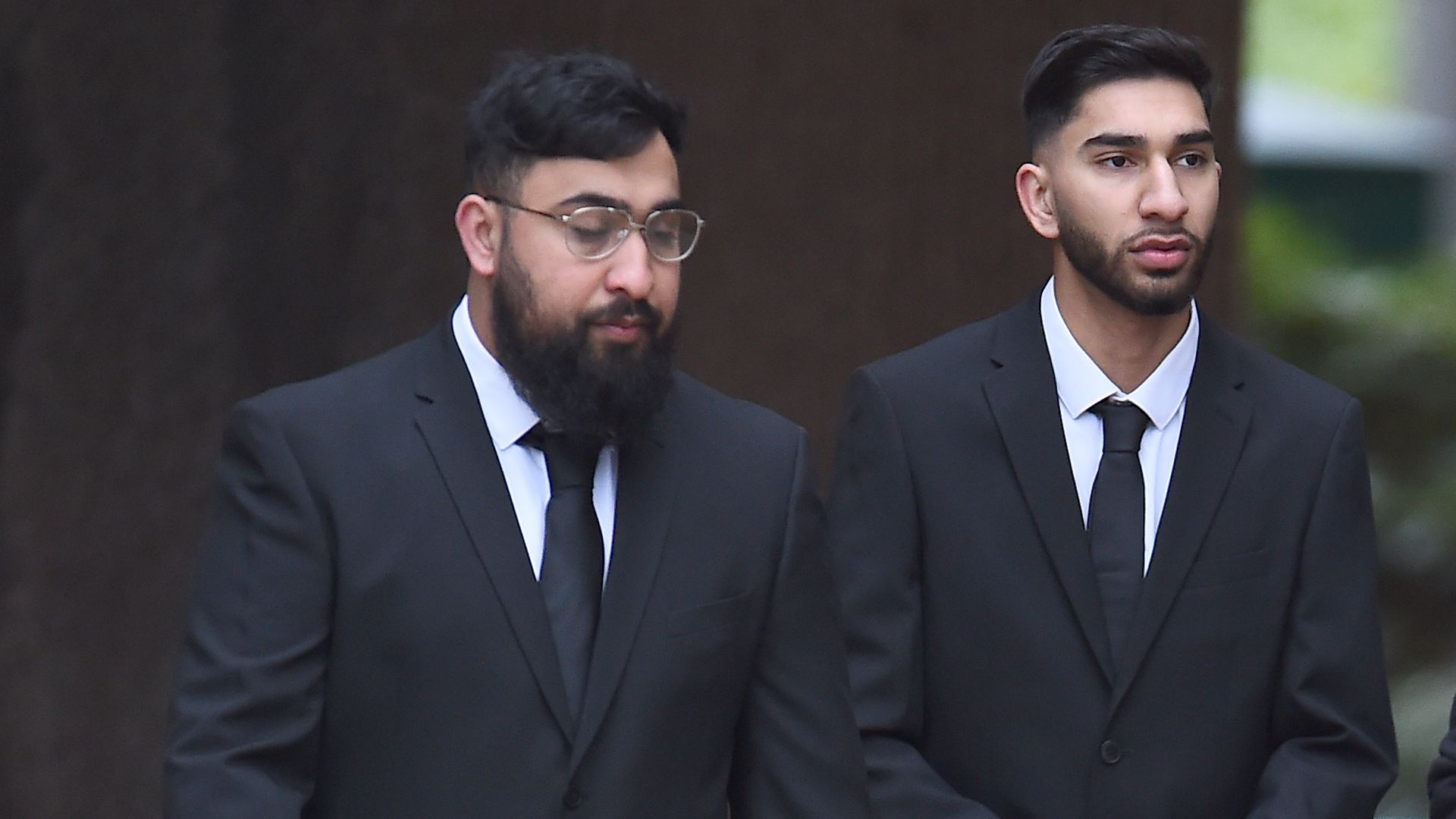
When the video of an officer kicking a man in the head at Manchester Airport went viral, the internet exploded. It was a visceral, ugly moment that looked like a clear-cut case of police brutality. But as the legal process grinds forward, we're seeing the other side of the story. Amaad Bolot, one of the men involved in that chaotic scuffle, now claims he and his brother were "under attack" and acting in self-defense. It's a bold stance that shifts the narrative from a one-sided assault to a complex legal battle over what happens when the public and the police collide in a high-pressure environment.
This isn't just about a viral clip anymore. It’s about the legal threshold for "reasonable force" and how a defense team tries to reframe a violent encounter. If you’re following this case, you need to look past the fifteen-second snippets on social media. The truth of what happened in Terminal 2 is buried in the minutes leading up to those kicks, and the defense is betting everything on the idea that the officers were the initial aggressors. For a different view, check out: this related article.
What the Defense is Actually Saying
Amaad Bolot recently spoke out, detailing his perspective on the incident. According to his account, the situation didn't start with a refusal to cooperate. He claims the atmosphere was charged from the beginning and that the police response felt like a targeted assault rather than a standard procedure. When you hear someone say they felt "under attack," they’re setting the stage for a self-defense plea. In UK law, specifically under Section 76 of the Criminal Justice and Immigration Act 2008, a person is allowed to use reasonable force to protect themselves if they honestly believe they're in danger.
The challenge for Bolot is proving that his actions—which reportedly involved a physical struggle with officers—were a proportionate response. The prosecution will likely argue that the officers were performing their duties and that any resistance was unlawful. But Bolot’s team is flipping the script. They want the public and the court to see the officers not as law enforcers, but as combatants who lost control. Further insight on the subject has been shared by The Guardian.
It’s a high-stakes gamble. If the court finds that the brothers truly believed they were being unlawfully attacked, it changes the entire complexion of the assault charges. But "honestly held belief" is a tough thing to prove when there are multiple body-worn cameras and CCTV feeds capturing every angle of the fight.
The Chaos Before the Kick
Most people have only seen the footage of the officer’s boot connecting with a man on the floor. That’s the "money shot" for news outlets, but it’s not the whole story. Before that moment, there was a significant physical confrontation. Reports indicate that three officers were injured, including one who suffered a broken nose.
You can't ignore that context. Police officers are trained to use a "National Decision Model" to escalate or de-escalate force. If they’re being punched or tackled, their use of force is allowed to increase. The defense, however, argues that the police triggered the violence by being overly aggressive with Bolot’s mother or by using heavy-handed tactics during the initial stop.
The narrative being pushed by the Bolot family is one of protection. They claim they weren't trying to start a riot; they were trying to shield their family from what they perceived as an out-of-control police unit. It’s a classic "he said, she said" scenario, but with much higher stakes and a lot of digital evidence to sift through.
The Role of Body Worn Video
In 2026, we don't have to rely on memory. We have data. The Manchester Airport incident will be picked apart frame by frame. Investigators from the Independent Office for Police Conduct (IOPC) are looking at the full sequence of events. They aren't just looking at the kick; they're looking at the verbal commands, the physical positioning of the brothers, and the exact moment things turned physical.
The defense will use this footage to point out any breach in police protocol. If an officer didn't follow the proper warnings or used a technique that isn't in the manual, it bolsters Bolot’s claim that the police were "attacking" rather than "arresting." On the flip side, if the footage shows the brothers ignoring clear orders and initiating the strikes, the self-defense argument falls apart quickly.
Why Public Perception is So Divided
This case has become a lightning rod for broader issues in UK society. For some, it’s a clear example of a police force that has lost its way, using excessive violence against ethnic minorities. For others, it’s a symptom of a society where respect for authority has vanished, and officers are expected to be "punching bags" without fighting back.
The Bolot family’s decision to go public with their "under attack" narrative is a calculated move to keep public sympathy on their side. By humanizing their experience and describing their fear, they're countering the "thug" narrative that often circulates in the wake of such incidents. They want you to imagine yourself in a crowded airport, tired from travel, seeing your brother or mother grabbed by armed officers, and feeling that primal urge to protect.
But we have to be careful with empathy. Empathy doesn't change the law. The law cares about "necessity" and "proportionality." Was it necessary to fight back? Was the force used by the brothers proportionate to what the police were doing? That’s where the case will be won or lost.
The Impact on Policing
Every officer in Greater Manchester Police is watching this case. If the officer who delivered the kick is prosecuted, it sends a message about accountability. If the Bolot brothers are cleared based on self-defense, it changes how officers approach arrests in high-traffic areas like airports.
There’s a genuine fear among frontline workers that they’ll be hung out to dry for split-second decisions made in high-stress environments. Conversely, there’s a genuine fear among the public that they aren't safe from the people who are supposed to protect them. This tension is what makes the "under attack" claim so explosive. It’s not just a legal defense; it’s a societal accusation.
Breaking Down the Legal Strategy
To win on a self-defense claim, the Bolot brothers' legal team has to clear a few specific hurdles. It’s not enough to just say they were scared. They have to prove that the force they used wasn't "gratuitous" or "retributive."
- The Trigger: They must show there was an imminent threat. If the police were just standing there talking, the defense fails. They’ll likely argue that the physical handling of their family members constituted an unlawful assault by the police.
- The Response: The reaction has to be "reasonable." This is the hardest part. If the police were trying to cuff someone and the response was a flurry of punches, the court might find that response excessive.
- The Subjective Element: The court has to consider what the brothers thought was happening. If they genuinely believed the officers were "fake police" or were acting with "malice," the law gives them some leeway, even if they were mistaken.
The defense is clearly leaning into the subjective element. By using the phrase "under attack," they’re signaling that their clients were in a state of fight-or-flight, not calculated rebellion.
Moving Beyond the Headlines
If you’re looking for a simple hero or a simple villain in the Manchester Airport saga, you won’t find one. It’s a messy collision of human emotion, police protocol, and legal technicalities. Amaad Bolot’s claim of being "under attack" is his truth, but whether it holds up as a legal reality remains to be seen.
Watch the full footage when it becomes available. Read the IOPC reports. Don't let a viral clip dictate your understanding of justice. The legal system is slow for a reason; it has to strip away the emotion to find the facts.
If you want to understand how these cases usually go, look at previous rulings on police battery and self-defense. Most of the time, the court sides with the police unless there's an "obvious and egregious" use of force that serves no tactical purpose. The kick in the head might be that "egregious" moment, but it doesn't automatically nullify the actions that happened before it.
Pay attention to the upcoming court dates and the specific charges filed. The language used in the indictments will tell you exactly how the Crown Prosecution Service views the "under attack" defense. Until then, keep a critical eye on the narratives being spun by both sides. Justice isn't found in a comment section; it's found in the evidence.