A man sits in a humid room in Lahore, his fingers trembling as he turns a page made of brittle, yellowed paper. The air smells of dust and the faint, sweet scent of decaying pulp. On the page, written in the flowing, rhythmic script of Gurmukhi, is a name: Gurdwara Pehli Patshahi.
The book was printed in 1924. Its author is long dead. The country it describes—a unified Punjab where a traveler could walk from Amritsar to Nankana Sahib without a passport—ceased to exist in 1947. To the modern eye, this book is an antique. To those searching for the architectural soul of a faith, it is something much more urgent. It is a GPS for a ghost kingdom.
For decades, the story of Sikh heritage in Pakistan was one of silhouettes. We knew the giants: the birthplace of Guru Nanak, the site of Guru Arjan’s martyrdom. These are grand, gold-domed structures that pulse with the energy of thousands of pilgrims. But between these landmarks lie the "forgotten" ones. They are the small village shrines, the community kitchens, and the resting places tucked away in the narrow alleys of Rawalpindi or the sugarcane fields of Gujranwala. They are not lost because they were destroyed. They are lost because we stopped knowing how to find them.
The Paper Trails of a Vanished World
When the border was drawn in 1947, the physical connection to hundreds of sacred sites was severed in a matter of weeks. Families fled with what they could carry. Books, heavy and cumbersome, were often left behind. Over time, the collective memory of these locations began to blur. A village known by one name in a 1930s gazetteer might have been renamed three times since. A gurdwara that once stood at the center of a bustling market might now be a private residence, a school, or a silent ruin reclaimed by banyan trees.
This is where the pre-1947 Gurmukhi literature becomes a lifeline.
Modern historians and heritage enthusiasts are now turning to these vintage texts—travelogues, directories, and religious accounts printed in British India—to cross-reference the past with the present. These books contain granular details that modern maps omit. They mention a specific well near a village gate. They describe the distance from a railway station in "koss," an ancient measure of distance. They name the local donors who built the marble floors.
Imagine a researcher named Amardeep. He isn't a ghost hunter, but he feels like one. He holds a copy of Gurdwara Darshan, published in the 1920s. The text mentions a small shrine dedicated to the sixth Guru, located "two miles north of the Chenab River, near the grove of ancient Peepal trees."
Amardeep opens a satellite map on his phone. The river has shifted its course over eighty years. The trees are gone. But by using the book’s specific descriptions of the surrounding hamlets, he can triangulate a coordinate. He drives out into the heat. He asks the local elders if they remember a "Baba’s house" or a "Sikh temple." Usually, they point toward a crumbling structure used to store grain.
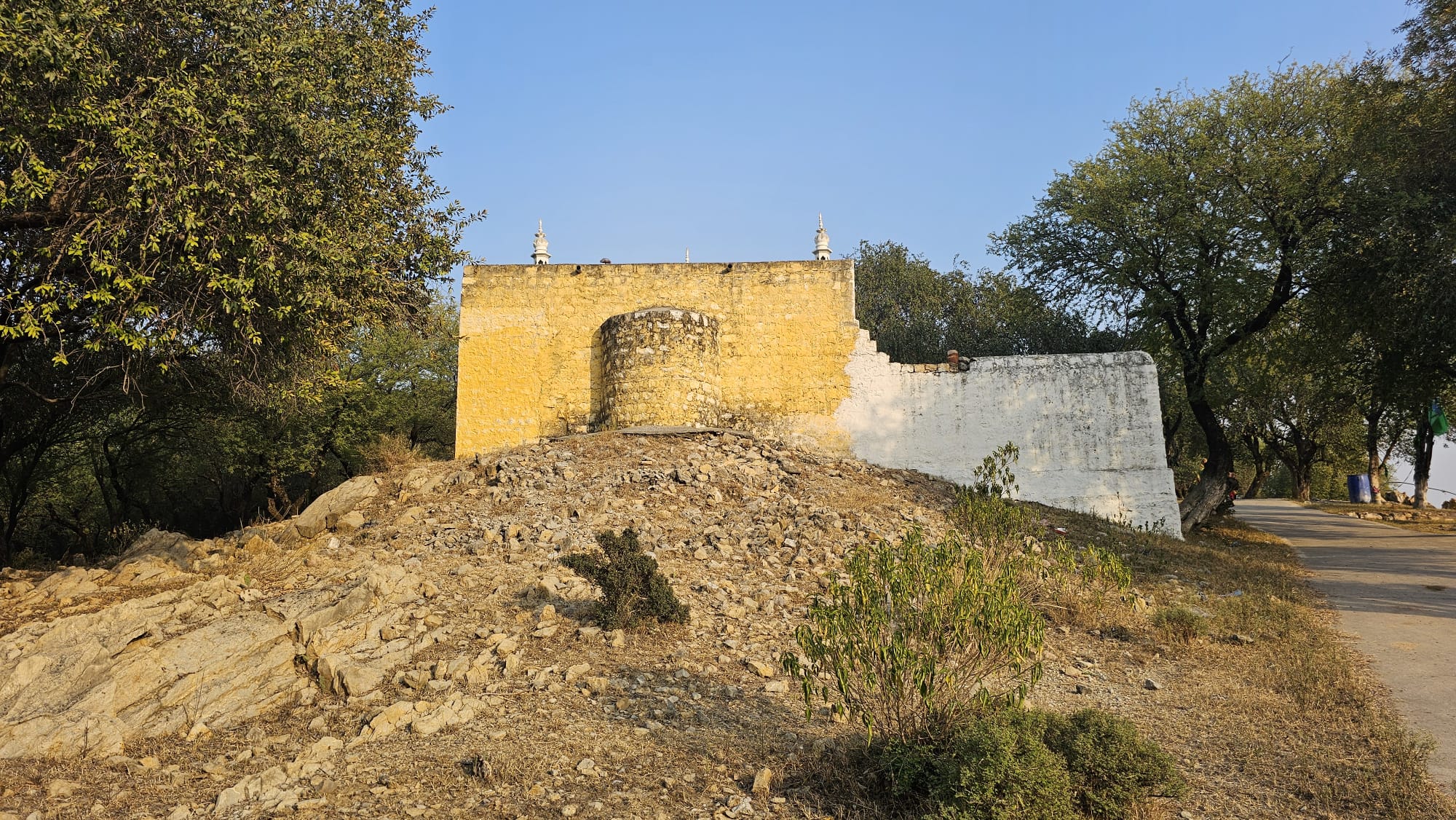
Underneath the layers of whitewash and the piles of dried grass, he finds it. A floral fresco. A scalloped arch. A piece of history that has been holding its breath for three-quarters of a century.
The Anatomy of a Forgotten Space
Why does this matter? Is it just about old bricks and mortar?
To understand the stakes, you have to understand what a gurdwara represented in a pre-partition village. It wasn't just a house of worship. It was the communal heartbeat. It was where the traveler found a bed, where the hungry found a meal, and where the village children learned to read. When these sites vanish from the map, the physical evidence of a pluralistic, shared history vanishes with them.
The architecture of these forgotten sites is often distinct from the modern, standardized "Sikh style." In the smaller towns of Pakistan, the gurdwaras were influenced by local Mughal and Rajput aesthetics. They featured intricate woodwork, hand-painted murals of the Gurus, and delicate brickwork that felt more like a home than a monument.
Today, many of these buildings are in a state of precarious survival. Some have been repurposed with a pragmatic, unselfconscious grace. There are gurdwaras in the Pothohar plateau that now serve as primary schools, where the sounds of children reciting their lessons echo through halls once filled with kirtan. Others have become homes for refugee families who arrived in 1947 with nothing but the clothes on their backs.
There is a profound, quiet irony here. The very families who were displaced by the violence of Partition became the unintended custodians of the heritage left behind by those who fled in the opposite direction.
The Digital Resurrection
The movement to rediscover these sites isn't just happening on the ground in Punjab; it is a global, digital effort. Young Sikhs in London, Toronto, and California are using these old books to reconstruct their family histories.
They scan the pages of old directories for the names of their ancestral villages. They find the mention of a local gurdwara their grandfather used to visit. Then, they reach out to Pakistani YouTubers or heritage bloggers—a new generation of locals who are just as curious about the "hidden" history of their own towns.
This collaboration is a quiet defiance of the borders that define the region. A person in Vancouver provides the text from a 100-year-old book; a person in Sialkot provides the drone footage. Together, they confirm that the building still stands.
But the window is closing.
History is a fragile thing, and buildings are more fragile still. In the race between the historian and the bulldozer, the bulldozer often wins. Urban expansion in cities like Gujranwala and Lahore means that old structures are frequently leveled to make way for shopping plazas or housing blocks. The "forgotten" gurdwaras are at the highest risk because they lack the official protection afforded to major pilgrimage sites.
The Weight of the Unseen
Walking into one of these rediscovered spaces is a heavy experience. You see the gaps where the Guru Granth Sahib once rested. You see the faded colors of a mural that hasn't seen the sun in decades. It feels like a conversation that was interrupted mid-sentence.
It is easy to look at a ruin and see only what is gone. It is much harder, and much more necessary, to look at a ruin and see what it still holds. These buildings are witnesses. They witnessed the coexistence of the past and the trauma of the separation. They are the only things left that remember the names of the people who once called these streets home.
The use of pre-1947 Gurmukhi books is not merely an academic exercise. It is a form of cartography for the heart. It allows a grandson to stand in the exact spot where his grandfather stood, even if that spot is now a dusty courtyard in a village he can only visit on a visa.
The books tell us where to look, but the buildings tell us who we were.
As the man in Lahore closes his brittle book, he marks a page with a small scrap of paper. Tomorrow, he will ride his motorcycle to a village near the border. He will look for a door with a specific carving of a lotus. He will look for the ghost of a world that refused to be erased.
He isn't just looking for a building. He is looking for proof that the past actually happened, and that the stories told by his elders weren't just fairy tales designed to soothe the ache of exile.
Somewhere, deep in the rural heart of Pakistan, a small dome rises above the wheat fields. It is cracked. It is grey. It is lonely. But because of a few lines of ink written a century ago, it is no longer invisible.