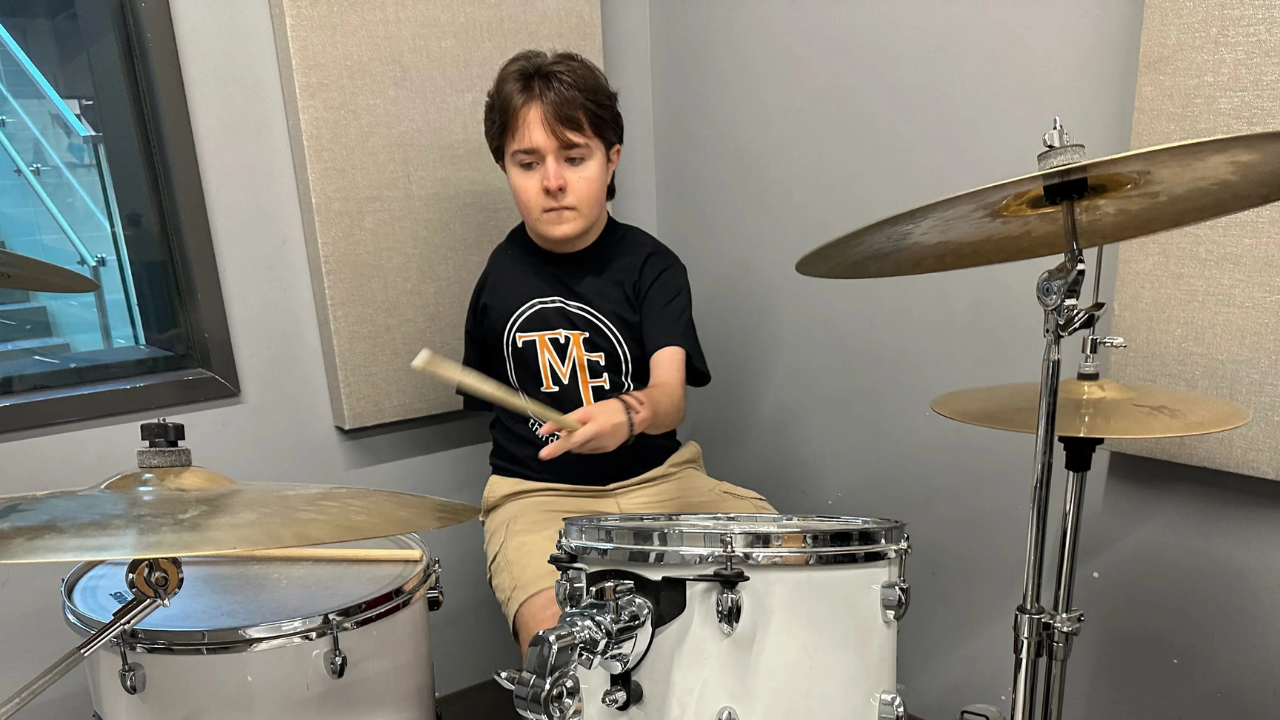
People love comparing any one-armed drummer to Rick Allen of Def Leppard. It is an easy lazy shortcut. You see someone missing a limb behind a drum kit, your brain instantly jumps to the 1980s stadium rock history books. But Marcus Klepacki finds that comparison hilarious.
At nineteen years old, this Phoenix musician isn't relying on customized electronic kits with foot triggers to compensate for missing a limb. He sits down at a standard, unmodified acoustic drum kit and plays circles around able-bodied players. With the public debut of his band Third Man Factor at Tempe's Yucca Tap Room, Klepacki is changing how people think about physical limitations and musical spaces.
Born without a right arm and lacking a thumb on his left hand, Klepacki didn't stumble into music as a sympathy case. His journey started around age ten, fueled by grit and a refusal to accept standard constraints. Long before he started mastering complex rhythms, his childhood was defined by heavy medical battles. He wore a back brace from kindergarten until middle school to manage severe scoliosis, and he endured three and a half years of chemotherapy for leukemia starting at age seven.
When you spend your formative years fighting cancer and spinal issues, learning how to hit a snare drum with one arm feels less like an impossible mountain and more like a fun puzzle to solve.
He found his initial creative sanctuary at Alice Cooper's Solid Rock Teen Centers, a local nonprofit providing free music and arts instruction. Mark Savale, the regional director of the center, became his drum instructor. Instead of treating Klepacki with kid gloves, Savale pushed him. They experimented with grip, positioning, and momentum. They figured out how to extract a massive, driving sound out of a standard shell pack using specialized techniques.
Savale likes to tell people a blunt truth. Klepacki isn't just good for a one-armed drummer. He is just flat-out good.
If you want proof of his technical capability, look no further than the Purdie Shuffle. Created by legendary session icon Bernard Purdie, this notoriously tricky half-time syncopated groove layers triplet hi-hat ticks and quiet ghost notes over a heavy backbeat. Most two-handed drummers spend years trying to get the limb independence right. Klepacki locks it down on an acoustic kit with a single arm, baffling instructors who thought the pattern was physically impossible under those conditions.
His influences span rock royalty. He draws inspiration from Neil Peart, John Bonham, Stewart Copeland, and Buddy Rich, while wearing his deep love for the White Stripes on his sleeve. He plays guitar and sings too, occasionally posting clips online that pull in massive viewer engagement.
When he performs, audiences often stare in disbelief. They spend the first three songs watching his right shoulder, trying to reverse-engineer how he manages the kit. But by song four, the gimmick fades away. You stop looking at his arm and start listening to the pocket. He drives the tempo with authority, keeping a tight lock with bassist Noah Paz and guitarists Ben Pakula and Chris Sanchez.
Vocalist Fletcher Placko knew right away during their early rehearsals at Arizona State University's pop music program that Klepacki was the real deal. Placko noted that the collaborative energy in the room works because Klepacki listens, shares creative control, and pushes the band forward without demanding special treatment.
The lesson here stretches far beyond the local music scene. We live in a culture obsessed with having the exact right gear, the perfect ergonomic setup, and zero friction before we allow ourselves to start creating. We wait for ideal conditions. We make excuses about what we lack.
Klepacki walks into a room with half the physical tools standard players take for granted and simply makes the instrument roar. He treats limitations as mere design parameters.
If you are stuck on a creative project, waiting for better tools, or letting an obstacle stall your momentum, take a cue from the local Phoenix stages. Stop overthinking the hardware. Sit down at the kit you have and start playing.