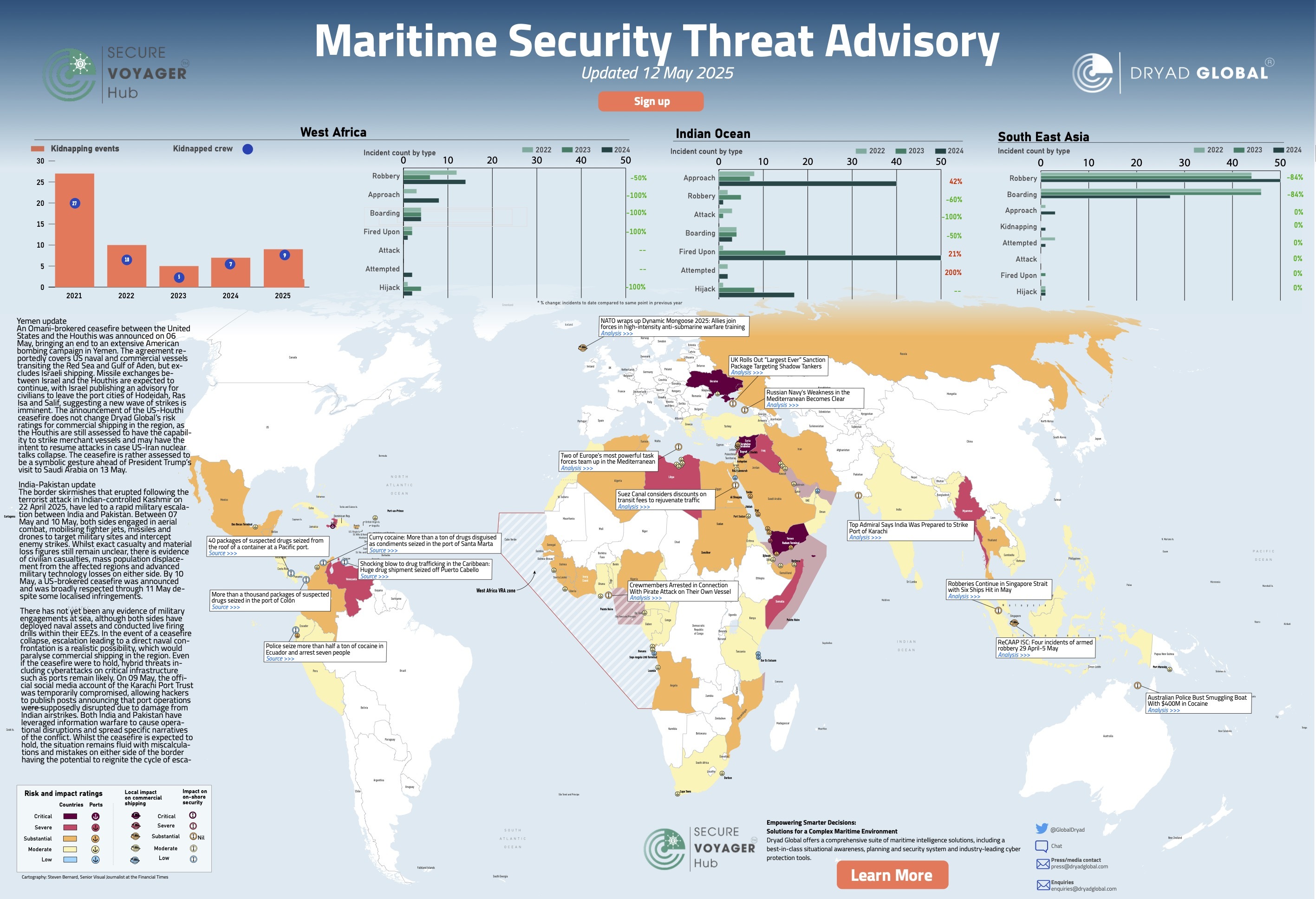
The convergence of India’s MAHASAGAR initiative and Japan’s Free and Open Indo-Pacific vision marks a significant shift in how regional powers approach security in the Indian Ocean. Defense Minister Rajnath Singh has recently emphasized that the alignment between these two frameworks is not merely diplomatic posturing. It represents a functional response to the shifting balance of power across the maritime corridors that facilitate much of the world’s energy and trade. By integrating their naval surveillance capabilities and intelligence sharing, India and Japan are moving toward a coordinated posture designed to secure critical chokepoints against increasing external pressure.
For decades, the Indian Ocean was viewed through a localized lens. New Delhi concentrated on maintaining its regional primacy, while Tokyo focused on its own immediate territorial waters and the vital sea lanes connecting it to Middle Eastern oil supplies. That era has ended. The rise of sophisticated naval expansions across the region has forced these two nations to reconcile their strategic approaches. MAHASAGAR, which functions as a high-level virtual interaction for maritime security, serves as the vehicle for this synchronization, allowing for rapid communication between navies that previously operated in separate silos.
Operational Integration Beyond Rhetoric
The core mechanism driving this partnership is the increasing interoperability of naval assets. Japan and India have moved beyond signing memoranda of understanding. They are now conducting complex exercises that test the ability of their fleets to communicate and coordinate in real-time. This is not about building a formal alliance, which would be fraught with political sensitivity. Instead, the focus rests on maritime domain awareness. By sharing radar data, satellite feeds, and patrol reports, both nations reduce the uncertainty that often leads to tactical miscalculations.
When Japanese officials discuss the Free and Open Indo-Pacific vision, they often reference the importance of international law and unimpeded access to shipping lanes. Indian policymakers share this view but add a layer of regional self-reliance, encapsulated by the Security and Growth for All in the Region, or SAGAR, policy. The synthesis of these two doctrines creates a comprehensive monitoring network. If a vessel behaves suspiciously near the Strait of Malacca, the data now flows faster through these integrated channels than it did even five years ago.
The Geography of Strategic Necessity
Geography dictates this collaboration. Japan remains heavily dependent on energy imports that transit the Indian Ocean. Any disruption in this flow represents an existential threat to the Japanese economy. India, situated at the center of the northern Indian Ocean, possesses the natural geographic advantage to monitor these flows. The partnership is a logical exchange of capability for security. Tokyo brings advanced surveillance technology and underwater sensor expertise, while New Delhi offers the strategic depth and base access necessary to exert influence across a vast maritime theater.
The real-world implication involves the tracking of submersible movements. This is where the partnership gains its most tangible value. Tracking modern, quiet diesel-electric or nuclear submarines is a labor-intensive task that requires a persistent network of sensors and patrol craft. By coordinating their efforts, Japan and India effectively extend the range of their detection capabilities. They are creating a map of the Indian Ocean that is far more transparent than it has ever been.
Challenges to Persistent Cooperation
Despite the progress, significant hurdles remain. Neither government wants to be perceived as an antagonist by other regional powers, which limits the scope of their public rhetoric. There is also the matter of industrial cooperation. While Japan has relaxed its strict regulations on defense exports, integrating Japanese naval technology into India’s locally produced hardware remains a complex engineering challenge. Systems often use different software architectures, and getting them to talk to each other requires a level of bureaucratic and technical cooperation that is notoriously difficult to achieve.
Furthermore, the domestic politics in both nations introduce a degree of volatility. Changes in leadership or shifts in public opinion can suddenly reprioritize national goals. For India, the primary focus remains its land border disputes, which can sometimes divert resources and attention away from the maritime domain. For Japan, the domestic debate over defense spending and the constitutional role of its self-defense forces continues to evolve. These internal factors ensure that the maritime partnership will likely remain functional and pragmatic rather than grand or ideological.
Moving Toward a Distributed Security Architecture
The future of this relationship hinges on the ability of the Indian and Japanese navies to move from bilateral cooperation to a distributed security architecture. This means working more closely with other partners like Australia and the United States, but doing so in a way that remains grounded in the specific, localized requirements of the Indian Ocean.
This is not a top-down command structure. It is a series of overlapping networks. If India, Japan, Australia, and the US can sustain a persistent, shared picture of the maritime domain, they create a deterrent effect that does not require a permanent, centralized force. They are betting on the idea that the threat of being monitored and identified is more effective than the threat of a kinetic conflict.
The alignment between MAHASAGAR and the Free and Open Indo-Pacific vision is an attempt to institutionalize this surveillance. It acknowledges that the era of strategic ambiguity is closing. As the maritime routes become more contested, the cost of not having a clear, shared picture of what is happening under the waves and on the surface has become too high to bear. Both nations are choosing to invest in the infrastructure of transparency, hoping that clarity will prevent the very conflicts they are preparing to manage. The success of this endeavor will not be measured by statements from defense ministers, but by the quiet, consistent ability of naval operators to track, identify, and understand every movement within these vital lanes.