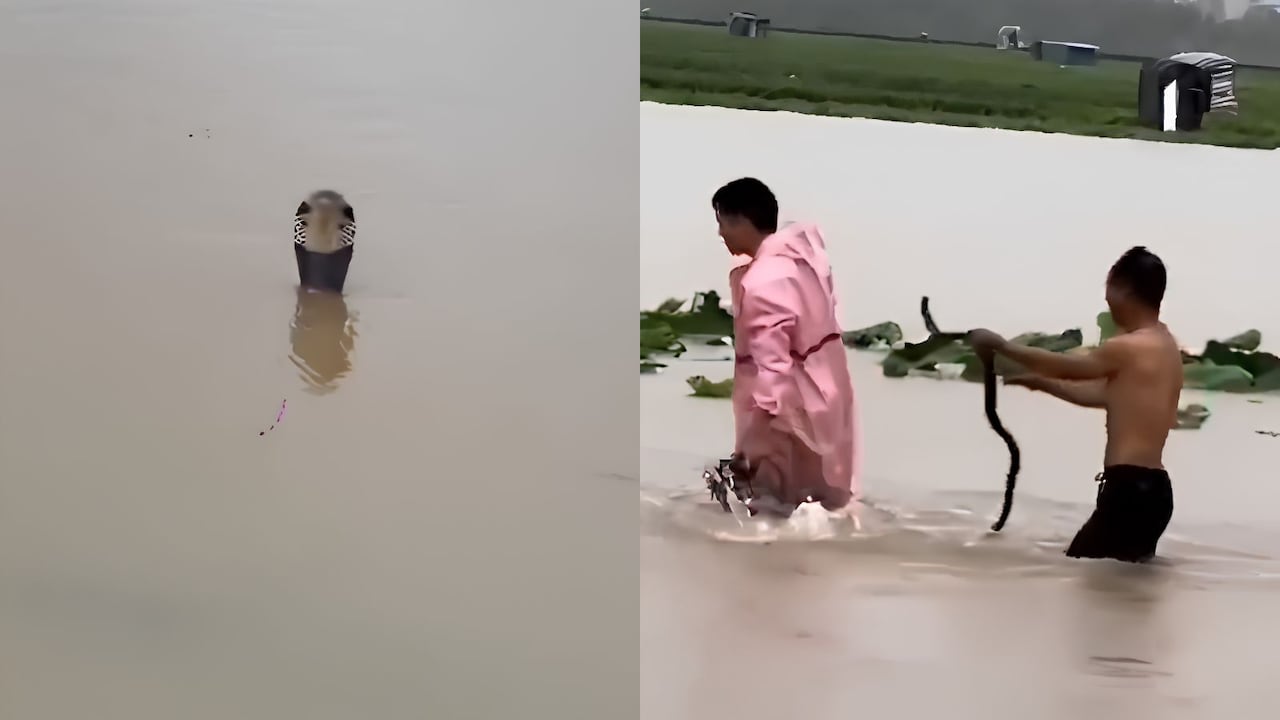
Imagine watching your town submerge under catastrophic floodwaters, only to look down and see hundreds of snakes swimming directly toward your porch. That nightmare became reality for residents in southern China's Guangxi region when severe storms caused a mass breakout at local reptile breeding facilities.
When the Liulan and Yunbiao reservoirs breached under the pressure of Typhoon Maysak, the resulting deluge tore through multiple small-scale commercial snake farms in Hengzhou. Roughly 900 snakes broke free. The escapees weren't just harmless garden variety reptiles either. The breakout included highly venomous monocled cobras alongside non-venomous water snakes and king rat snakes.
While viral videos on social media show terrifying footage of reptiles riding debris through brown floodwaters, the real story here isn't just about a localized horror film scenario. It highlights a massive vulnerability in how we zone, regulate, and protect commercial wildlife facilities in an era of unpredictable, extreme weather.
The Logistics of a Reptile Breakout
Guangxi is a major hub for China's commercial snake-farming industry. These facilities breed reptiles for traditional medicine, leather products, pharmaceuticals, and food. When regional rivers swelled past safe limits, low-lying farms in towns like Yunbiao bore the brunt of the water.
Local officials confirmed that the flash flooding completely overwhelmed the enclosures on July 6. The fast-moving current didn't just open gates—it entirely dismantled the infrastructure of smaller operations. Suddenly, nearly 900 animals were washed straight into surrounding residential communities.
The mixture of species created immediate chaos for emergency responders.
- Monocled Cobras: Highly venomous neurotoxins capable of causing respiratory failure.
- King Rat Snakes: Large, aggressive, but completely non-venomous.
- Water Snakes: Mildly venomous or harmless, but easily confused with more dangerous species in murky water.
Distinguishing a venomous cobra from a harmless water snake in waist-deep, muddy floodwater is practically impossible for an average citizen. This lack of visibility dramatically increased the panic across affected villages.
The Tragic Intersection of Flooding and Envenomation
A natural disaster complicates medical logistics by its very nature. Add venomous reptiles to the mix, and the healthcare system faces a logistical breaking point.
Local media reports confirmed multiple snakebites among stranded villagers. Tragically, at least one woman died after a venomous bite because rising waters and blocked roads cut off access to emergency medical teams. When cell towers go down and roads turn into raging rivers, delivering anti-venom is incredibly difficult.
Emergency management agencies scrambled to deploy specialized rescue teams equipped with fishing nets and stun guns. Meanwhile, local communities had to rely on civilian initiatives. A dozen residents from unaffected nearby villages stepped up to form an impromptu snake-catching task force, going house to house to pull reptiles out of stagnant pools and floating garbage.
Experienced handlers point out a grim reality that many online commenters missed: the snakes were victims of the environment too. While reptiles can swim, farm-raised snakes aren't built to survive prolonged exposure to fast-moving, debris-laden floodwaters. Industry experts estimate that a significant portion of the escaped snakes likely died from exhaustion or physical trauma during the initial surge.
What Most People Get Wrong About Wild Animal Escapes
Whenever an incident like this makes global headlines, the immediate public reaction is to blame the farm owners or call for an outright ban on the industry. That reaction ignores the broader structural issue. Wild animal escapes during natural disasters are an infrastructure problem, not just a farming problem.
We have seen this happen before. When Hurricane Andrew hit Florida in 1992, it leveled exotic animal facilities and breeding farms, permanently altering the ecosystem of the Everglades by releasing invasive Burmese pythons. The issue isn't unique to Asia or the West; it happens wherever commercial wildlife facilities overlap with high-risk weather zones.
The real mistake is treating these operations like standard agricultural farms. A cattle ranch or a chicken coop faces devastation during a flood, but the animals don't pose an immediate toxic threat to the surrounding population if they drift away. Wildlife farms require specialized flood-resistant containment engineering that goes far beyond standard fencing.
Critical Next Steps for Flood-Zone Communities
If you live anywhere near a commercial wildlife facility, an exotic pet breeding center, or even a local zoo in a high-risk flood zone, you cannot treat flood preparation like a standard weather event. You need a specific protocol for dealing with potential wildlife displacement.
First, never attempt to handle or clear debris with bare hands after a flood hits an area near a wildlife operation. Displaced reptiles naturally seek high ground, which means they congregate on rooftops, floating furniture, and inside home attics. Use long tools, thick boots, and structural barriers before assessing any damaged area.
Second, local governments must mandate that wildlife facilities keep real-time digital registries of their inventory. When the Hengzhou farms flooded, authorities had to rely on rough estimates from farm owners to guess how many venomous snakes were loose. Accurate data lets medical teams know exactly which anti-venoms to stockpile at local clinics before the storm season even starts.
Finally, zoning laws must change. Building commercial reptile farms in low-lying, flood-prone valleys adjacent to residential neighborhoods is a recipe for disaster. Moving these facilities to higher ground or enforcing strict concrete bunkers for venomous species is the only way to prevent another community from facing a dual-threat crisis.



