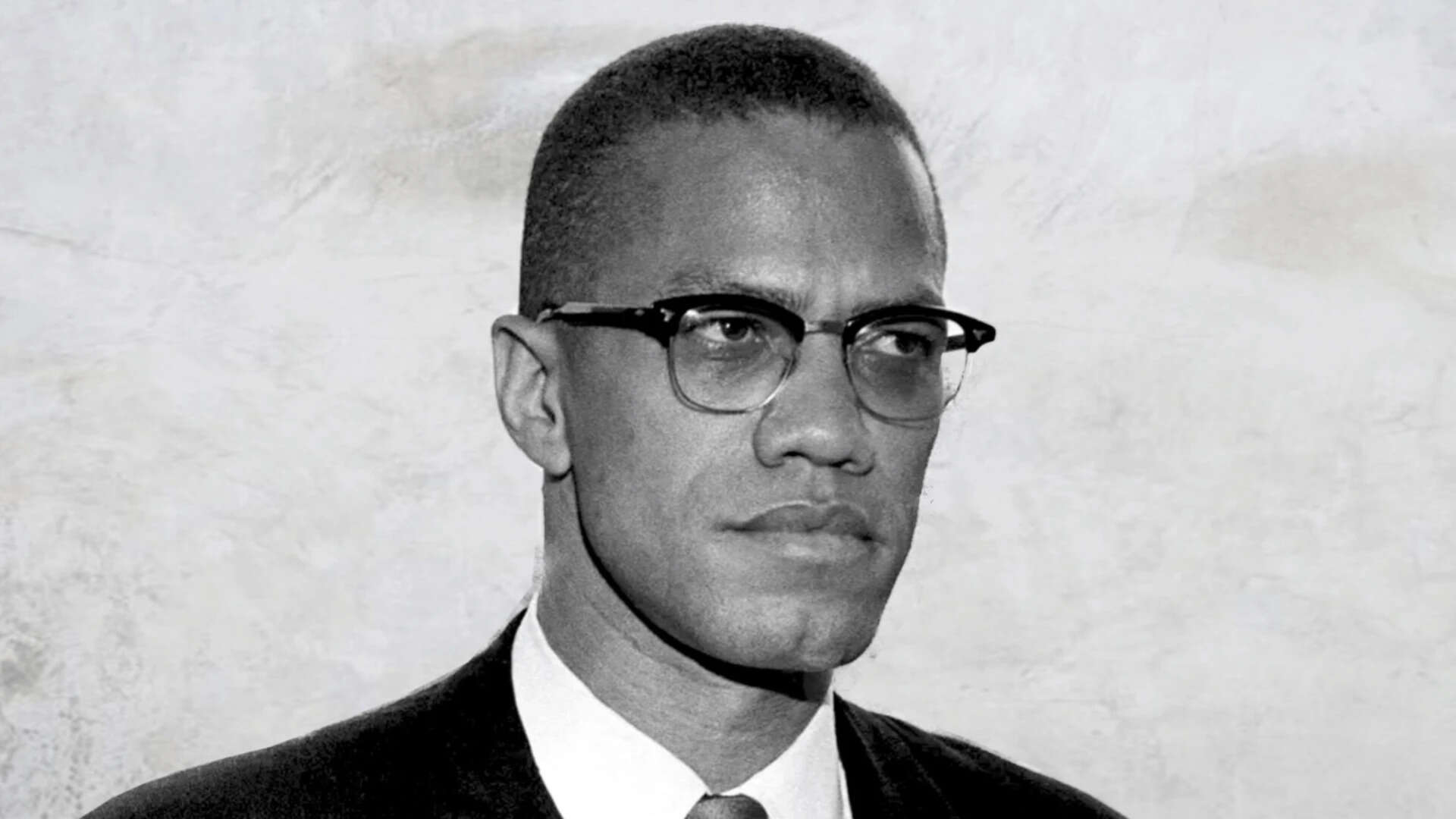
The room was suffocatingly hot, packed to the walls with people who had spent their entire lives being told to sit down, shut up, and accept their lot. At the front stood Malcolm X. He wasn't smiling. He rarely did when the stakes were this high. He looked out at the crowd, his eyes cutting through the haze of cigarette smoke, and delivered a line that was less of a quote and more of a psychological blueprint for survival in an inherently hostile world.
"A wise man can play the part of a clown," he noted, "but a clown can't play the part of a wise man." Expanding on this idea, you can find more in: The Truth About Supermarket Steak And What Really Happens Behind Kitchen Doors.
It is a devastatingly simple observation. Yet, most people completely misunderstand what he was trying to say. They think it is a simple insult, a witty playground taunt aimed at foolish leaders or political adversaries. It isn't. It is an exploration of power, deception, and the heavy emotional tax of wearing a mask just to stay alive.
To truly understand the depth of this insight, you have to look at the anatomy of the masquerade. Experts at ELLE have also weighed in on this matter.
The Strategy of the Shuffled Feet
Picture a corporate boardroom in the modern era. Let us call the man at the end of the table Marcus. He is the only Black executive in a room of twelve people. Marcus is brilliant. He holds degrees that his colleagues could only dream of, and his data analysis is flawless. Yet, when he speaks, he pitches his voice just a little higher. He laughs a little too loudly at the CEO’s terrible golf jokes. He rounds off the sharp edges of his intellect.
Marcus is playing a part.
This isn't a new corporate trend; it is a survival mechanism as old as civilization itself. Historically, marginalized individuals have had to adopt the persona of the harmless jester to avoid triggering the insecurities of the powerful. In the American South, this was a literal art form. Enslaved people and later sharecroppers learned that displaying too much intelligence, too much competence, or too much pride could get them killed.
So, they wore the mask. They played the clown. They smiled when they were bleeding and shuffled their feet when they wanted to run.
But here is the crucial distinction that Malcolm X was pointing out: Marcus knows he is acting. The performer is entirely separate from the performance. He holds the strings. He observes the room from behind the slits of his metaphorical mask, collecting data, measuring vulnerabilities, and calculating his next move. The performance is a shield. It is a tactical retreat, not a surrender.
The Tragedy of the Permanent Costume
Now, consider the alternative.
Look at the person who inherits a position of authority purely through privilege, nepotism, or a loud mouth. Let us call him the true clown. This individual ascends to the high ground not because of wisdom, but because the system is designed to elevate empty vessels that make the most noise.
When a crisis hits—and a crisis always hits—the true clown is exposed.
He cannot suddenly pivot to wisdom. Wisdom is not a coat you can buy at a boutique and throw over your shoulders when the weather turns cold. It is forged in the fires of introspection, suffering, and deep study. A foolish person cannot simulate deep strategic thought any more than a bicycle can simulate a jet engine. They lack the internal machinery.
When the lights get bright and the pressure mounts, the true clown simply plays the clown louder. They double down on the theatrics. They turn serious policy debates into reality television. They wave their hands, point fingers, and yell at the clouds, hoping the spectacle will distract the audience from the gaping void where their substance should be.
We see this play out in politics, in tech companies run by erratic billionaires, and in our own local communities. The tragedy is that the clown often believes their own act. They confuse the applause of the circus with genuine respect.
The Psychological Toll of the Act
Living this way splits a person in two. It is an exhausting way to exist.
I remember sitting in a meeting years ago, watching a mentor of mine—a woman of immense talent—literally diminish herself in real-time to appease an insecure manager. She giggled at his condescending remarks. She prefaced her groundbreaking ideas with, "This might be a silly thought, but..."
Afterward, in the hallway, the mask fell away. Her face was gray with fatigue. Her eyes were dead.
"Why do you do that?" I asked her, young and arrogant enough to think the solution was simple.
She looked at me with a mixture of pity and resentment. "Because if I don't let him think he's the smartest person in the room, he won't let me stay in the room at all. I can play his game until I don't need his room anymore."
That is the hidden cost. The wise person who plays the clown must constantly police their own brilliance. They must stomach the humiliation of being underestimated. They have to watch lesser minds claim credit for their labor while they nod and smile.
The danger, of course, is that if you wear the mask for too long, it can begin to stick to your skin. The line between the performance and the self blurs. You begin to forget the sound of your own unfiltered voice.
Reading the Room from the Margins
The core truth of Malcolm's words lies in the concept of situational awareness. Those who are forced by circumstance to navigate worlds that were not built for them develop a hyper-acute sense of observation. They become masters of reading the room. They know exactly which version of themselves to deploy to achieve a specific outcome.
It is a form of emotional chess. The wise man playing the clown is always three moves ahead. He knows that being perceived as a threat is the fastest way to get eliminated from the board. By projecting harmlessness, he buys time. He builds his capital. He waits for the precise moment when the mask is no longer required.
The true clown, conversely, has never had to learn how to read a room. The room has always adjusted to them. They blunder through delicate situations with all the grace of a bulldozer, entirely unaware of the resentment they are generating or the traps they are walking into. They assume that because people are laughing, they are winning.
The Moment the Mask Comes Off
The real shift happens when the environment changes.
Systems fail. Markets crash. The old guards stumble. When the structure that protects the foolish leader begins to crack, the power dynamic instantly flips.
Suddenly, the theatrics don't work anymore. The catchphrases ring hollow. The crowd stops laughing and starts demanding answers. The true clown looks around for a script, but there isn't one written for this specific disaster. They are trapped in their own caricature.
That is when the quiet observer steps forward.
The person who spent years being overlooked, underestimated, and dismissed sheds the performance. They don't need to yell. They don't need to wave their hands. They speak with the quiet, terrifying authority of someone who has spent a lifetime studying the terrain from the shadows.
They don't just take over the room; they redefine it.
Malcolm X wasn't advocating for deceit. He was acknowledging the brutal reality of a lopsided world. He was reminding his listeners that intelligence must sometimes be guarded, that arrogance is a vulnerability, and that the ultimate victory belongs to those who know exactly who they are, even when the world demands they play the fool.