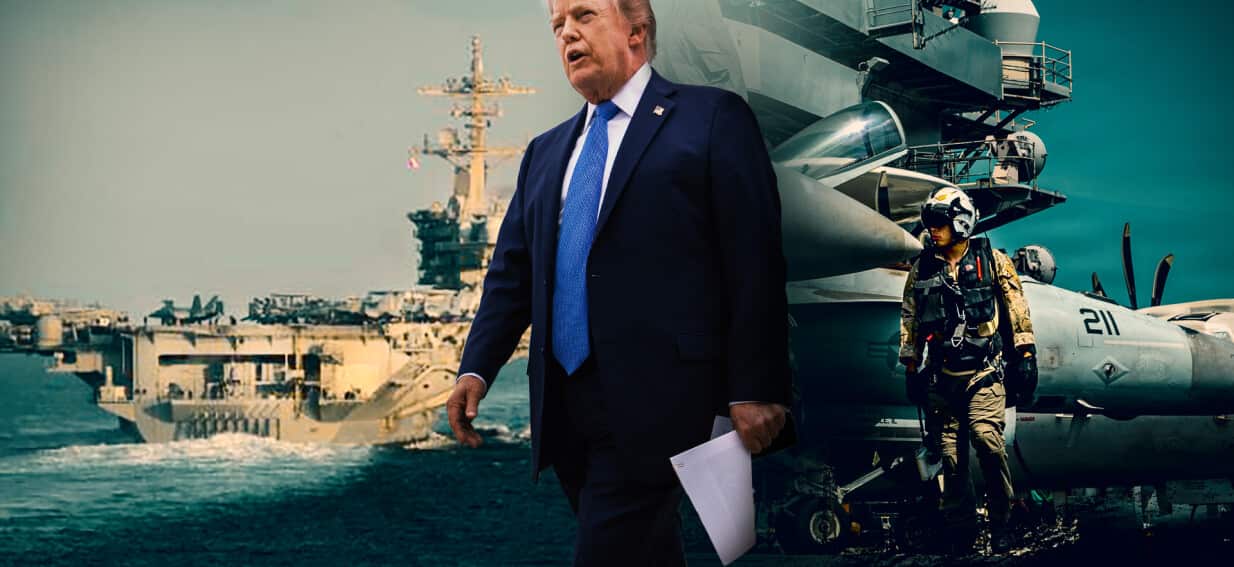
Naval operational capacity is bounded by human endurance and logistical replenishment intervals. When a carrier strike group exceeds its designed deployment ceiling without port rotation, the structural failure mode manifests first in crew psychology and second in command efficacy. Recent accounts from the USS Abraham Lincoln detail multiple self-harm incidents, prolonged deployments exceeding 250 consecutive days at sea, and acute supply chain degradation. Opposing state actors, specifically Iran, exploit these internal fractures through targeted information operations, converting tactical fatigue into strategic psychological leverage. Analyzing this dynamic requires moving past surface-level narratives of low morale to examine the systemic misalignment between force generation policy and human capital limits.
The Cost Function of Extended Deployment Cycles
A Nimitz-class supercarrier operates as a closed-loop micro-city supporting roughly 5,000 personnel. The engineering plants, water purification systems, and aviation support facilities demand relentless maintenance. Under standard operational tempo, deployment windows are capped at six to seven months to balance presence requirements with crew psychological reset and mechanical overhaul. Don't forget to check out our recent post on this related article.
When strategic inertia or escalating regional conflict forces an open-ended extension, the operational cost function turns nonlinear.
- The Supply Degradation Vector: Fresh food provisions deplete within the first sixty days, forcing reliance on shelf-stable rations that diminish nutritional intake. Critical hygiene items, including soap and toothpaste, exhaust their reserve stock.
- The Mechanical Stress Vector: Continuous flight operations and high-tempo watch rotations accelerate wear on non-redundant sanitation and fresh-water distillation systems, leading to non-functional heads, mold accumulation, and intermittent hot water.
- The Cognitive Attrition Vector: Sleep deprivation accumulates across 12-hour operational shifts conducted beneath persistent acoustic stress from the flight deck.
This friction creates an environment where physical discomfort transitions into cognitive exhaustion. When sailors perceive that leadership lacks an exit strategy, institutional trust erodes. The psychological safety net collapses when mental health resources face multi-week backlogs or are perceived as punitive rather than supportive. Self-harm incidents and attempts to go overboard represent extreme behavioral endpoints of systemic operational failure. To read more about the history here, The New York Times provides an in-depth breakdown.
Asymmetric Exploitation and Information Warfare
Information operations function by amplifying existing structural vulnerabilities. Iran’s strategic apparatus does not need to manufacture discontent aboard American warships; it needs only to index, broadcast, and weaponize the friction points already generated by overstretched force architectures.
State-aligned media channels frame these internal crises through specific analytical lenses designed to undermine strategic deterrence:
- Portraying Structural Decay as Systemic Collapse: Framing routine mechanical failures or supply bottlenecks as evidence of total logistical breakdown.
- Highlighting Command Alienation: Amplifying family member grievances and testimonies of ignored mental health pleas to construct a narrative of command indifference.
- Delegitimizing Power Projection: Juxtaposing the immense capital cost of nuclear supercarriers against the degraded living conditions of their crews to argue that sustained naval projection is unsustainable.
This dynamic creates a feedback loop. As foreign media highlights internal dissent, domestic political pressure mounts, forcing defensive communications from military leadership. These defensive postures frequently clash with frontline realities reported by families, reinforcing the perception among sailors that their welfare is secondary to political objectives.
Force Architecture Corrections
Addressing the vulnerability of extended deployments requires structural changes to naval scheduling and sustainment protocols rather than superficial deployments of resilience counselors.
The primary structural intervention involves enforcing rigid time-at-sea ceilings. If mission requirements in strategic choke points like the Strait of Hormuz demand continuous carrier presence, the Navy must transition from single-ship overextensions to a structured rotational handoff model. This requires prepositioning relief vessels prior to the expiration of the preceding crew's operational window, eliminating the operational gaps that cause indefinite extensions.
Concurrently, logistics pipelines must incorporate mandatory replenishment at sea protocols for perishable goods and mental health infrastructure. Placing deployment resilience counselors under direct command evaluation structures creates perverse incentives to underreport psychological casualties to avoid mission disruption. Decoupling mental health reporting from operational fitness evaluations allows for timely medical interventions before cognitive exhaustion manifests as self-harm.
The strategic risk is clear. A force architecture that treats human capital as infinitely elastic will eventually face catastrophic retention failures and operational degradation that no amount of technological superiority can offset.
Institute mandatory, hard-stop deployment limits for all capital warships, backed by automated force-rotation triggers that mandate relief arrival thirty days prior to any statutory deployment ceiling.