The conflict between Donald Trump and Jimmy Kimmel is not a standard celebrity feud; it is a high-frequency exchange of political and cultural capital that operates on a specific logic of mutual benefit through perceived antagonism. While traditional media analysis treats these interactions as spontaneous emotional outbursts, a structural deconstruction reveals a stable, self-reinforcing feedback loop. This cycle relies on the conversion of "outrage-minutes" into measurable audience retention and political mobilization. To understand the friction between the 45th President and the host of Jimmy Kimmel Live!, one must analyze the mechanisms of late-night saturation, the economics of the "anti-fan," and the strategic use of high-profile platforms like the Academy Awards as battlegrounds for narrative dominance.
The Economic Engine of Antagonistic Symbiosis
The primary driver of the Trump-Kimmel dynamic is the monetization of polarization. In the current media fragmented state, "broad appeal" has been replaced by "intensity of affinity." This creates an environment where a host like Kimmel does not need to appeal to the entire country; he needs to solidify a loyal base that views him as a surrogate for their political frustrations.
This relationship functions through three distinct operational pillars:
- The Audience Retention Hook: For Kimmel, Trump provides a reliable, renewable source of content that requires minimal setup. The audience arrives with a pre-existing emotional charge, which the host then discharges through satire. This creates a predictable ratings floor.
- The Base Mobilization Trigger: For Trump, Kimmel represents the "media elite" archetype. By engaging with Kimmel’s critiques, Trump reinforces his brand as a fighter against a perceived hostile establishment. Every insult from a late-night host is a data point Trump uses to validate his narrative to his supporters.
- Algorithmic Virality: Digital platforms prioritize high-sentiment content. A clip of Kimmel reading a Trump "Truth" post during the Oscars generates a specific type of engagement—high shareability among supporters and high hate-watching among detractors—which ensures the content bypasses traditional gatekeepers.
Operational Analysis of the 2024 Oscar Engagement
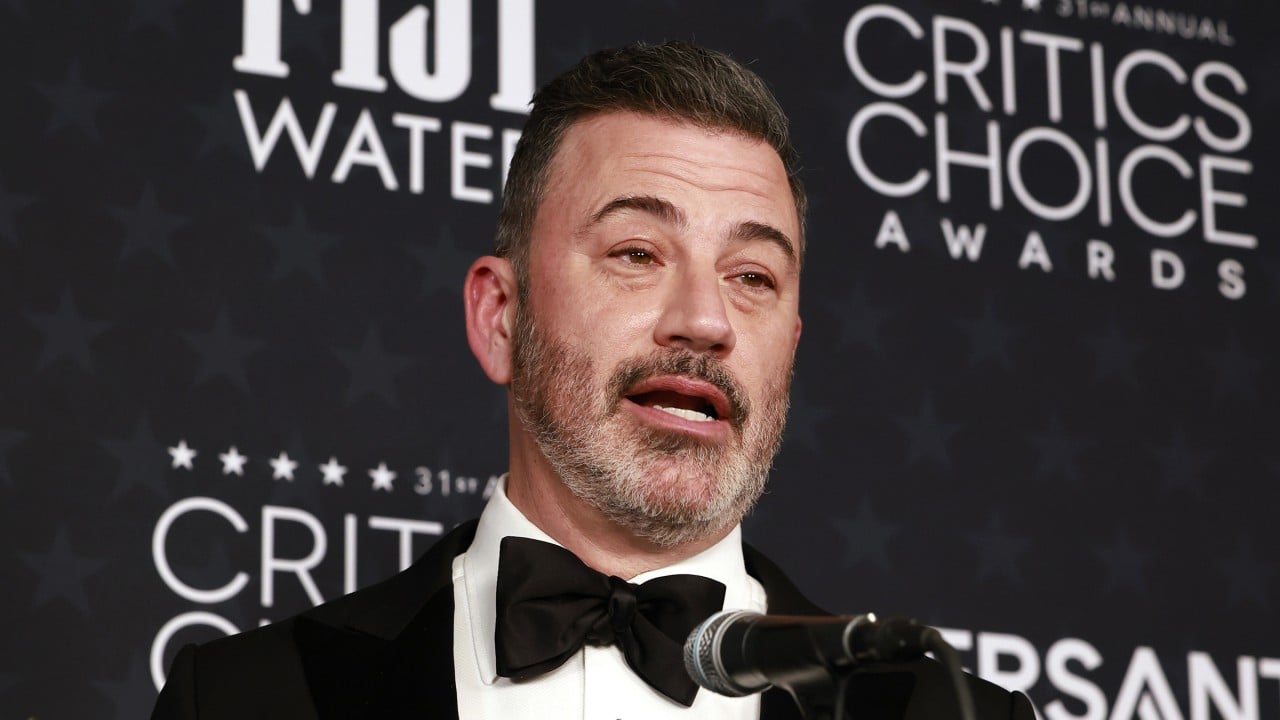
The flashpoint during the 96th Academy Awards serves as a perfect case study for this structural exchange. When Kimmel read Trump’s social media critique live on stage, he wasn't merely "reacting." He was executing a calculated maneuver to seize the news cycle.
Trump’s post, which questioned Kimmel’s competency as a host, functioned as a "top-of-funnel" engagement tactic. It signaled to his followers that he was watching and critiquing the cultural elite in real-time. Kimmel’s decision to read the post aloud transformed a private social media interaction into a global broadcast event. This move neutralized the criticism by framing it as a joke, while simultaneously providing Trump with the oxygen of a global audience of millions who might not otherwise engage with his social media platform.
The cause-and-effect here is linear:
- Action: Trump posts a critique to maintain relevance within the cultural conversation of the Oscars.
- Reaction: Kimmel integrates the critique into the broadcast, inflating the importance of the post.
- Result: A 48-hour news cycle dominated by the interaction, benefiting both parties’ visibility metrics while starving other news of attention.
The Cost Function of Late-Night Politicization
While the immediate ROI of these feuds is high in terms of clips and "likes," there is a long-term cost to the structural integrity of the late-night format. This can be viewed through the lens of audience narrowing.
Data from various viewership studies indicates a significant shift in the demographic and psychographic makeup of late-night audiences. Historically, the format sought a "big tent" approach. The current strategy, exemplified by Kimmel, prioritizes "niche-deep" engagement.
The bottleneck in this strategy is the Law of Diminishing Outrage. To maintain the same level of audience engagement, the intensity of the rhetoric must continually escalate. This creates a risk of audience fatigue, where the "shouting match" becomes background noise, leading to a slow decay in the cultural weight of the medium. If the host becomes indistinguishable from a political commentator, they lose the unique "jester's privilege" that allows late-night television to influence the broader public discourse.
Tactical Asymmetry in the Trump Media Strategy
Donald Trump utilizes a tactic known as "flooding the zone," where the volume of provocations prevents any single critique from gaining permanent traction. In the context of the Kimmel feud, Trump uses Kimmel as a convenient foil to distract from more substantive legal or political challenges.
When Trump attacks Kimmel’s ratings or his hosting ability, he is pivoting the conversation from a high-stakes political arena (such as court proceedings) to a low-stakes entertainment arena. This is a deliberate misdirection. By winning—or even just competing—in a rhetorical battle with a comedian, Trump projects an image of vitality and unbothered confidence to his constituency.
The Myth of the "One-Sided" Victory
Media commentators often attempt to declare a "winner" in these exchanges. This is a fundamental misunderstanding of the conflict’s architecture. In a system of asymmetric attention warfare, both participants win as long as the conflict continues.
- Kimmel’s Win Metric: Relevance, monologue material, and alignment with the progressive demographic that advertisers in the 18-49 bracket currently prize.
- Trump’s Win Metric: Content for his social media ecosystem, proof of "media bias" to show donors, and a demonstration of his ability to live "rent-free" in the minds of his critics.
The only loser in this configuration is the unaligned viewer who seeks entertainment divorced from the bifurcated political reality. The disappearance of "neutral" cultural space is a direct byproduct of this specific feud’s success.
Structural Incentives for Escalation
There are no internal incentives for either Trump or Kimmel to de-escalate. From a game theory perspective, both players are in a "Nash Equilibrium" where neither can improve their position by changing their strategy unilaterally.
If Kimmel stops attacking Trump, he loses the core edge that defines his current brand and risks losing the audience segments that tune in specifically for the "resistance" narrative. If Trump stops responding to Kimmel, he loses a high-profile punching bag that helps him maintain a presence in the cultural centers of New York and Los Angeles without having to leave his base.
The interaction is governed by the Principle of Reciprocal Validation. Each side defines itself in opposition to the other. Without the "villain" (as defined by their respective audiences), the "hero" narrative for both Kimmel and Trump loses its potency.
Strategic Forecast: The Integration of Entertainment and Campaigning
As the 2024 and 2026 political cycles evolve, the Kimmel-Trump feud will likely move from a series of skirmishes to a permanent integrated front. We should expect the following developments:
- The Weaponization of Late-Night Clips: Campaign ads will increasingly use late-night clips—not to defend the candidate, but to demonstrate the "insulting nature" of the opposition, further driving small-dollar donations.
- The Erosion of the "Host" Persona: Kimmel will likely lean further into a political-advocacy role, mirroring the transition seen in figures like Jon Stewart, but with a more aggressive, confrontational edge suited for the short-form video era.
- Targeted Platform Attacks: Trump will likely move beyond attacking Kimmel the person and begin attacking the networks and corporate sponsors behind the shows, attempting to create economic pressure on the platforms that host his detractors.
The strategic play for any entity observing this space is to recognize that these exchanges are not "news" in the traditional sense, but are high-value transactions in the attention economy. Success in this environment is not measured by "changing minds," but by the efficiency with which one can harvest and direct the existing emotional energy of a polarized public. Any attempt to mediate or "fact-check" these interactions misses the point; the feud is the product, and the outrage is the currency.