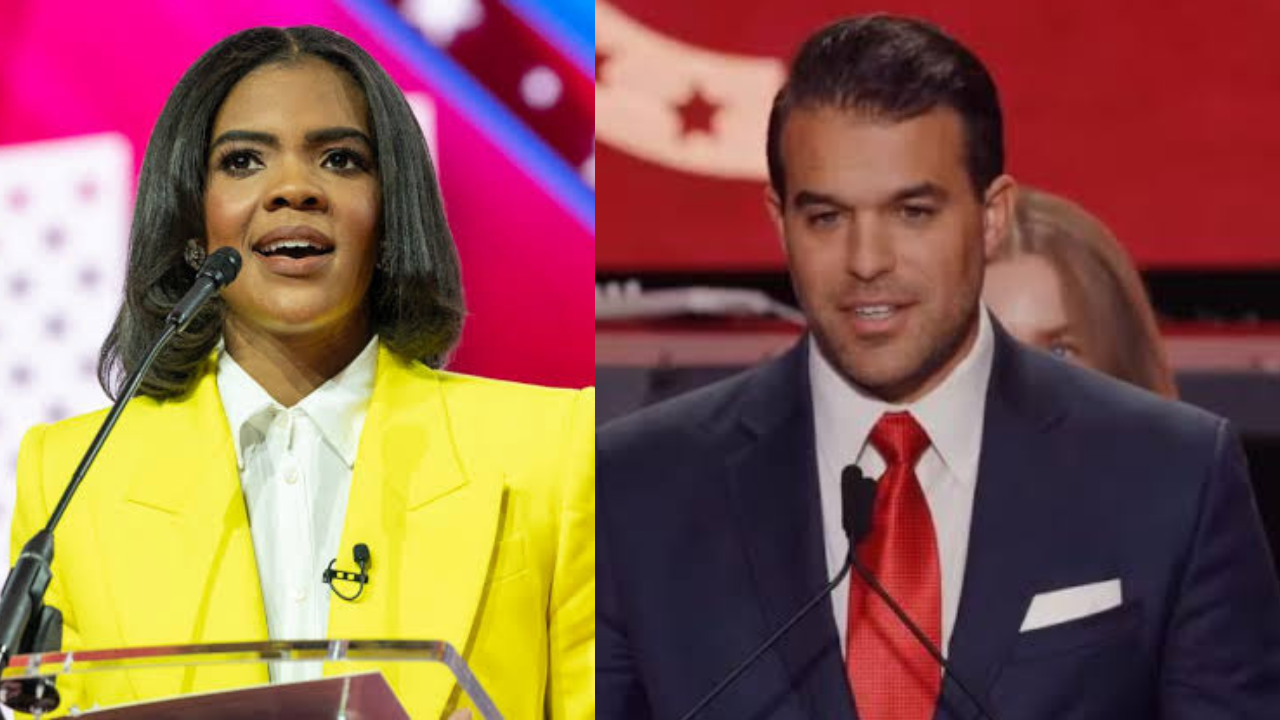
The recent convergence of leaked private communications involving Andrew Kolvet and the subsequent public responses from Candace Owens and Charlie Kirk represents more than a standard media controversy; it is a case study in Institutional Risk Contagion. In the attention economy, the primary asset is the "Credibility Premium." When private coordination mechanisms—specifically those involving media strategists like Kolvet—are exposed, the distance between authentic conviction and manufactured narrative collapses. This collapse creates a liquidity crisis of trust that affects not only the individual influencers but the entire ecosystem of the "Alternative Right" media infrastructure.
The Architecture of Narrative Management
The friction surrounding the Kolvet leak centers on the role of a media strategist as a "Narrative Arbitrageur." In this model, the strategist identifies ideological gaps in the market and coordinates talent to fill them. The leak involving Owens and Kolvet suggests a degree of tactical planning that contradicts the "organic outsider" brand both Owens and Kirk have cultivated.
The structural integrity of these media brands relies on three specific pillars:
- Perceived Independence: The audience believes the commentator is uncoupled from corporate or political donor interests.
- Moral Clarity: The brand provides a definitive binary framework for complex social issues.
- Insider/Outsider Access: The commentator claims to provide "the truth" that mainstream outlets suppress.
The leaked chat disrupts the first pillar. When a strategist appears to be "managing" a conflict or a pivot, the audience is forced to re-evaluate the commentator’s output as a product of a Decision-Support System rather than a spontaneous conviction. This shift moves the audience’s perception of Owens from a "Thought Leader" to a "Media Asset."
Measuring the Cost of Brand Contagion
Brand contagion occurs when the negative attributes of one node in a network begin to devalue the surrounding nodes. In the Charlie Kirk/Candace Owens dynamic, the "Unease" noted by viewers of the Charlie Kirk Show stems from a Cognitive Dissonance Gap.
The mechanics of this contagion follow a predictable decay function:
- The Exposure Phase: The leak enters the ecosystem. Initial reactions are defensive, often citing "deep state" interference or "out of context" nuances to maintain the status quo.
- The Coordination Strain: As Owens "breaks silence," the public response must align with existing brand values while neutralizing the leak. If the response feels overly polished or coordinated with Kirk’s platform, it reinforces the very narrative of "manufactured dissent" it seeks to disprove.
- The Audience Churn: Dedicated followers rarely leave, but the "Persuadable Middle"—the growth engine for these platforms—experiences a sharp drop in conversion. The cost of acquisition (CAC) for new subscribers rises because the "Trust Barrier" has been elevated.
This phenomenon is quantifiable through engagement metrics. During a trust crisis, while raw views may spike due to "hate-watching" or curiosity, the Sentiment-to-Volume Ratio typically inverts. High volume with net-negative sentiment signals long-term brand erosion, regardless of short-term ad revenue gains.
The Strategy of Strategic Silence and Selective Disclosure
Owens’ decision to "break silence" is a tactical maneuver designed to regain control of the Information Asymmetry. By speaking directly to the leak, she attempts to frame the narrative before it is codified by competitors or mainstream media. However, this strategy carries the "Transparency Paradox": the more one explains the "real story" behind a leak, the more they highlight the fact that a hidden layer of coordination exists.
The Charlie Kirk Show clip, which reportedly left viewers "uneasy," highlights a failure in Non-Verbal Calibration. In high-stakes digital media, audiences have developed a sophisticated "Inauthenticity Radar." When a presenter attempts to gloss over a structural conflict (like a leak involving their top strategist) with standard talking points, the mismatch between the gravity of the situation and the levity of the delivery creates a visceral discomfort.
This "Unease" is a leading indicator of Platform Fragility. If the audience begins to view the interaction as a performance rather than a discussion, the platform loses its utility as an alternative to "Mainstream Media" (MSM). The irony is that by using the same narrative management tools as the MSM, these alternative figures risk becoming the very thing they monetize against.
The Economic Implications of Personnel Leaks
Andrew Kolvet occupies a critical position in the Talent-Management-Industrial Complex. Within this framework, the strategist is the bridge between the ideology and the monetization. A leak at this level is a "Systemic Shock" because it reveals the "Cost of Goods Sold" in the opinion market.
The "Goods" are the opinions; the "Cost" is the coordination required to keep those opinions synchronized across different platforms. When the curtain is pulled back, the audience realizes they are consuming a Coordinated Media Product rather than a diverse marketplace of ideas.
This realization triggers a re-evaluation of the "Alternative" tag. If the same PR firms and strategists are managing multiple "independent" voices, the market is not a competitive landscape of ideas but a Monopolistic Narrative Block. This reduces the competitive advantage of platforms like The Daily Wire or Turning Point USA, as they start to exhibit the same institutional rigidities as traditional networks.
Tactical Deficiencies in the Current Response
The primary error in the Owens/Kirk response strategy is the reliance on Deflection over Deconstruction.
A superior strategic response would involve:
- Radical Transparency: Disclosing the nature of the strategist-talent relationship to normalize the "Management" aspect before it is leaked.
- Value Decoupling: Owens must demonstrate an ideological move that is clearly against the interests of the strategist or the platform to prove autonomy.
- Direct Engagement with the Leak's Content: Avoiding the "who leaked it" question and answering the "what does this mean about your independence" question directly.
By focusing on the "leak" as an act of aggression rather than the "content" as a point of data, the actors remain in a defensive posture. This allows the story to have a longer Half-Life in the news cycle, as each new "explanation" provides fresh material for analysis and skepticism.
The Pivot to "Proof of Work"
To survive the "Post-Leak" environment, media personalities must transition from "Proof of Persona" to "Proof of Work." The audience is no longer satisfied with a personality stating a position; they require evidence of the process that led to that position.
This creates a new bottleneck in the content production pipeline. High-frequency daily shows are inherently "Low Process"—they rely on quick takes and emotional resonance. Moving to a "High Process" model requires more research, more transparency, and slower output. However, this is the only path to rebuilding the Credibility Premium.
The current "Unease" felt by viewers is a signal that the market is maturing. The "Wild West" era of alternative media, where a microphone and a controversial take were sufficient to build an empire, is closing. The new era demands Auditability. If a commentator cannot prove the independence of their thought process, their brand will eventually be priced as a "Commodity Narrative"—useful for tribal signaling, but devoid of actual influence.
Future volatility in this sector will likely be driven by similar data breaches. As these organizations scale, the number of individuals with access to private coordination increases, raising the probability of a "Whistleblower Event." Organizations that do not move toward a decentralized, less managed talent model will find themselves perpetually vulnerable to the Transparency Shock that Owens and Kirk are currently navigating.
The optimal play for a media brand in this position is to intentionally trigger a "Minor Scandal" of independence—a public disagreement between the talent and the strategist on a non-critical issue. This creates a "Firebreak" that prevents a major leak from being seen as proof of total coordination. Without these intentional friction points, the brand remains a "Single Point of Failure" where one leaked chat can devalue a decade of audience building.