
Cultural and historical friction directly dictates consumer behavior in international sports markets. As Boston hosts matches for World Cup 2026, a specific logistical and behavioral phenomenon emerges: how distinct supporter groups utilize urban spaces, and whether English fans will replicate the distinct organizational patterns established by Scottish supporters during recent international tournaments.
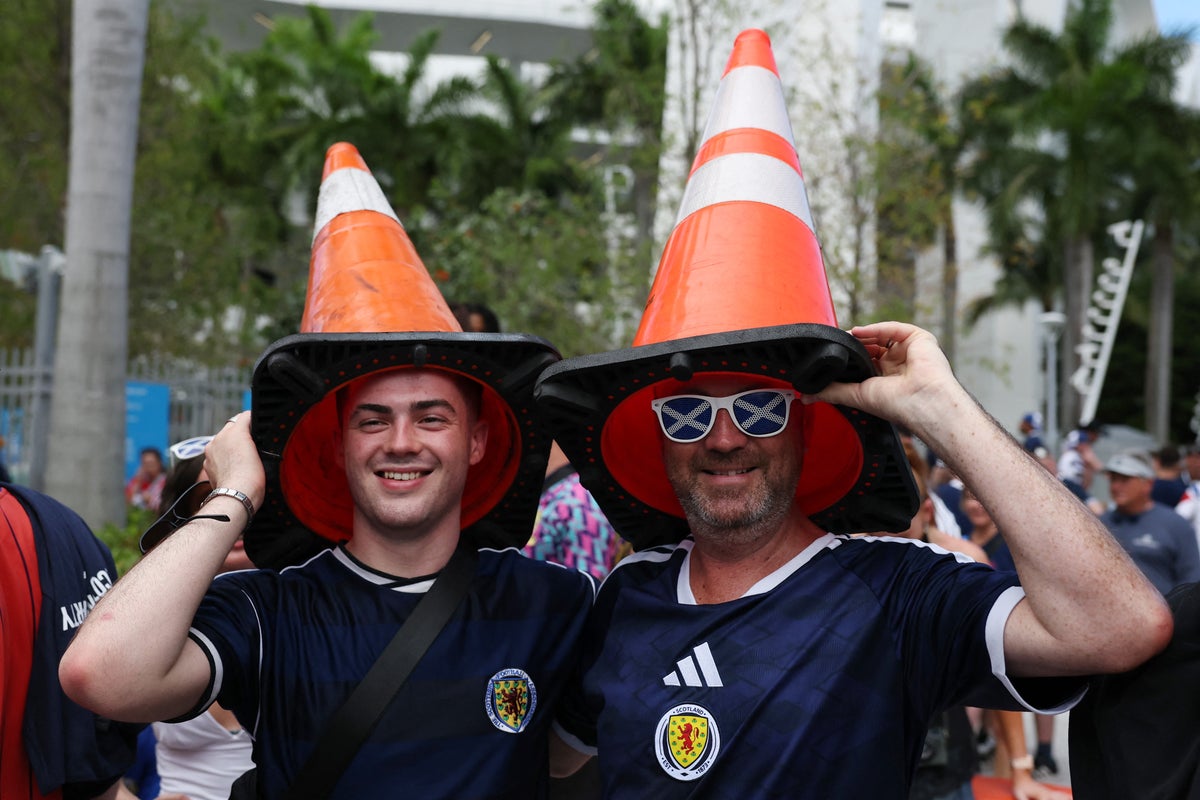
The baseline comparison rests on a fundamental contrast in supporter infrastructure. Scottish fans historically rely on a highly centralized, narrative-driven mobilization strategy—frequently termed the "Tartan Army" model—which prioritizes collective visibility, localized takeovers of civic spaces, and an intentional subversion of aggressive fan stereotypes to build immediate local goodwill. Conversely, English supporter dynamics in foreign markets operate under a decentralized, fragmented architecture.
To evaluate whether English fans in Boston will follow the Scottish precedent, we must analyze the structural drivers of fan behavior across three distinct pillars: geographic distribution, institutional hospitality ties, and the socio-historical incentives driving collective fan identity.
The Structural Drivers of Supporter Footprints
The spatial allocation of soccer fans within a host city is not random; it is governed by an optimization problem balancing real estate constraints, transit accessibility, and cultural alignment.
Fan Concentration = f(Transit Proximity, Venue Density, Cultural Affinity)
In Boston, the primary bottleneck for collective fan behavior is the physical separation between the match venue (Gillette Stadium in Foxborough) and the primary cultural and hospitality hubs located within Boston proper. This 30-mile geographic disconnect forces a structural bifurcation in how fan groups operate.
1. The Decentralization Impediment
The Scottish model succeeds because it relies on high-density convergence. When Scottish supporters travel, they establish a singular "home base" within a city's historic or civic core. This collective density lowers the coordination cost for match-day events.
English supporters face a different optimization challenge. The English diaspora and visiting fan base are significantly larger and more heterogeneous than their Scottish counterparts. This scale creates a fragmentation effect. Rather than clustering in a single zone, English fans naturally distribute across distinct nodes based on economic profiles and accommodation availability:
- The Downtown/Faneuil Hall Corridor: High-density, commercialized hospitality zones attracting casual travelers and international tourists.
- The Neighborhood Hubs (e.g., South Boston, Brighton): Highly localized, historic Irish-American or British expat enclaves where established pubs dictate match-day gatherings.
- The Foxborough Perimeter: Pragmatic, transit-focused nodes prioritized by match-attending fans seeking to bypass the MBTA Commuter Rail or driving bottlenecks.
This geographic dispersion makes a unified "Scottish-style" takeover structurally improbable for English fans. The friction of distance and the sheer volume of individuals scatter the demographic weight across too many competing commercial zones.
2. Institutional Hospitality Infrastructure
A primary variable missing from standard sports commentary is the role of commercial gatekeepers—specifically, official supporter clubs and pub partners. The Scottish fan presence often utilizes a pre-arranged framework, coordinating directly with specific venues to ensure an exclusive operational base.
The English supporter network in Boston operates on an open-market model. Major English Premier League supporter groups (e.g., local chapters for Liverpool, Manchester United, Arsenal, and Chelsea) already possess dedicated, fragmented allegiances to specific bars across the city. During a World Cup, these club-level allegiances are temporarily overridden by national team support, but the underlying physical infrastructure remains divided.
The competition for venue space prevents a singular fan identity from dominating the urban landscape. Boston’s strict liquor licensing laws, capacity limits, and public consumption ordinances further suppress the spontaneous, large-scale outdoor gatherings that characterize Scottish fan behavior in European town squares.
Socio-Historical Incentives and Identity Marketing
Beyond geography and logistics, fan behavior is driven by identity utility—the psychological and social benefits derived from adopting a specific public persona.
The Scottish fan identity is consciously curated as an exercise in soft power. By emphasizing camaraderie, traditional attire, and philanthropic initiatives in host cities, Scottish supporters actively differentiate themselves from the historic baggage associated with English football hooliganism. This creates a high level of local receptivity; city governments and hospitality owners actively welcome the influx because the perceived risk is low and the economic return is high.
English fans operate under a historical deficit. While the modern England supporter base has undergone significant demographic shifts and behavioral improvement over the past two decades, the legacy of the late 20th-century fan disruptions creates an institutional barrier. Host city security apparatuses, including local law enforcement and stadium management, apply a different risk-assessment framework to English fan concentrations.
This reality alters the operational cost for English supporters:
- Increased Surveillance and Policing: Higher concentrations of English fans trigger greater law enforcement visibility, which naturally dampens spontaneous civic takeovers.
- Strict Enforcement of Public Space Ordinances: Boston’s historical preservation laws and strict policing of public drinking mean that any attempt to replicate the open-air, plaza-style gatherings seen in European tournament hosts will face immediate regulatory intervention.
- The Expat Dampening Effect: A significant portion of the England-supporting demographic in Boston consists of white-collar British expatriates working in technology, biotech, and higher education. This demographic favors private hospitality suites, ticketed fan zones, or established indoor venues over high-visibility street mobilization.
The Logistics of the Foxborough Funnel
The definitive factor breaking the parallel between Scottish and English fan behavior is the logistics of Gillette Stadium itself. Unlike European venues situated within robust urban transit grids, Foxborough is an automobile-dependent suburban stadium surrounded by expansive parking infrastructure.
This architectural reality shifts the fan experience from urban socialization to isolated tailgating. The "Scottish lead" is built on the concept of walking marches to urban stadiums—a visible, rhythmic progression through city streets. The logistics of World Cup 2026 in Boston replace this dynamic with a highly regulated transit funnel.
Fans must choose between the limited schedule of the tournament train from South Station or sitting in prolonged traffic bottlenecks on Route 1. The result is a compression of time. Fans cannot afford to linger in Boston’s historic center if they intend to clear FIFA’s multi-layered stadium security perimeters on time. The physical reality forces fans to migrate early to the stadium perimeter, transferring the energy from Boston’s public squares to the corporate, controlled footprint of Patriot Place and the surrounding parking lots.
Strategic Operational Forecast
The assumption that English fans will adopt the centralized, high-visibility operational model of Scottish supporters ignores the fundamental structural differences in demographic scale, geographic distribution, and institutional constraints.
English fan behavior in Boston will manifest as a hub-and-spoke system. Rather than a singular, unified presence occupying a central civic space, expect a decentralized network of high-intensity indoor activations at established football hubs across the city, transitioning abruptly into highly regulated transit cohorts moving toward Foxborough.
For commercial stakeholders, hospitality operators, and city planners, the optimal strategy is not to prepare for a singular massive fan zone, but to optimize individual node capacities and streamline the transit links connecting downtown hospitality assets to the suburban stadium infrastructure. The economic windfall will be highly distributed, driven by localized density rather than a singular cultural takeover.


.jpg?width=1200&auto=webp&trim=25%2C0%2C25%2C0)