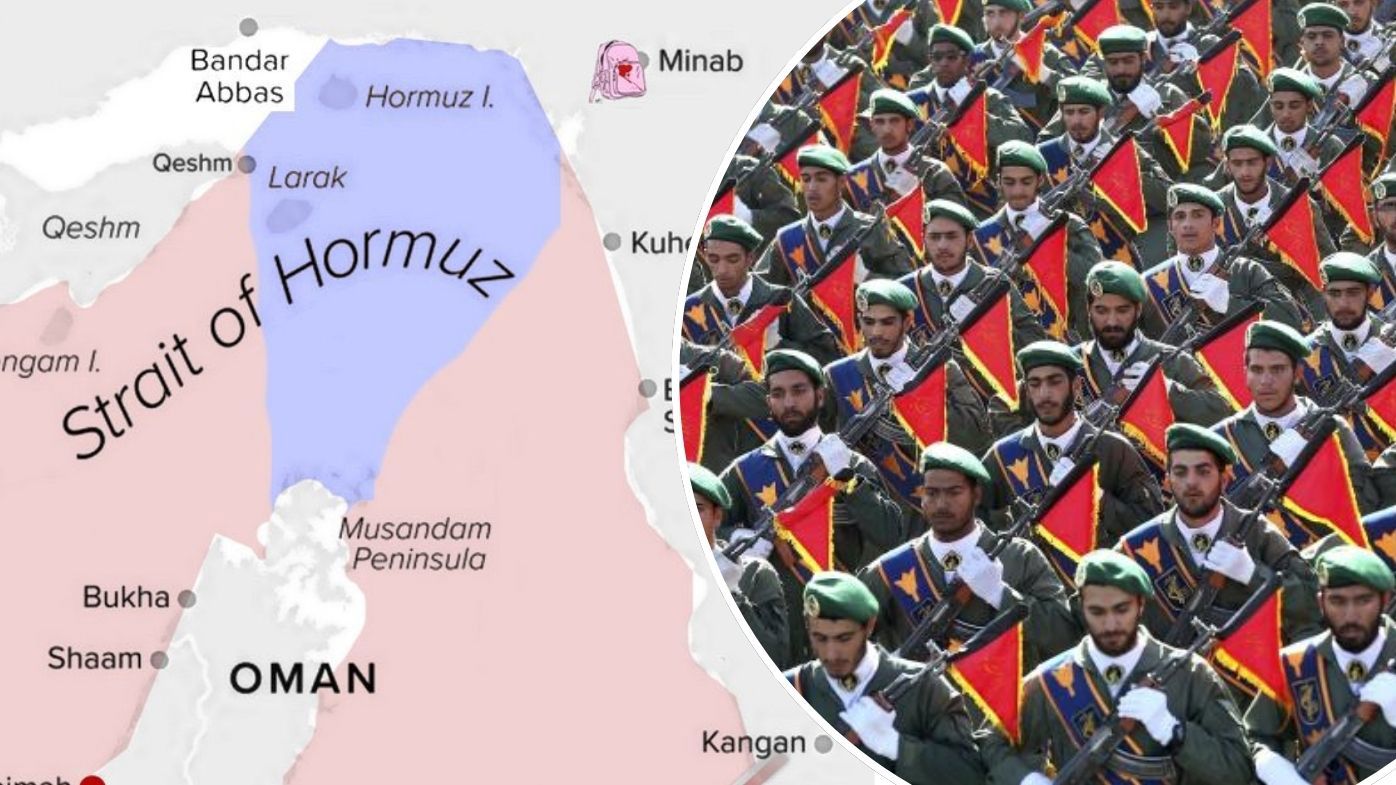
The Strait of Hormuz is not a static geographic feature; it functions as a highly vulnerable economic valve. This single maritime corridor handles roughly 20 to 30 percent of the world’s total liquefied natural gas (LNG) and petroleum consumption, making global energy markets fundamentally dependent on its stability. For decades, Western defense analysis has focused almost exclusively on a kinetic scenario: a sudden, catastrophic closure of the strait by Iranian forces utilizing anti-ship missiles, fast attack craft, and naval mines. This binary view—that the waterway is either open or shut—fundamentally misinterprets Iran's true asymmetric doctrine. Tehran's strategic objectives do not rely on an economically self-destructive total closure, but rather on a calculated mechanism of grey-zone friction designed to alter global logistics costs and enforce geopolitical leverage.
Understanding Iran’s maritime ambitions requires analyzing the operational variables that dictate state behavior in enclosed waters. By dissecting the logistical, legal, and military realities of the Persian Gulf and the Gulf of Oman, we can isolate the precise levers Iran uses to project power. The standard media narrative points to aggressive intent; a structured analysis reveals a deliberate, defensive-offensive strategy calculated to offset conventional military inferiority.
The Asymmetric Friction Framework
Conventional naval power is measured by tonnage, sensor capabilities, and blue-water power projection. Iran’s naval strategy operates on a different matrix. It rejects conventional parity in favor of asymmetric friction, which aims to maximize an adversary's operational costs while maintaining plausible deniability.
This friction framework relies on three distinct operational layers.
Spatial Contiguity and Geography
The Strait of Hormuz is exceptionally narrow, with its narrowest point spanning roughly 21 nautical miles. Crucially, the internationally recognized shipping lanes—the westbound and eastbound Traffic Separation Schemes (TSS)—each measure only two miles in width, separated by a two-mile buffer zone.
Because of the bathymetry of the Persian Gulf, the deepest, most navigable channels suitable for ultra-large crude carriers (ULCCs) run through Iranian territorial waters or their immediate contiguous zone, specifically near the islands of Abu Musa and the Greater and Lesser Tunbs. This geographic reality grants Iran permanent physical proximity to the primary arteries of global trade.
The Cost-Imposition Vector
Iran does not need to sink a supertanker to disrupt the global economy. By using fast-attack craft from the Islamic Revolutionary Guard Corps Navy (IRGCN) to shadow vessels, fire warning shots, or temporarily detain commercial crews, Tehran triggers an immediate escalatory response in the commercial insurance markets.
When a maritime zone is designated a high-risk area by the Joint War Committee of Lloyd’s Market Association, war risk insurance premiums skyrocket for ship owners. This cost is compounded by delays, detours around Africa, and crew bonuses, creating an economic tax on Western and Asian economies without Iran firing a single cruise missile.
Legal Grey-Zone Exploitation
Iran leverages its position as a non-ratifying signatory of the 1982 United Nations Convention on the Law of the Sea (UNCLOS). While the United States also has not ratified UNCLOS, both nations interpret customary international law differently. Iran argues that the right of transit passage through international straits applies only to states that have ratified the treaty.
For non-ratifying states or adversaries, Iran attempts to enforce the more restrictive standard of "innocent passage," which forbids any activities deemed prejudicial to the peace, good order, or security of the coastal state. This legal ambiguity provides a ready-made pretext for interdicting vessels under the guise of environmental enforcement, safety violations, or minor maritime collisions.
Deconstructing the Total Closure Fallacy
The frequent rhetoric regarding Iran's capability to completely shut down the Strait of Hormuz ignores the internal economic constraints governing Iranian decision-making. A prolonged, total closure of the waterway would violate Iran’s own survival imperative.
First, Iran remains economically dependent on the very waterway it threatens. Despite US sanctions, Iran exports millions of barrels of crude oil per day, primarily to markets in Asia, alongside petrochemical products and condensates. The vast majority of these exports must transit the Strait of Hormuz via ports like Kharg Island. Sinking ships or mining the channel would immediately halt Iran's primary source of hard currency, inducing internal economic collapse before Western military retaliation could even materialize. While Iran has developed the Jask oil terminal outside the strait on the Gulf of Oman, its current throughput capacity cannot handle the entirety of Iran's export volume, leaving the country tethered to the Persian Gulf.
Second, a complete closure is a clear red line that removes geopolitical ambiguity. The moment Iran deploys bottom-dwelling sea mines across the entire shipping lane, it invites an overwhelming, unified international military response under coalitions like the Combined Maritime Forces (CMF) or Operation Sentinel. The strategic value of Iran's maritime leverage lies entirely in its potential use. Once the trigger is fully pulled, the ambiguity disappears, and Iran’s conventional naval assets would likely be neutralized within days. The ambition is not to start a war it cannot win, but to maintain a perpetual state of controlled instability that deters foreign intervention.
The Strategic Shift to the Gulf of Oman and Beyond
Limiting the analysis to the Persian Gulf misses a broader, structural pivot in Iranian maritime strategy. Over the past decade, Iran has systematically expanded its operational envelope outward into the Arabian Sea, the Gulf of Aden, and the Red Sea. This expansion represents a deliberate attempt to break out of the Persian Gulf bottleneck and establish a multi-theater maritime containment capability.
                  [ Bab-el-Mandeb Strait ]
                             |
                    (Houthi Subversive Ops)
                             |
                             v
[ Western Indian Ocean ] <------- [ Gulf of Oman ] <------- [ Strait of Hormuz ]
 (Long-Range Interdiction)       (Jask Port / Forward Base)   (Primary Friction Zone)
The primary mechanism for this expansion is the cultivation of proxy forces capable of executing localized friction strategies. The relationship between Tehran and the Houthi movement in Yemen provides a clear operational template. By transferring technology for anti-ship ballistic missiles, land-attack cruise missiles, and unmanned surface vessels (USVs) to the Houthis, Iran has effectively duplicated its Hormuz leverage at the Bab-el-Mandeb strait.
This creates a dual-chokepoint dilemma for global shipping. If an adversary attempts to counter Iranian pressure in the Persian Gulf, Tehran can activate its proxy network in the Red Sea, forcing commercial shipping to abandon the Suez Canal route entirely. The systemic shock of simultaneously disrupting both the Strait of Hormuz and the Bab-el-Mandeb would instantly paralyze international maritime supply chains, stretching Western naval resources across two non-contiguous theaters.
Furthermore, the Islamic Republic of Iran Navy (IRIN)—the regular blue-water navy, distinct from the IRGCN—has increased its deployments to the western Indian Ocean. These missions are designed to show a persistent presence along the Sea Lines of Communication (SLOC) connecting the Middle East to Asia and Europe. By conducting joint naval exercises with major powers like China and Russia in the Gulf of Oman, Iran signals that any attempt to isolate its maritime operations will run counter to the economic and strategic interests of other global powers.
Operational Countermeasures and Systemic Constraints
Countering Iran’s maritime strategy requires recognizing the limits of conventional naval deterrence. Sending multi-billion-dollar guided-missile destroyers to escort individual commercial tankers is an unsustainable economic equation; it expends high-end air defense munitions against low-cost drones and fast craft.
A more resilient counter-strategy requires structural changes to energy logistics and international maritime architecture:
- Logistical Redundancy: Gulf cooperation states must maximize alternative transport infrastructure. This includes expanding the operational capacity of Saudi Arabia’s East-West Pipeline to the Red Sea and Abu Dhabi’s Habshan–Fujairah pipeline, which bypasses Hormuz entirely. Reducing the net percentage of global oil that must transit the strait directly defangs Iran’s primary economic weapon.
- Proportional Grey-Zone Enforcement: Instead of relying solely on heavy surface combatants, international coalitions must deploy high-endurance unmanned surface vessels (USVs) and aerial surveillance networks to establish persistent, undeniable tracking of IRGCN assets. Documenting and publicizing illicit interdictions in real-time strips Iran of its plausible deniability and legal cover.
- Insurance Underwriting Mechanisms: To blunt the cost-imposition vector, major consuming nations could establish state-backed maritime insurance guarantees. By buffering commercial shipping lines from sudden spikes in war risk premiums, international partners can prevent localized maritime friction from immediately translating into global inflationary shocks.
The Equilibrium of Controlled Friction
Iran’s long-term maritime ambitions are defined by the maintenance of a highly calculated equilibrium. Tehran recognizes that its conventional forces cannot control the seas, so it has optimized its doctrine to deny control to others at a time and place of its choosing. The objective is to ensure that the cost of pressuring Iran remains permanently tied to the cost of global energy security.
Western and regional strategies that treat every Iranian maritime action as an isolated provocation will continue to fall short. The challenge is not an unpredictable series of rogue incidents, but a highly disciplined, resource-efficient system of asymmetric leverage designed to exploit the physical and legal vulnerabilities of global trade. The future stability of global energy markets depends on dismantling this leverage systematically, rather than reacting to it kinetically.