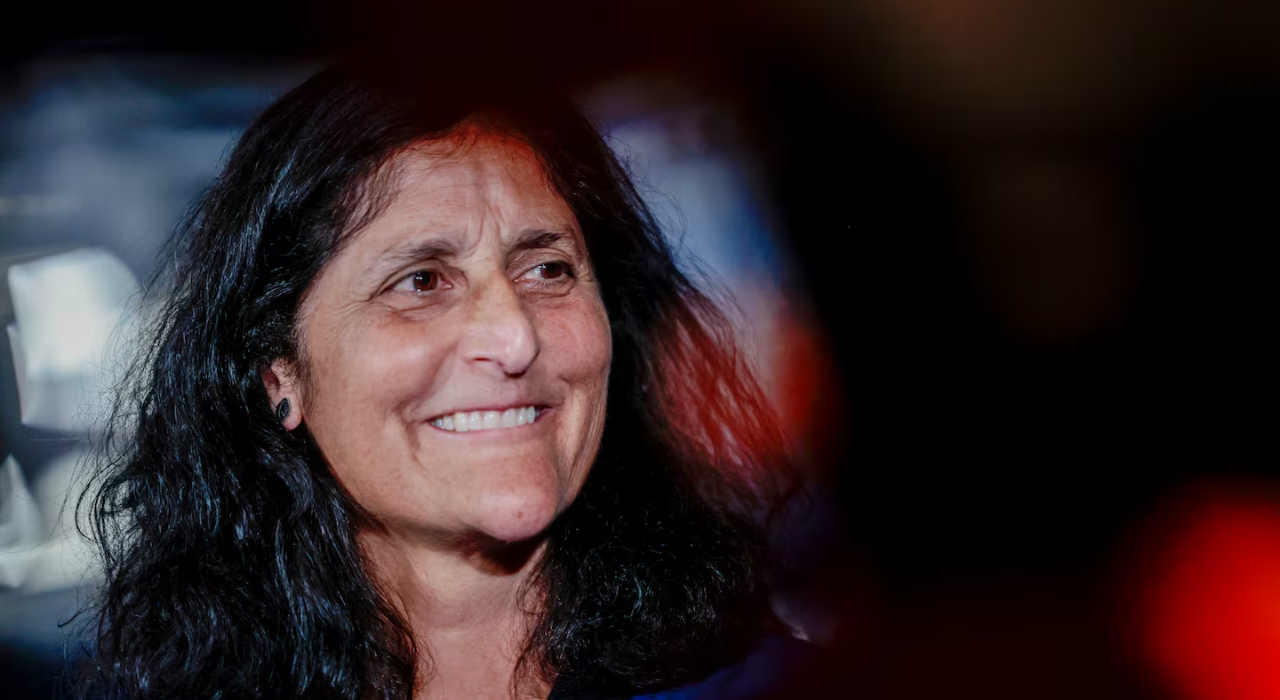
The headlines regarding Sunita Williams returning to the Boston Marathon are a masterclass in manufactured sentimentality. We are told to marvel at the endurance, the symbolism, and the athletic rigor of an astronaut taking on 26.2 miles after a lifetime of extreme environments. It is a feel-good story designed to sell subscriptions and drive engagement metrics for news outlets hungry for low-effort, high-click content.
Let us strip away the manufactured awe. What the public is really witnessing is a branding exercise, not an athletic milestone.
The Myth of the Space Athlete
The narrative consistently positions space travel as a physical training regimen. When Williams ran on the treadmill aboard the International Space Station, the media treated it as a feat of human performance comparable to winning a gold medal.
Here is the inconvenient truth: space-based exercise is not performance training. It is remedial maintenance. It is a desperate, necessary effort to prevent the rapid degradation of bone density and muscle mass that occurs in microgravity. Comparing a treadmill session in a harness to the biomechanical stress of a terrestrial marathon is like comparing a physical therapy routine to a professional rugby match. One is about survival in a hostile environment; the other is about pushing the boundaries of physiological output.
By conflating the two, the media dilutes what athletic excellence actually means. They turn a logistical necessity into a heroic journey. When people buy into this, they miss the reality of the engineering behind the feat. The triumph here belongs to the NASA engineers who designed the Vibration Isolation and Stabilization System, not the runner.
The Boston Marathon Is Now A PR Stunt
The Boston Marathon has shifted. It was once the pinnacle of amateur achievement—a race requiring a qualifying time that signaled true dedication. Now, it serves as a stage for celebrity cameos and high-profile human-interest stories that soften the image of brands and institutions.
Plugging an astronaut into this race does nothing for the sport. It distracts from the athletes who have spent the last four years in relative obscurity, optimizing their VO2 max and lactate thresholds for a chance at a sub-2:10 finish.
Imagine a scenario where the media dedicated even ten percent of the coverage they give to celebrity runners to the biomechanics of shoe technology or the actual metabolic costs of elite pacing. The audience would learn something meaningful. Instead, they get a profile piece on why it is inspiring to see an astronaut run. It is the athletic equivalent of "junk food" journalism.
The Reality of Recovery
The obsession with the "return" of these figures ignores the physiological reality of the aging body. Running a marathon at 60 is not the same as running one at 30. While I applaud the motivation, the medical community knows that high-impact activities for individuals who have spent decades in extreme conditions often come with a heavy cost.
Yet, you never hear about the joint stress, the hormonal imbalances, or the long-term impact on arterial stiffness. We focus on the "historic" nature of the event because it is easier to sell a hero than a biology lesson. I have watched high-level executive athletes push through pain thresholds because they were addicted to the narrative of their own "grind." The result is almost always a catastrophic injury that lands them on the sidelines for years.
The Wrong Questions
The media asks: "Can Sunita Williams capture the magic of her previous runs?"
That is the wrong question.
The right question is: "Why does the public demand that their heroes never stop performing, even when it is biologically irrational?"
We are addicted to the idea of the "eternal athlete." It is a fantasy that helps us avoid confronting our own decline. We project our desires onto these figures, expecting them to defy the laws of thermodynamics and biology for our entertainment.
If you want to understand the sport, look at the biomechanical data coming out of the East African training camps. Look at the shift toward carbon-plated foam technology that has completely rewritten the geometry of the marathon. That is where the real story resides. It is raw, it is gritty, and it is entirely devoid of the celebrity glitter that defines the Boston coverage.
Stop Chasing The Narrative
If you find yourself glued to these stories, ask yourself what value you are gaining. Are you learning about endurance? Are you improving your own training? Or are you simply consuming a product that makes you feel a temporary surge of artificial inspiration?
Real athletes do not run for the headlines. They run for the split times, the data, and the relentless pursuit of an objective limit. They do not care if their journey fits into a tidy, hero-centric news cycle.
Stop looking for inspiration in the press releases of celebrities. Go find a local track, record your own splits, and measure your progress against your own baseline. That is the only victory that matters. Everything else is just noise meant to keep you scrolling.
The race happens on the pavement, not on the screen. Turn off the device and go move your body.