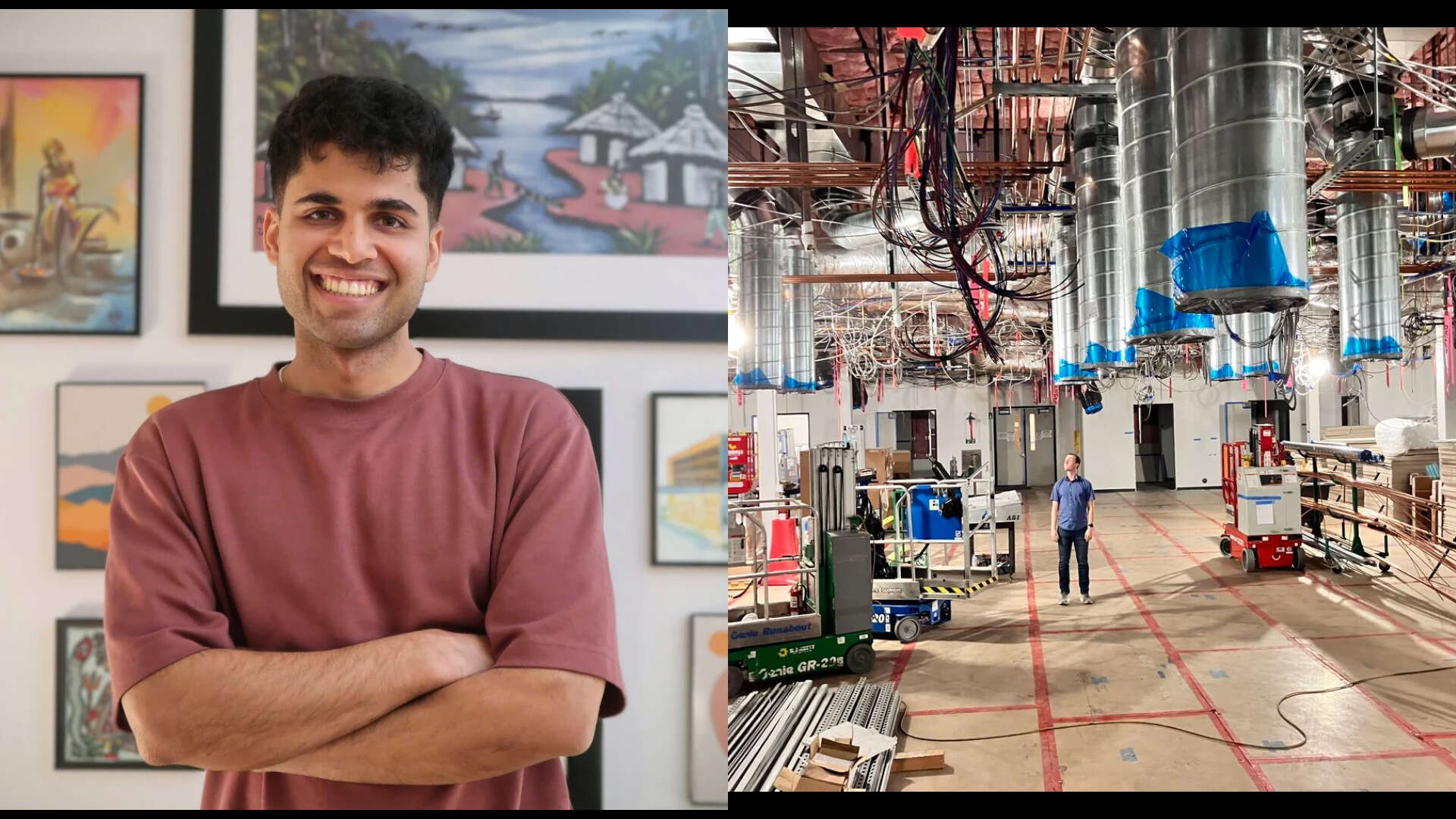
The market valuation of elite Reinforcement Learning (RL) and Large Language Model (LLM) researchers has detached from standard corporate compensation models. When a viral report asserted that computer science researcher Rishabh Agarwal rejected a $1 million annual package from Meta to co-found an early-stage startup, the subsequent correction came from Agarwal himself: the actual offer was an order of magnitude higher.
An "order of magnitude" implies a multi-million dollar annual allocation, pushing the boundaries of executive-level tech compensation for an individual contributor. This valuation is not a speculative anomaly; it represents an institutional calculation of the marginal revenue product of elite AI researchers. To understand why a premier researcher would decline a 2026 compensation package scaling toward eight figures, one must map the economic trade-offs between centralized computing density and the equity upside of specialized domain architecture.
The Talent Scarcity Function in Frontier Research
The supply curve for researchers capable of advancing the state of the art in offline reinforcement learning and LLM reasoning is highly inelastic. Traditional software engineering compensation models rely on scalable labor pools. Conversely, frontier AI development exhibits a power-law distribution where a small cadre of researchers drives the foundational breakthroughs in inference-time algorithms and verification systems.
Agarwal’s career trajectory underscores this specialization mechanism:
- Academic Base: A PhD from Mila under foundational figures Aaron Courville and Marc Bellemare, paired with an undergraduate foundation at IIT Bombay.
- Institutional Exposure: Consecutive tenures across Google Brain, Google DeepMind, and Waymo before entering Meta’s Superintelligence Labs.
- Direct Contributions: Core authorship on on-policy distillation, offline RL frameworks, and foundational architecture contributions to Google’s Gemma and Gemini models.
When a firm like Meta offers a premium to secure this specific profile, it is pricing the avoidance of architectural bottlenecks. In frontier model development, the engineering cost of a sub-optimal training run can scale into tens of millions of dollars in compute waste. Securing a researcher who minimizes algorithmic drift and optimizes reinforcement learning from human feedback (RLHF) acts as an insurance policy against capital destruction.
The Equilibrium of Corporate Compute vs. Foundational Agility
The decision to exit a hyper-capitalized corporate laboratory involves balancing two distinct variables: compute density and structural autonomy. Big tech platforms possess an unprecedented consolidation of compute infrastructure. Meta’s aggressive infrastructure acquisition provides researchers with massive clusters of cutting-edge hardware, an environment designed to accelerate empirical validation.
However, the organizational architecture of these corporate labs introduces structural friction:
[Corporate Superintelligence Labs] -> High Compute Density + High Corporate Alignment Friction
[Specialized Scientific Startups]  -> Lower Absolute Compute + High Architectural Autonomy
Corporate AI development faces alignment friction where researchers must navigate balkanized internal metrics, corporate PR guardrails, and productization timelines. This creates an operational bottleneck. For researchers focused on expanding foundational capabilities—such as automated hypothesis generation for physical sciences—the internal structure of a social media and enterprise-focused tech giant may not offer the direct line of sight needed to execute domain-specific scientific breakthroughs.
Evaluating the Economic Structure of Periodic Labs
The alternative path chosen by Agarwal—joining Periodic Labs as a founding member—shifts the economic return profile from guaranteed liquid compensation to high-beta equity. This strategic move highlights a broader shift in the tech ecosystem: the rise of specialized AI applications targeting fundamental scientific discovery, such as material sciences, pharmacology, and physics.
The economic viability of this transition relies on two distinct factors.
Capital Underwriting by Strategic Anchors
Periodic Labs is backed by capital from Nvidia and Jeff Bezos. This capitalization model provides the startup with a crucial asset: guaranteed access to compute pipelines via Nvidia’s ecosystem, partially mitigating the absolute infrastructure advantage held by hyperscalers.
The Value-Capture Paradigm of the "AI Scientist"
While consumer-facing chat platforms face margin compression due to commoditization, AI engines engineered to autonomously generate and validate scientific hypotheses capture high-margin value. If a startup successfully automates aspects of material discovery or drug synthesis, the enterprise value scales non-linearly, quickly outpacing even an eight-figure corporate salary.
The Arbitrage of Risk and Professional Runway
Opting out of an eight-figure institutional package requires calculating the opportunity cost of time. For a top-tier researcher, personal runway is not measured in financial survival, but in the velocity of scientific impact. High corporate compensation packages are heavily weighted toward stock vesting schedules spread over multi-year horizons, exposing the researcher to the volatility of the firm's equity and shifting internal priorities.
By reallocating talent to an agile, venture-backed structure, an elite researcher exchanges short-term liquidity for a concentrated equity position in a clean codebase, free from legacy infrastructure constraints. The risk profile changes completely: the researcher trades the political and execution risks of a massive corporate structure for the clear, binary market risk of a specialized startup.
The current landscape demonstrates that for the builders of frontier AI, capital has become a secondary asset. The primary asset is the unencumbered autonomy to deploy algorithmic frameworks against the most complex processing bottlenecks in science and industry.
The strategic play for enterprise leaders and venture allocators is clear: competing purely on cash compensation against hyperscalers is a losing proposition when dealing with top-tier talent. The winning strategy requires offering uncompromised architectural ownership, direct access to specialized compute channels, and equity upside tied directly to foundational scientific breakthroughs.