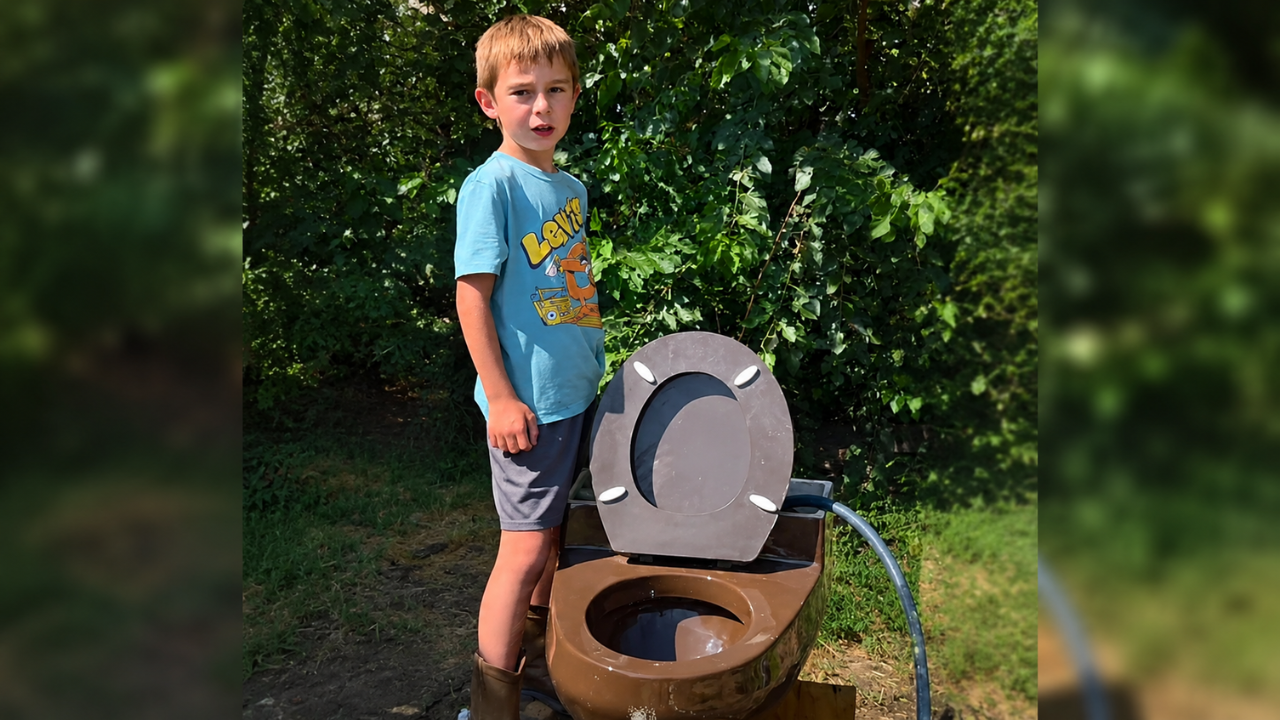
Informal engineering initiatives undertaken outside traditional institutional boundaries rely on direct sensory observation and physical manipulation of localized variables. When a nine-year-old resident of Washington constructed a domestic evaluation station to test toilet flush mechanics, the project demonstrated a fundamental behavioral pattern. This pattern involves empirical stress-testing of standardized consumer hardware without formal instrumentation.
Standard domestic plumbing fixtures operate within strict municipal parameters, yet end-users frequently bypass these official metrics in favor of qualitative assessment. Deconstructing this backyard testing environment requires an examination of fluid dynamics, mechanical fatigue limits, and the economic variables driving unauthorized performance audits.
The Core Variables of Domestic Fluid Dynamics
Residential sanitation architecture relies on gravity-fed siphon systems designed to clear waste while minimizing water consumption. Modern regulatory standards mandate low-flow thresholds, typically capped at 1.28 gallons per flush for high-efficiency configurations. Informal testing rigs circumvent laboratory conditions by introducing variable-density payloads to evaluate boundary limits.
The primary mechanical inputs in any flush cycle consist of valve opening velocity, reservoir volume, and trapway geometry. When an operator systematically alters these inputs using non-standard test materials, the resulting data exposes the friction coefficients and pressure differentials inherent in ceramic drainage pathways.
Volumetric Efficiency Versus Kinetic Force
Standardized testing procedures utilize synthetic media to measure solid waste removal efficiency. Informal evaluation stations substitute these proxies with readily available domestic objects, creating uncontrolled variations in mass and surface area.
[Reservoir Release] -> [Trapway Constriction] -> [Momentum Transfer] -> [Clearing Success/Failure]
This sequence highlights the core constraint of modern plumbing design. Decreasing water volume to comply with conservation mandates requires compensatory engineering in the trapway design to maintain velocity. When testers introduce high-mass or irregular payloads into low-flow architectures, kinetic energy transfer drops below the threshold required to clear the siphon bend. This creates localized clogs and highlights the friction between regulatory conservation goals and mechanical reliability.
The Physics of Mechanical Actuation
The interface between the user and the fixture is governed by the trip lever, chain, and flapper assembly. In makeshift testing environments, repetitive actuation cycles expose the material fatigue limits of plastic and rubber components.
- Tension Variance: Uneven force applied to external actuators alters the seal degradation rate of the flapper valve.
- Buoyancy Dynamics: The rate at which a flapper closes determines the net volume discharged per cycle, directly impacting kinetic momentum.
- Surface Adhesion: Irregularities in porcelain glazing inside older or budget fixtures increase drag coefficients, reducing effective flow speed.
The Economic and Behavioral Drivers of Domestic Auditing
Consumer engagement with infrastructure typically remains passive until a failure event occurs. Proactive testing by non-professionals indicates an underlying shift toward empirical verification of household systems.
Why Consumers Bypass Official Standards
Official certifications from organizations such as the American Society of Mechanical Engineers provide baseline performance guarantees. However, these metrics represent average conditions rather than edge cases. End-users encounter edge cases daily, ranging from high-viscosity waste to excessive paper product consumption.
The gap between laboratory certifications and field performance generates user skepticism. Backyard testing stations emerge as a direct response to this uncertainty. By establishing a physical feedback loop, the operator replaces abstract manufacturer claims with observable, repeatable failure thresholds.
Resource Allocation and Maintenance Cost Functions
Maintaining domestic plumbing infrastructure involves balancing capital expenditure against potential water damage liabilities. Systematic testing of flush mechanics alters this financial equation by identifying component degradation before catastrophic failure.
- Preventive Feedback: Early detection of slow-closing valves reduces long-term water waste from persistent leaks.
- Component Optimization: Replacing stock flappers with adjustable-volume alternatives customizes the flush profile to match specific household disposal needs.
- Risk Mitigation: Identifying the upper mass limits of a drainage system prevents emergency plumbing interventions.
Structural Bottlenecks in Informal Testing Methodologies
While empirical observation provides actionable insights, uncalibrated testing environments suffer from distinct methodological limitations that skew results.
The Measurement Instrument Gap
Professional testing facilities employ high-speed high-definition cameras, pressure transducers, and volumetric flow meters to capture microsecond-level fluid dynamics. Informal stations rely on visual confirmation and acoustic feedback.
This sensory reliance introduces significant observation bias. A flush that appears successful to the naked eye may leave residual particulate matter clinging to the internal trapway, creating a foundation for future blockages. Without chemical or optical sensors, the operator cannot quantify micro-efficiency gains or losses.
Environmental Inconsistencies
Municipal water pressure fluctuates based on local demand curves, pipe diameter reductions, and elevation profiles. A backyard station connected to an unprotected residential supply line experiences variable inlet pressure across different testing intervals.
This variability prevents true longitudinal analysis. When the baseline pressure shifts, comparative performance data collected between morning and evening sessions loses statistical validity. True rigorous evaluation requires pressure-regulating valves to isolate the test fixture from municipal supply noise.
Strategic Operational Playbook
To transition from ad-hoc observation to systematic infrastructure auditing, operators must implement structured controls across data collection, variable isolation, and failure analysis.
- Standardize the Payload: Replace arbitrary test objects with standardized density metrics to ensure repeatable kinetic inputs across multiple evaluation runs.
- Isolate Supply Variables: Install a dedicated inline pressure regulator and flow meter to neutralize municipal water pressure fluctuations before testing begins.
- Establish Clear Metric Thresholds: Define success not merely by whether the bowl clears, but by measuring the total volume consumed per successful cycle and the time elapsed to complete the siphon break.
- Log Mechanical Wear Rates: Track the number of cycles completed before seal degradation or actuator fatigue occurs, correlating usage volume with replacement intervals.
- Map Flow Trajectories: Utilize non-toxic tracing dyes to visualize vortex formation and dead zones within the bowl architecture during the discharge phase.