A standard weekday salad should be the least dramatic choice a person makes. You tear open a clear plastic bag, scatter pale green ribbons of iceberg lettuce onto a bowl, drizzle oil, and sit down at the kitchen table. It feels clean. It feels responsible.
Then, about seven days later, the cramping begins. Meanwhile, you can explore related developments here: Why the DRC Ebola Epidemic Broke the 1,000 Death Threshold.
It starts as a faint, lingering ache beneath the ribs before blooming into full-blown gastrointestinal chaos. Watery diarrhea, relentless fatigue, sudden waves of nausea, and a low fever that leaves you shivering under heavy blankets in the middle of summer. You wonder if it was the leftover takeaway or a brief stomach bug floating around the office. Days turn into weeks. The weight drops off. The exhaustion turns bone-deep.
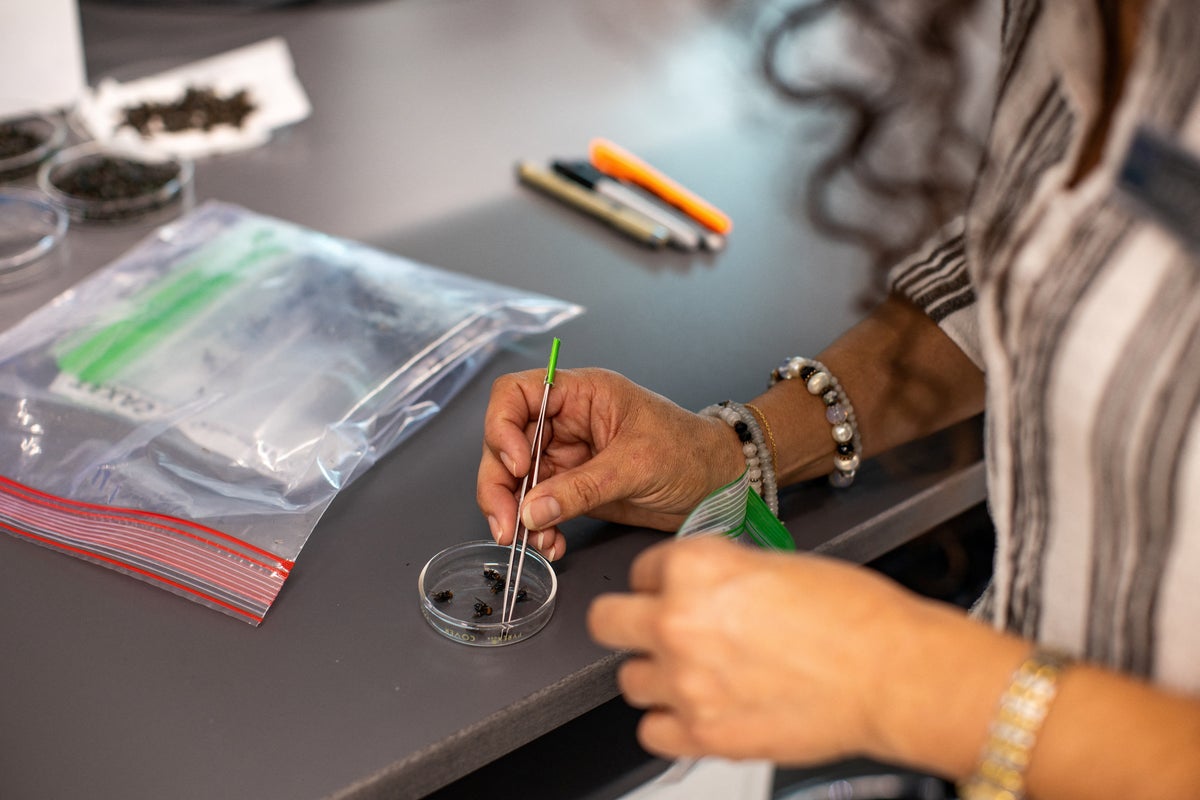
When you finally visit a clinic, the doctor orders specialized stool tests. The culprit isn't a familiar bacteria like Salmonella or E. coli. It is Cyclospora cayetanensis, a microscopic single-celled parasite that treats the human small intestine as its personal nursery. To understand the bigger picture, check out the recent report by Mayo Clinic.
For years, whenever public health officials tracked seasonal spikes of cyclosporiasis, public announcements pointed at a single recurring villain: bagged, pre-shredded lettuce. It made intuitive sense. Shredded lettuce is washed in massive industrial flumes, packaged in damp plastic bags, and distributed to thousands of grocery stores and restaurant chains overnight. But focusing solely on that bag of salad green overlooks a much larger, darker mystery in the modern food chain.
Shredded lettuce was never working alone.
The Mystery in the Flume Water
Consider how a head of lettuce becomes the shredded mix sitting in your local supermarket display.
In a hypothetical processing facility—let’s imagine one outside a farming town in early June—thousands of pounds of leafy greens move down an automated conveyer belt. Giant mechanical blades slice the heads into thin strips. Those ribbons drop into long, churning baths of water designed to wash away field dirt and cool the produce before sealing.
If a single head of lettuce enters that water carrying Cyclospora oocysts—tough, egg-like structures shielded by thick walls—the water doesn't always kill them. Chlorination levels that easily eradicate bacteria often leave Cyclospora entirely unscathed. The parasite floats through the bath, adhering to thousands of clean leaves passing through the same system.
One infected leaf quickly becomes ten thousand infected salad bowls.
Yet epidemiologists investigating multi-state outbreaks slowly began noticing troubling discrepancies. Patients who fell violently ill with cyclosporiasis swore they had not eaten shredded lettuce. They hadn't touched a fast-food salad or bought a bagged mix. Instead, they had eaten fresh cilantro at a local taqueria, sprinkled fresh basil over homemade pasta, or eaten raw snow peas from a salad bar.
The parasite wasn't tied to a specific factory machine or a single brand of pre-cut greens. It was moving through an interconnected network of water, soil, and fresh agricultural produce that spans continents.
Why This Parasite Is So Hard to Catch
Cyclospora is a master of stealth.
Unlike viruses or bacteria that multiply rapidly in warm food left on a counter, this parasite cannot multiply outside a living host. When an infected human excretes Cyclospora oocysts, those microscopic spheres are actually non-infectious. They cannot make anyone sick immediately. They require days or even weeks in warm, moist environmental conditions to mature, or "sporulate."
That delayed reaction creates a massive blind spot for public health investigators.
By the time a patient feels sick enough to visit a doctor, three weeks might have passed since they ate the contaminated food. Try remembering every single leaf of herbs, garnish, or fresh vegetable you swallowed twenty-one days ago. It is nearly impossible.
When public health agencies like the CDC and FDA interview sick individuals, shredded lettuce frequently tops the statistical charts simply because so many people consume it daily. It becomes a default answer. But beneath that statistical noise, smaller agricultural commodities—imported raspberries, fresh herbs, green onions—carry the exact same parasite undetected.
Water is the common denominator. Farm hands need clean water to mix pesticides and hydrate crops. Processing plants need clean water to cool and wash harvested yields. If agricultural water sources are exposed to untreated human waste—even miles upstream—the parasite hitches a ride on whatever crop that water touches.
The Human Chain Behind the Plate
We like to think of our food supply as an automated, sterile miracle. We buy pristine packages wrapped in cellophane, untouched by human hands.
The reality is far more human, and far more fragile.
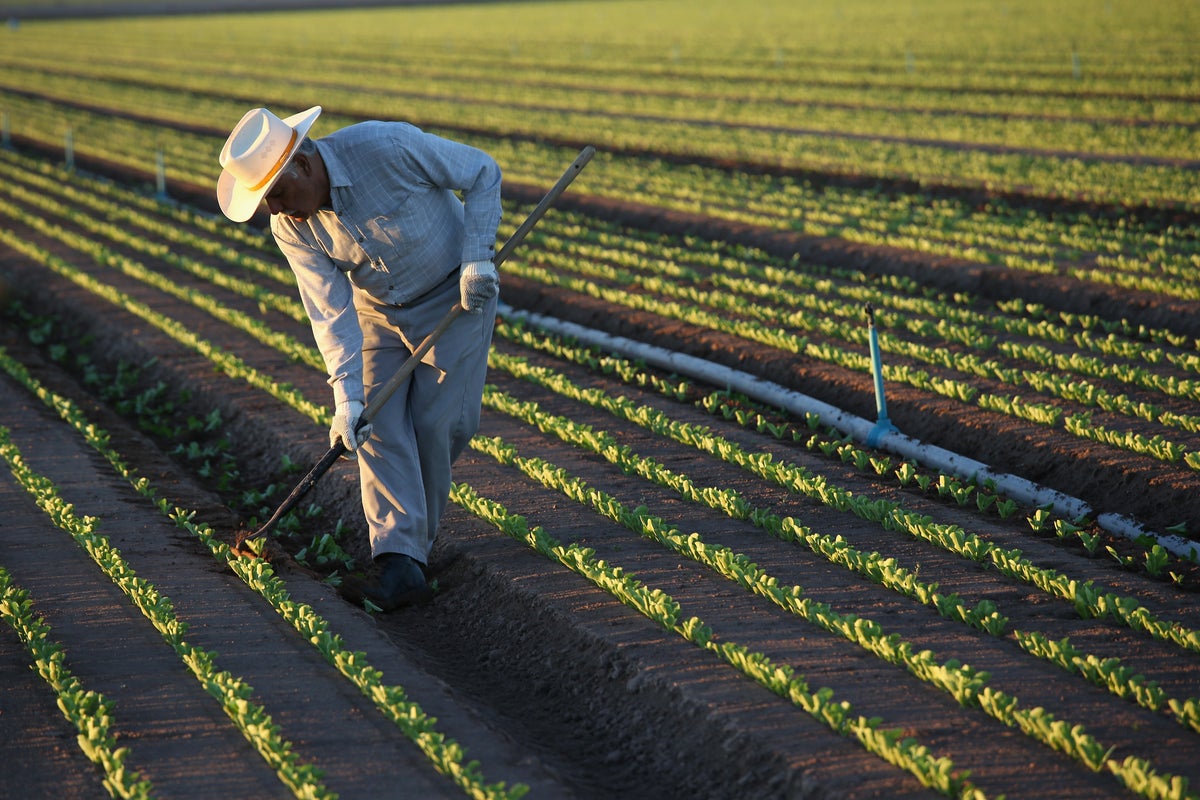
Fresh produce is planted, tended, and picked by hand. Field workers labor under blistering suns, often in remote regions where basic sanitation facilities can be scarce or poorly maintained. If field hygiene breaks down—not out of malice, but out of systemic neglect, poor infrastructure, or sheer exhaustion—microscopic pathogens enter the food web.
Once Cyclospora attaches to the textured surface of a basil leaf or the rough exterior of a berry, home washing accomplishes very little. You can run cold tap water over a leaf of lettuce for two minutes in your sink; the parasite holds fast. Chemical rinses available at the grocery store fare no better.
This leaves consumers feeling utterly helpless, trapped between the desire to eat healthy food and the fear of a parasite that causes weeks of debilitating illness.
Rethinking Freshness in a Global Food Network
Fixing this problem demands looking far beyond the shredding machines in processing plants.
Public health experts and agricultural engineers are beginning to realize that treating shredded lettuce as the primary suspect is like blaming the delivery truck for a manufacturing defect. The focus must shift upstream, directly to the water sources feeding international agricultural fields.
New testing methods using advanced genetic sequencing are finally allowing scientists to trace specific strains of Cyclospora back to exact water channels and farms across borders. Instead of waiting for hundreds of people to fall ill in mid-summer, agricultural inspectors can screen irrigation water before crops are harvested.
Farm management practices are changing, too. Enhanced worker safety standards, mandatory sanitary facilities in remote fields, and stricter water-sanitization protocols are slowly becoming standard practice rather than optional safeguards.
Still, the risk never drops to zero. As long as global supply chains move fresh, uncooked produce across thousands of miles within days, microscopic hitchhikers will attempt the journey.
Tonight, millions of people will tear open a bag of salad or chop fresh herbs into a pan. They won't think about agricultural water runoff, sporulation cycles, or microscopic parasites with impenetrable shell walls. They will simply eat.
The next time you see a food safety warning on the news, remember that the true story is rarely as simple as a single bag of shredded greens. The invisible threads connecting our dinner tables to distant fields are complex, fragile, and far more connected than we ever cared to admit.