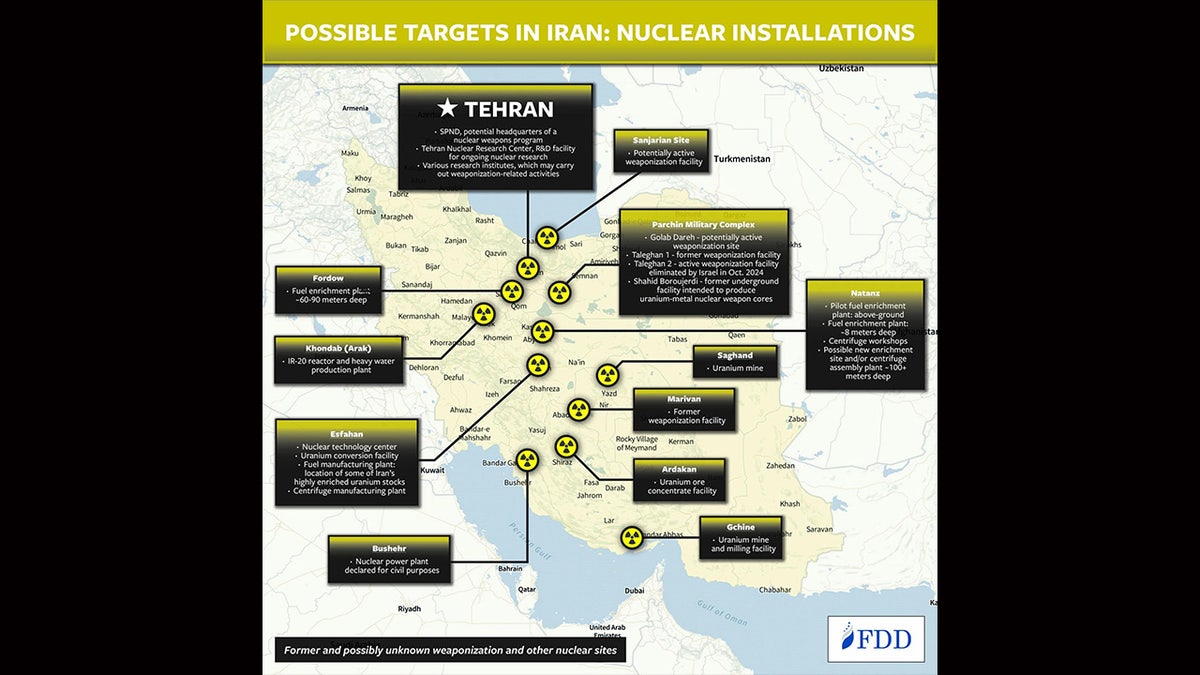
The current surge of U.S. troop deployments across West Asia is not a precursor to a conventional invasion. Instead, it represents a calculated shift toward a doctrine of "maximum optionality," a strategy designed to turn military presence into a high-stakes bargaining chip. By saturating the region with specialized assets—ranging from advanced missile defense systems to rapid-response carrier strike groups—the White House is attempting to paralyze Iranian decision-making while keeping every possible escalation on the table.
This isn't about boots on the ground in the 20th-century sense. It is about a tactical density that allows the administration to pivot from diplomacy to kinetic strikes within minutes. While public-facing statements focus on "deterrence," the reality on the ground suggests a more aggressive engineering of leverage. The goal is to ensure that when talks with Tehran reach a breaking point, the U.S. isn't just at the table—it owns the room. Learn more on a similar issue: this related article.
The Infrastructure of Optionality
To understand why 5,000 additional troops or a new squadron of F-35s matters, one must look at the geography of the Persian Gulf. Military power in this theater is no longer measured by the sheer number of soldiers. It is measured by "kill chains"—the speed at which a sensor can identify a target and a platform can destroy it.
The recent deployments focus heavily on logistics hubs and aerial refueling capacity. By expanding the footprint in places like Al-Udeid in Qatar and Muwaffaq Salti in Jordan, the U.S. creates a redundant network. If one base is targeted by drone swarms or ballistic missiles, the operational capacity shifts elsewhere instantly. This redundancy is the "optionality" the White House craves. It removes the vulnerability of a single point of failure, making a preemptive strike against U.S. interests a futile exercise for regional adversaries. Further analysis by USA Today highlights comparable perspectives on the subject.
Logistics as a Weapon
We often think of war in terms of explosions. Veteran analysts know it is actually about fuel and spare parts. The current buildup includes a massive influx of logistical specialists. These are the people who ensure that a carrier group can remain on station for months rather than weeks. By shortening the supply lines and pre-positioning equipment in "warm" status, the administration reduces the lead time for any military action.
This creates a psychological pressure cooker. For the leadership in Tehran, the sight of cargo planes landing every hour in Kuwait is more threatening than a fiery speech from the Rose Garden. It signals that the machinery of war is greased and ready, regardless of whether the order to fire is ever given.
The Secret Negotiations and the Military Shadow
While the Pentagon moves pieces across the map, the State Department is engaged in a quiet, frantic effort to redefine the nuclear and regional security framework. These two tracks are not separate. They are the same strategy.
The deployment serves as a physical manifestation of the "or else" in every diplomatic cable. History shows that Iran’s negotiating posture softens when the threat of internal instability or external strike becomes credible. By flooding West Asia with assets, the administration is attempting to manufacture that credibility. They are betting that the sheer cost of maintaining such a presence is a price worth paying if it forces a concession on ballistic missile ranges or proxy funding.
However, this strategy carries a built-in risk. When you lean this heavily on "optionality," you leave very little room for de-escalation. Every ship sent to the Strait of Hormuz is a signal, but once the signal is sent, withdrawing it without a concrete win looks like a retreat. This creates a trap where the only way to maintain leverage is to keep increasing the stakes.
The Technology Gap and the Drone Problem
The nature of the threat in West Asia has shifted toward low-cost, high-impact technology. Iran and its affiliates have mastered the use of "suicide drones"—cheap, GPS-guided loitering munitions that can overwhelm sophisticated defense systems through sheer volume.
The U.S. response has been to deploy integrated air defense layers. This includes the THAAD (Terminal High Altitude Area Defense) and Patriot batteries, but also newer directed-energy weapons and electronic warfare suites.
- THAAD: Designed to intercept short, medium, and intermediate-range ballistic missiles in their terminal phase.
- Electronic Warfare (EW): Systems that jam the signals between a drone and its operator or disrupt the GPS coordinates the drone uses for navigation.
- Counter-UAS (Unmanned Aircraft Systems): Small, kinetic interceptors or "coyote" drones designed to take out hostile drones at a fraction of the cost of a traditional missile.
The deployment of these specific technologies reveals the White House's true concern. They aren't worried about an Iranian tank division crossing a border. They are worried about a $20,000 drone hitting a billion-dollar refinery or a multi-billion-dollar destroyer. The "maximum optionality" involves having the tech to neutralize these asymmetric threats so that the U.S. can maintain its conventional dominance.
The Proxy War Paradox
One factor often overlooked by mainstream coverage is the role of local partners. The U.S. isn't acting in a vacuum. Saudi Arabia, the UAE, and Israel are all integral to this "optionality" framework. By increasing American presence, the White House also provides a security umbrella that allows these regional players to take more aggressive stances of their own.
This creates a dangerous feedback loop. If a regional partner feels emboldened by the U.S. presence to strike a proxy target in Lebanon or Yemen, the U.S. is inevitably drawn into the retaliation cycle. The "optionality" then becomes a liability. The administration finds itself in a position where its moves are dictated by the actions of its allies rather than its own strategic interests.
The Intelligence Surge
Beyond the visible ships and planes, there is a massive, invisible deployment of intelligence assets. This includes increased satellite surveillance, signals intelligence (SIGINT) aircraft, and cyber-warfare units.
The goal here is total domain awareness. The White House wants to see the movement of every missile battery inside Iran in real-time. This level of surveillance is intended to prevent "surprises" like the 2019 Abqaiq–Khurais attack on Saudi oil facilities. If you can see the punch coming, you have the option to dodge it or strike the arm before the fist closes.
The Economic Price of a Permanent Footprint
Critics of the deployment point to the staggering cost. Maintaining a heightened state of readiness in West Asia costs billions per month. This isn't just about fuel; it’s about the wear and tear on airframes and the burnout of personnel.
The White House argues that the cost of a war is far higher than the cost of preventing one through presence. But this assumes that presence actually prevents war. There is a school of thought in the intelligence community that suggests a massive buildup actually makes accidental conflict more likely. A nervous radar operator on either side could misidentify a routine flight as an incoming threat, triggering a chain reaction that no diplomat can stop.
The Energy Security Mirage
A significant portion of the "optionality" argument rests on the need to protect global energy markets. The Strait of Hormuz remains the world's most important oil transit chokepoint.
But the global energy landscape has changed. The U.S. is now a net exporter of oil. While a spike in global prices would certainly hurt the American economy, the U.S. is no longer as physically dependent on Middle Eastern crude as it was in the 1990s.
This shift changes the underlying calculus of the deployment. The troops are there less to "protect the oil" for American gas tanks and more to control the flow of energy to rivals like China. By dominating the maritime corridors of West Asia, the U.S. gains an indirect veto over the energy security of its global competitors. This is the "hard-hitting" reality of modern geopolitics: military deployments in the Middle East are increasingly about the power struggle in the Pacific.
The Burden on the Individual
Lost in the talk of strike packages and optionality is the human cost. The soldiers being deployed are often on their fourth or fifth rotation to the region. The psychological toll of "waiting for something to happen" in a high-tension environment is immense.
The military is currently facing a recruitment and retention crisis. Deploying thousands of troops for a mission that has no clear end date and no defined "victory" condition exacerbates this problem. If the doctrine of optionality becomes a permanent feature of U.S. foreign policy, the military risks hollowing out its most valuable asset—its experienced non-commissioned officers.
The Iranian Response Strategy
Tehran is not a passive observer in this. Their counter-strategy is one of "strategic patience" mixed with "calculated friction." They know they cannot win a conventional war against the U.S. military. Instead, they aim to make the U.S. presence as uncomfortable and expensive as possible.
They use their "Axis of Resistance"—a network of militias in Iraq, Syria, and Lebanon—to harass U.S. positions. These attacks are usually calibrated to stay just below the threshold that would trigger a full-scale American response. It is a game of thousand cuts. By forcing the U.S. to stay in a defensive crouch, Iran hopes to wear down the American public’s will to stay in the region.
The White House’s "optionality" is an attempt to break this cycle. By having enough force to respond overwhelmingly to even a small attack, they hope to change Iran’s cost-benefit analysis. But so far, the needle hasn't moved. The militias continue their harassment, and the U.S. continues to pour assets into the region.
The False Promise of a Clean Exit
Every administration for the last twenty years has claimed it wants to "pivot" away from the Middle East. Each time, the gravity of the region’s instability pulls them back in. The current buildup is a sign that the pivot is dead.
You cannot have "maximum optionality" if you are leaving the theater. By doubling down on troop presence, the U.S. is acknowledging that West Asia remains the primary arena for global power projection. The talks with Iran are the immediate justification, but the long-term reality is a return to a semi-permanent garrison state in the desert.
This strategy assumes that the U.S. can control the escalation ladder. It assumes that more force equals more stability. History suggests the opposite is often true. When two heavily armed forces sit within sight of each other for years, the question isn't if a spark will fly, but when. The White House is beting that they can catch the spark before it hits the tinder. It is a gamble with the lives of thousands and the stability of the global economy as the stakes.
The sheer volume of hardware currently moving toward the Persian Gulf should tell you everything you need to know about the state of diplomacy. You don't send a carrier strike group to a meeting where you expect a quick agreement. You send it because you expect the meeting to fail, and you want to be the one holding the hammer when it does. The "optionality" isn't about having choices; it's about making sure the other side has none.