The coffee in the Reichstag building tastes like battery acid by 3:00 AM. It is a specific kind of exhaustion known only to politicians and night-shift factory workers, where the eyes burn and every word spoken feels heavy, like pulling boots through wet clay.
Outside, the Berlin streets were empty and slick with a quiet, pre-dawn rain. Inside, three political factions with utterly incompatible visions for the future of Europe’s economic engine were locked in a room, staring at a spreadsheet that refused to balance.
For months, Germany had been described by economists as the "sick man of Europe." Industrial production was sluggish. The energy crisis had left factories reeling. Citizens were anxious, watching their purchasing power erode while the government appeared trapped in a permanent state of ideological gridlock. Every headline screamed of collapse, of a coalition government so deeply fractured that it could barely agree on the time of day, let alone a path forward.
Then, the door opened.
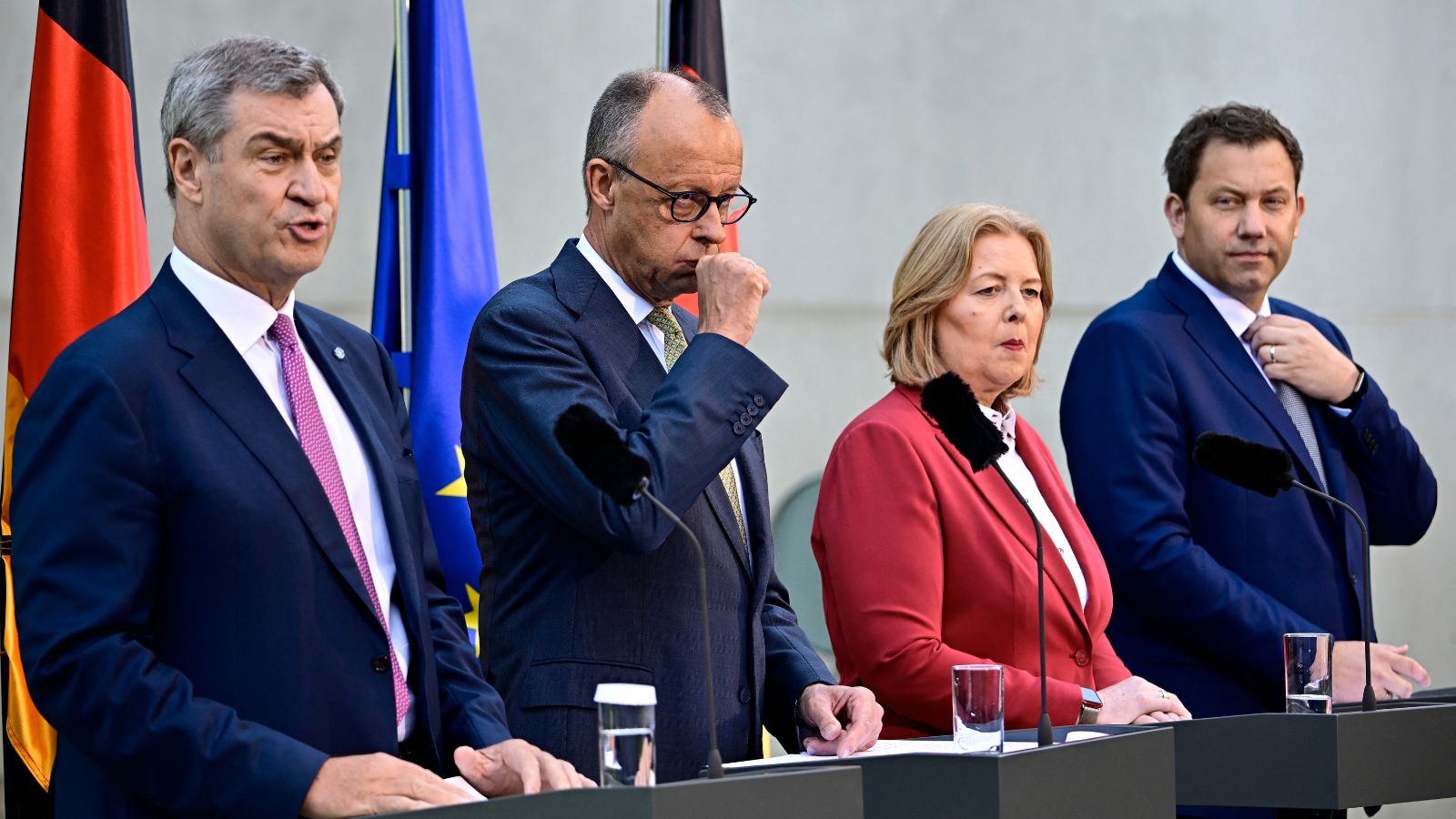
It wasn't a theatrical moment. There were no triumphant cheers. Instead, a group of pale, rumpled officials stepped out into the harsh fluorescent light of the press room to announce that they had done the impossible. They had agreed on a sweeping economic reform package.
To understand why this late-night breakthrough matters, you have to look past the dense, bureaucratic jargon of the official press releases. You have to look at what this deal actually alters on the ground.
The Weight of the German Engine
Consider a hypothetical mechanic named Stefan. He runs a medium-sized auto repair and specialized engineering shop in Baden-Württemberg. For three generations, Stefan’s family business thrived on predictable energy costs, stable supply chains, and a reliable influx of young, skilled apprentices.
Over the last two years, Stefan’s reality shattered.
His electricity bills doubled. The suffocating weight of German bureaucracy meant he spent more hours filling out compliance forms than actually fixing machines. When his master mechanic retired, Stefan spent six months trying to find a replacement, only to watch local youth drift toward tech startups or choose university degrees over manual trades.
Stefan represents the real stakes of the Berlin gridlock. When the government paralyzes itself with infighting, businesses like Stefan’s stop investing. They stop hiring. They freeze. When Germany freezes, the rest of Europe catches a cold.
The core of the newly minted reform package takes direct aim at Stefan’s nightmares. It is a massive, multi-pronged effort designed to inject adrenaline directly into the heart of a stalled economy.
The coalition agreed on significant tax relief for corporations and medium-sized businesses. This isn't just a handout to the wealthy; it is a calculated bet to encourage companies to spend money within German borders rather than moving their operations to North America or Asia. For Stefan, it means a lower tax burden on the machinery he needs to buy to stay competitive.
But taxes are only one side of the ledger. The more contentious battle fought in that smoky room revolved around the labor market and social welfare.
The Great Welfare Compromise
For days, the negotiations threatened to implode over a fundamental ideological divide. On one side stood the progressives, fiercely protective of the social safety net and determined to shield citizens from economic hardship. On the other side stood the fiscal hawks, arguing that an overly generous welfare system was actively discouraging people from entering the workforce at a time when labor shortages were crippling industry.
The compromise they reached is a delicate piece of political engineering.
The government decided to tighten the rules for welfare recipients. Under the new agreement, individuals who repeatedly refuse reasonable job offers will face faster and more severe cuts to their benefits. It is a controversial move, one that has drawn sharp criticism from social advocacy groups who argue it punishes the vulnerable.
The logic driving the policy, however, is grounded in a harsh statistical reality: Germany is running out of workers. With an aging population and thousands of vacant positions across healthcare, manufacturing, and technology, the coalition concluded that the status quo was no longer sustainable. They chose to use a carrot-and-stick approach, combining tax incentives for working overtime with stricter penalties for avoiding employment.
To make the pill swallowable for the progressive factions, the package balances these welfare cuts with substantial investments in infrastructure and green technology. The government is betting that by modernizing the country's crumbling rail networks and subsidizing clean energy initiatives, they can create a new wave of high-paying, sustainable jobs.
How the Deal Almost Vanished
The tension inside the coalition wasn't just about policy; it was deeply personal. The three parties involved—the Social Democrats, the Green Party, and the Free Democrats—ideologically resemble a forced marriage between people who disagree on everything from household budgeting to where to go on vacation.
Midway through the final evening of negotiations, a dispute over environmental regulations threatened to derail the entire package. The Greens demanded stricter carbon penalties for heavy industry. The Free Democrats countered that such measures would force factories to close permanently, throwing thousands out of work.
People close to the talks describe a moment around midnight when the entire project seemed dead. Papers were slammed shut. Leaders stood up to leave.
What saved the deal was a sudden, sobering realization of the alternative. If the coalition collapsed, Germany would be thrown into political chaos, triggering early elections during a period of intense global instability. The markets would react violently. The country's reputation for stability would be shattered.
Faced with the prospect of collective political ruin, the leaders sat back down. They compromised. The Greens agreed to soften certain environmental timelines in exchange for massive federal funding for hydrogen energy research and electric vehicle infrastructure. The fiscal conservatives conceded to higher federal spending limits by utilizing clever, off-budget investment funds.
It is an imperfect, messy agreement. Nobody left the room entirely happy. In politics, that is usually the sign of a successful compromise.
The Invisible Ripples Across Europe
It is easy to view this as a purely localized German drama, a domestic squabble settled in a distant capital. That is a mistake.
Germany is the economic anchor of the European Union. When German factories hum, they buy components from Poland, software from France, and raw materials from Italy. A stagnant Germany drags down the entire Eurozone, weakening the currency and reducing Europe’s geopolitical clout on the global stage.
By breaking their internal deadlock, the Berlin coalition signaled to international investors that the continent's largest economy is still capable of governing itself. The psychological impact of the breakthrough is arguably just as important as the actual policy details. It restores a measure of predictability to a world starved for it.
The real test, of course, lies in the execution.
Passing a reform package on paper after a marathon negotiation session is one thing; navigating the labyrinth of regional approvals and bureaucratic hurdles to actually implement these changes is quite another. Stefan, sitting in his workshop in Baden-Württemberg, will not feel the impact of this deal tomorrow, or even next month. It will take time for the tax relief to filter down, for the welfare changes to alter the labor pool, and for the infrastructure funds to break ground.
But the gridlock has been broken. The machine has groaned back to life.
As the sun finally rose over Berlin, washing the Reichstag in a cold, grey light, the politicians went home to sleep. The city woke up. Commuters boarded trains, delivery trucks rattled down the avenues, and across the country, millions of workers began their day, entirely unaware of how close their economic ground had come to shifting beneath their feet while they slept.