We've built an educational culture that tells young people there's only one respectable path to success. You graduate high school, you pile on tens of thousands of dollars in debt at a four-year university, and you land a desk job. It's a formula that has left millions underemployed and deeply in debt, while the essential industries keeping our physical world running face massive labor shortages.
Mikala Sposito didn't buy into that script.
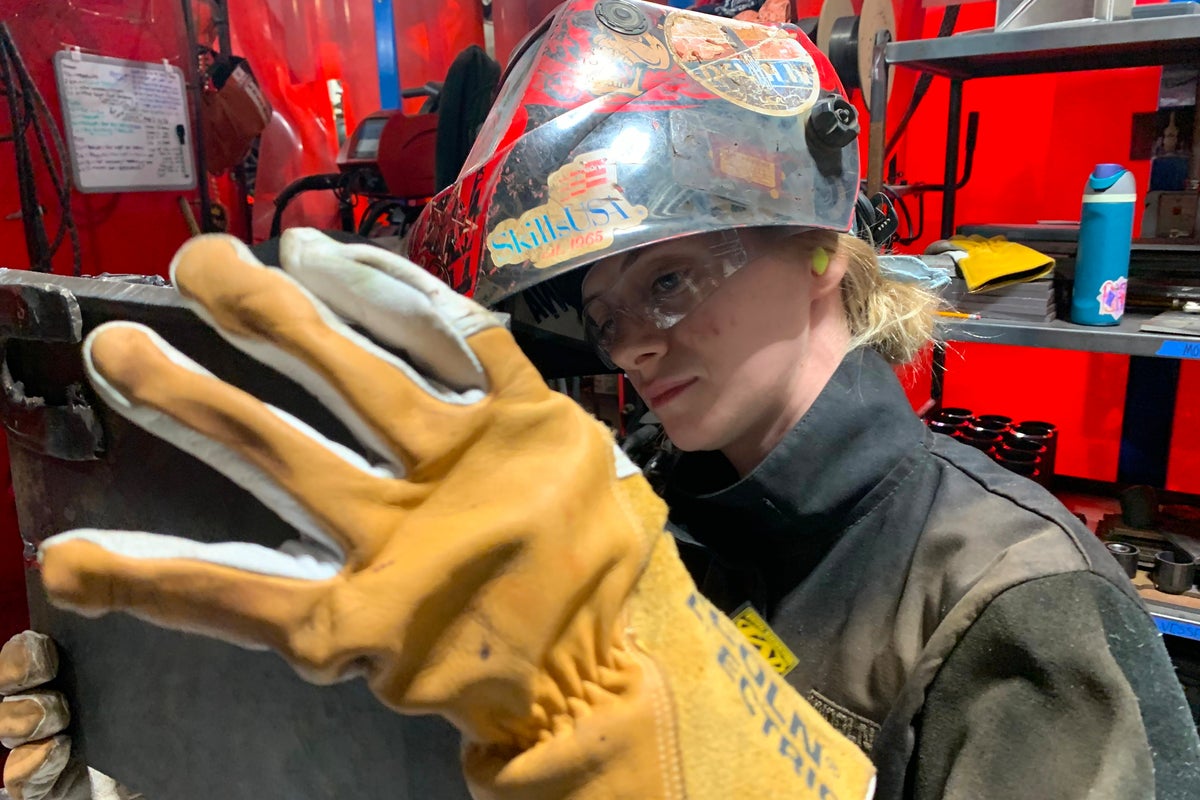
The 21-year-old from Dexter, Michigan, is currently spending up to 80 hours a week doing intense, physically demanding work at Washtenaw Community College. She isn't cramming for corporate law exams or studying marketing theories. She's welding. And this September, she'll head to Shanghai, China, to make history as the first American woman to represent the United States in welding at the 48th WorldSkills Competition.
Often called the "Olympics of skilled trades," WorldSkills is a massive global event where the absolute best young technicians on the planet compete under brutal time constraints and punishing international standards. Sposito won't just be competing for a gold medal. She'll be dismantling old stereotypes about who belongs in a welding booth.
What Most People Get Wrong About the Skilled Trades
There's a lingering, outdated assumption that trade schools are a fallback option for kids who couldn't cut it academically. It's an elitist myth, and frankly, it's completely wrong.
Modern welding isn't just about throwing sparks and melting metal together with brute force. It's an intricate science that requires deep spatial awareness, an understanding of metallurgy, precision engineering, and absolute physical control. One tiny pocket of porosity or a fraction of a millimeter deviation can compromise the structural integrity of a bridge, a high-pressure pipeline, or an aerospace component.
"I don't see the gender aspect of it," Sposito recently noted, pointing out that welding doesn't require massive physical strength. Instead, it demands fine motor skills, precision, and immense patience.
Her journey into the trade started in 2014 when she was just 10 years old. While visiting the Henry Ford Museum with her parents, she tried out a virtual welding simulator inside an American Welding Society career trailer. She fell in love with it immediately. Think about that for a second. While most ten-year-olds were playing video games, Sposito found a lifelong passion in joining metals under extreme heat and pressure.
Now, after winning the grueling USA Weld Trials in Huntsville, Alabama, earlier this year, she's proving that elite craftsmanship knows no gender. Women make up a tiny minority in the welding industry, but Sposito's historic spot on the US team shows that the landscape is shifting, even if the progress is slow.
Inside the High Stakes Training of an Elite Trade Athlete
If you think Olympic swimmers or gymnasts have a tough training regimen, take a look at what it takes to prepare for WorldSkills. Sposito isn't just practicing a few hours after class. She's putting in 80-hour workweeks at Washtenaw Community College (WCC).
WCC has quietly become an absolute powerhouse for trade education in the United States. Sposito is the sixth student from the institution to qualify for the WorldSkills competition. No other school in the country has produced more WorldSkills welding alumni.
To get ready for Shanghai, Sposito is working closely with her instructor and mentor, Alex Pazkowski. He knows exactly what she's going through because he lived it. Pazkowski competed in WorldSkills back in 2013 and walked away with a silver medal.
The preparation is an intense multi-month gauntlet. Pazkowski is taking Sposito through a series of international tune-up competitions that will span from Canada to Australia, simulating the pressure of the global stage before they ever land in China.
The actual competition in Shanghai, running from September 22 to 27, 2026, will push her to her physical and mental limits. Competitors face strict time limits to complete complex projects. They are judged on:
- Technical Execution: The purity, consistency, and strength of the weld beads.
- Craftsmanship: The visual cleanliness and structural perfection of the final assemblies.
- Blueprint Accuracy: Adhering to strict international design specs down to minuscule fractions of an inch.
- Testing Standards: Welds are often subjected to non-destructive testing, like X-rays, to find hidden internal flaws.
It's an exhausting, high-stress environment where a single mistake can ruin months of preparation. Pazkowski doesn't sugarcoat the reality, calling it a long, hard road. But he also notes that real success on this level opens up massive career doors for life.
Why the WorldSkills Competition Matters Beyond the Medals
While the event functions as a elite sporting spectacle for builders and tech experts, WorldSkills has a much bigger purpose. It highlights the desperate need for vocational training on a global scale.
According to organizations like SkillsUSA and the National Center for Construction Education & Research (NCCER), the United States is facing a massive shortage of skilled craftspeople. Older workers are retiring faster than young people are entering the field. We're short on carpenters, plumbers, electricians, and welders.
This shortage hits the economy hard. It slows down infrastructure projects, drives up construction costs, and makes manufacturing more expensive. By elevating these skills to the level of an international Olympic competition, WorldSkills shows young people that the trades offer viable, lucrative, and highly respected professional paths.
Take Sposito's long-term plans as an example. Her immediate goal is to finish her bachelor's degree in welding engineering at Wayne State University in Detroit. Eventually, she wants to return to WCC to teach the next generation. She wants to be an inspiration for other women who want to break into the trades but are hesitant because of the cultural stigma or the male-dominated environment.
The Practical Value of Choosing a Different Path
If you're looking at your career options or thinking about making a pivot, there's a huge lesson to be learned from Sposito's story. You don't have to follow the crowd to build an incredible career.
Elite trade professionals are in massive demand. If you have the drive to master a technical discipline, you can build a stable career without the mountain of student debt that comes with a traditional four-year degree. The doors open wide for top-tier craftspeople, leading to roles in advanced manufacturing, aerospace engineering, project management, and vocational education.
Success in this field doesn't happen by accident. It takes thousands of hours of deliberate practice, great mentorship, and the willingness to do difficult, precise work when nobody is watching.
If you want to support the next generation of American builders, technicians, and digital specialists, skip the standard sports channels this September. Pay attention to the WorldSkills Competition in Shanghai. Watch Sposito and the rest of the US team compete against the world's best. It's time we start celebrating our top craftspeople with the same energy we give to traditional athletes.