Nobody expected a real fight in Mississippi. Safe red states rarely turn into battlegrounds overnight. Yet, the 20th Senate contest here is forcing political watchers to rethink how solid the conservative map actually is.
Incumbent Republican Senator Cindy Hyde-Smith is running for a second full term. She faces a surprisingly energetic challenge from Democratic District Attorney Scott Colom. When you look past the usual partisan assumptions, local dynamics tell a very different story about voter fatigue and shifting regional strategies.
The Money and the Momentum
Elections come down to cash and ground game. Hyde-Smith holds a traditional financial advantage, reporting over $5.4 million raised with roughly $2.5 million in cash on hand as of mid-2026. Her campaign leans heavily on high-profile endorsements, including backing from President Donald Trump and state leaders like Governor Tate Reeves.
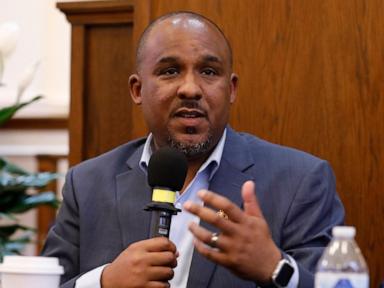
At the same time, Colom has built a credible fundraising apparatus. He pulled in nearly $2.4 million by mid-2026. That kind of money doesn't flow into a deep-red state unless internal polling shows an opening. Recent numbers from groups like Impact Research put the race within striking distance, showing a tighter margin than past cycles.
Why are voters responding? Colom's background as a prosecutor in the 16th Judicial District gives him a local profile built on criminal justice reform and economic development. He isn't running the standard playbook. He focuses heavily on rural health access and local jobs.
Breaking Down the Conservative Firewall
Mississippi hasn't sent a Democrat to the U.S. Senate since 1982. That historical brick wall makes any competitive shift notable. Part of the current friction stems from primary battles that tested party discipline. Hyde-Smith fended off a primary challenge from physician Sarah Adlakha, capturing about 80% of the vote. While solid, that primary contest exposed some conservative hunger for fresh faces.
Meanwhile, Colom cleared a Democratic primary field that included teacher Priscilla Williams-Till, a cousin of Emmett Till, and Marine veteran Albert Littell. With independent candidate Ty Pinkins also on the ballot, the contest features multiple lanes for disaffected voters.
What This Means for the National Map
National strategists usually ignore Mississippi until election night. They have to pay attention now. When traditionally safe seats require multi-million-dollar defense campaigns, it drains resources from other competitive Senate battlegrounds. Republicans cannot afford to take any southern seat for granted if independent voters start splitting tickets.
Watch the turnout in suburban pockets around Jackson and the Delta region. If Colom cracks the threshold needed to turn out low-propensity voters, the shockwaves will alter how both parties fund southern races for the rest of the decade. Pay close attention to late-stage campaign spending over the final months. That tells you where the campaigns are actually worried.