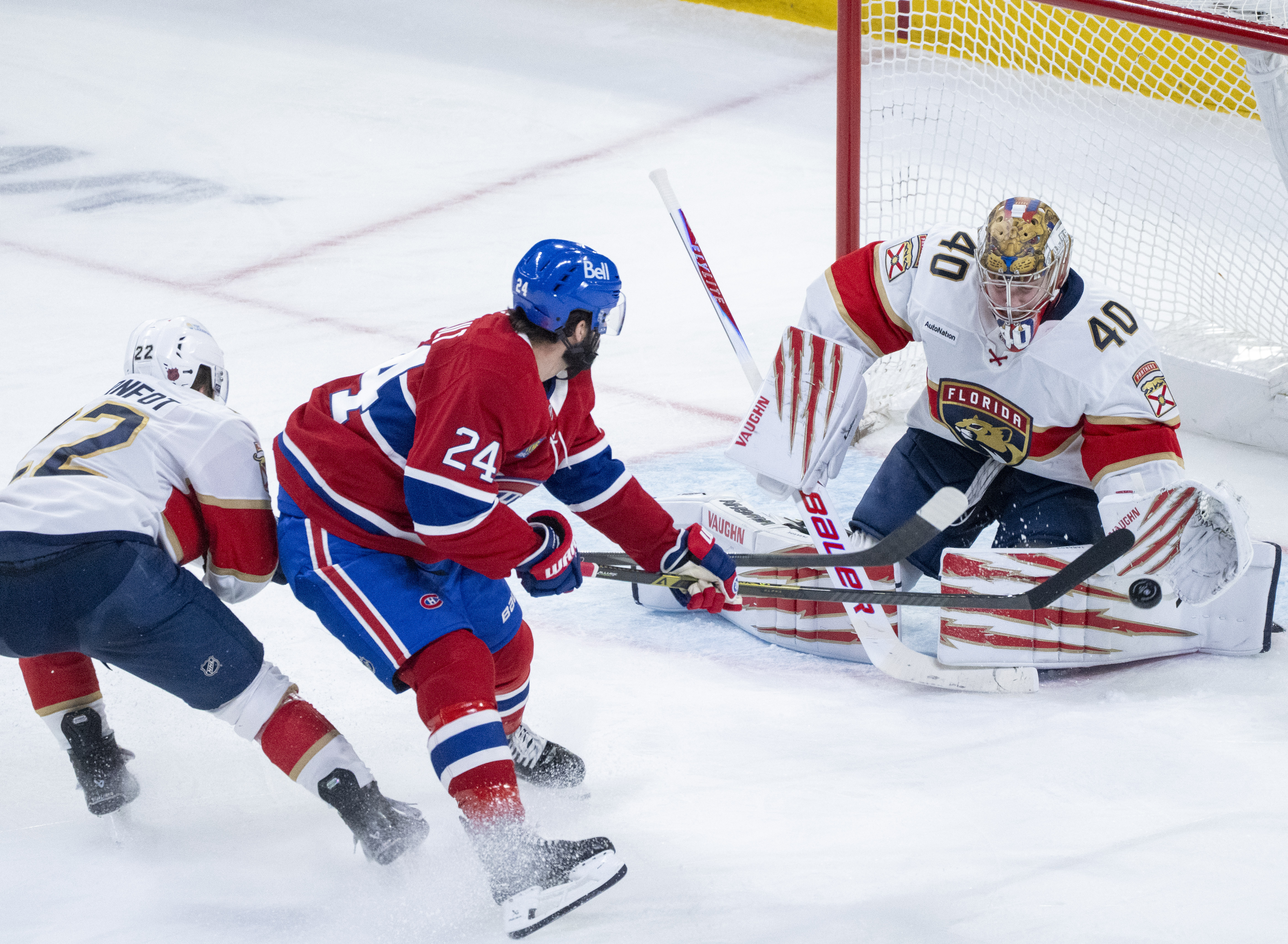
Winning feels like a drug. It masks the pain, hides the structural rot, and convinces the fan base that the "process" is working. But if you actually watched the Montreal Canadiens scrape past the Florida Panthers in a 4-3 shootout victory, you didn't see a "rebound." You saw a team accidentally sabotaging its own long-term survival for the sake of two meaningless points in April.
The mainstream sports media loves a "Call of the Wilde" style narrative. They want to talk about grit. They want to talk about the young core learning how to win. They want to celebrate a locker room that refuses to quit. This is lazy journalism. It’s a feel-good story that ignores the harsh math of the modern NHL.
The Myth of the Momentum Victory
Most analysts will tell you that beating a contender like Florida builds "winning culture." This is a fallacy. I’ve watched teams dwell in the basement of the standings for a decade because they couldn't stop winning the wrong games. Winning culture is built when you have the elite, high-end talent to dictate the pace of play. You don't get that talent by finishing 26th in the league instead of 30th.
The Canadiens are currently trapped in the "Goldilocks Zone" of mediocrity. They aren't bad enough to guarantee a franchise-altering superstar like Macklin Celebrini, and they aren't good enough to actually make noise in the playoffs. Every time they win a game like this, they push themselves further into the middle. The middle is where NHL teams go to die.
The Shootout Illusion
Let’s talk about the shootout. It is a carnival trick. Using a shootout win to justify a "rebound" is like judging a marathon runner based on how well they can skip rope after the race. It’s a specialized skill that has almost zero correlation with playoff success or 5-on-5 dominance.
When the Canadiens edge out a win in the skills competition, it paints a veneer of competency over a roster that was outshot and outplayed for significant stretches of the game. If you stripped away the gimmick, the underlying metrics suggested a team that is still struggling to maintain possession against elite forechecking.
Stop Obsessing Over Nick Suzuki’s "Leadership"
Don’t get me wrong. Nick Suzuki is a fine hockey player. He’s a legitimate top-six center. But the media treats him like the second coming of Jean Béliveau every time he notches a multi-point night.
Here is the cold truth: If Nick Suzuki is your best player, you are a bubble team.
The elite teams in this league—the Colorados, the Tampas, the Edmontons—have players who break the game. They have generational talents who force the opposition to rewrite their entire defensive playbook. Suzuki is a high-floor, limited-ceiling player. By winning these late-season games, the Canadiens are effectively ensuring they won't draft the high-ceiling complement that Suzuki desperately needs to actually be effective in a deep playoff run.
The Cost of "Competitive" Tanking
Fans hate the word "tank." They think it implies the players aren't trying. Professional athletes always try. They are wired that way. "Competitive tanking" isn't about the players on the ice; it's about the management of the roster.
When Kent Hughes and Jeff Gorton allow this team to overachieve in the final weeks of the season, they are failing the fans. I have seen GMs in this league get fired because they were too "honest" with their rebuild. They let the team win enough to stay "respectable," which resulted in a five-year cycle of drafting 12th overall.
The Scouting Trap
Imagine a scenario where the Canadiens draft 5th. They get a blue-chip defensive prospect or a high-scoring winger. Now imagine they win three more "character" games in April and drop to 9th. The difference between the 5th pick and the 9th pick in the NHL Draft is statistically massive.
- Top 5 Picks: 72% chance of becoming a 200-game NHLer with elite production.
- Picks 6-10: That number drops to roughly 45%.
By beating Florida, the Habs didn't "rebound." They just lowered their probability of drafting a superstar by about 5%. That is a massive loss for a franchise that hasn't had a 100-point scorer since Alex Kovalev was in his prime.
The Florida Panthers Are Playing a Different Sport
The narrative around this game was that Montreal "stood up" to a physical, Cup-contending team. But look at how Florida played. They were coasting. They are a team that has already punched its ticket, managing their energy levels for a grueling two-month postseason grind.
Montreal played that game like it was their Game 7. Florida played it like a Tuesday night in a humid swamp. Comparing the two is an exercise in delusion. The gap between a team that "finds a way" to win a shootout and a team built for the attrition of the playoffs is a canyon.
Defending the Blue Line
Montreal’s defense is young. We hear this constantly. "They just need time."
Time doesn't fix a lack of footspeed. Time doesn't fix a lack of elite puck-moving vision. While Kaiden Guhle and Arber Xhekaj are fan favorites, they are currently being asked to play roles they aren't suited for because the roster lacks a true #1 anchor. Winning these games convinces management that the defensive corps is "closer than it looks." It isn't. It’s a patchwork quilt that gets shredded the moment a team like Florida actually turns on the jets.
The "Young Core" isn't a Core Yet
Juraj Slafkovský is showing flashes. Cole Caufield can shoot. But calling this a "core" is premature and dangerous. A core is a group that has proven it can carry a team through a slump. Right now, this is a collection of interesting pieces that haven't learned how to dominate 5-on-5 play.
The Canadiens’ power play is often the only reason they stay in games. Relying on the man advantage is a fool’s errand. In the playoffs, the whistles go away. The game becomes a slog of board battles and zone entries. If you can't win at even strength, you can't win when it matters.
Why the "Process" is a Lie
Management talks about "The Process." It’s a buzzword borrowed from the NBA that has been twisted to mean "be patient while we finish 24th." True process involves identifying when a win is actually a loss.
Winning against Florida was a loss. It was a loss for the 2027 Canadiens. It was a loss for the fans who want to see a parade on Sainte-Catherine Street, not just a "competitive" team that misses the playoffs by six points.
The Actionable Truth for Montreal Fans
Stop cheering for the "rebound."
If you actually care about this team winning a 25th Stanley Cup, you should be rooting for a total collapse in the final weeks. You should be looking at the draft lottery simulator more than the box scores. Every win is a brick in the wall of mediocrity that is being built around the Bell Centre.
I've seen this movie before. The 2010s Calgary Flames. The post-Sundin Toronto Maple Leafs. Teams that were "too good to fail" but too bad to win. They spent years winning meaningless games in March and April, drafting in the middle of the pack, and wondering why they could never get past the first round.
The Montreal Canadiens are currently sprinting toward that exact same cliff. They are celebrated for their "heart" while their brain is making a catastrophic error in judgment.
The Panthers didn't lose that game. The Canadiens lost their future.
Stop settling for the sugar high of a shootout win. Demand a team that is built to win when the ice is slanted and the referees have put their whistles in their pockets. Until then, every "rebound" is just another step away from the only trophy that actually matters.
Burn the tape. Lose the games. Get the pick.